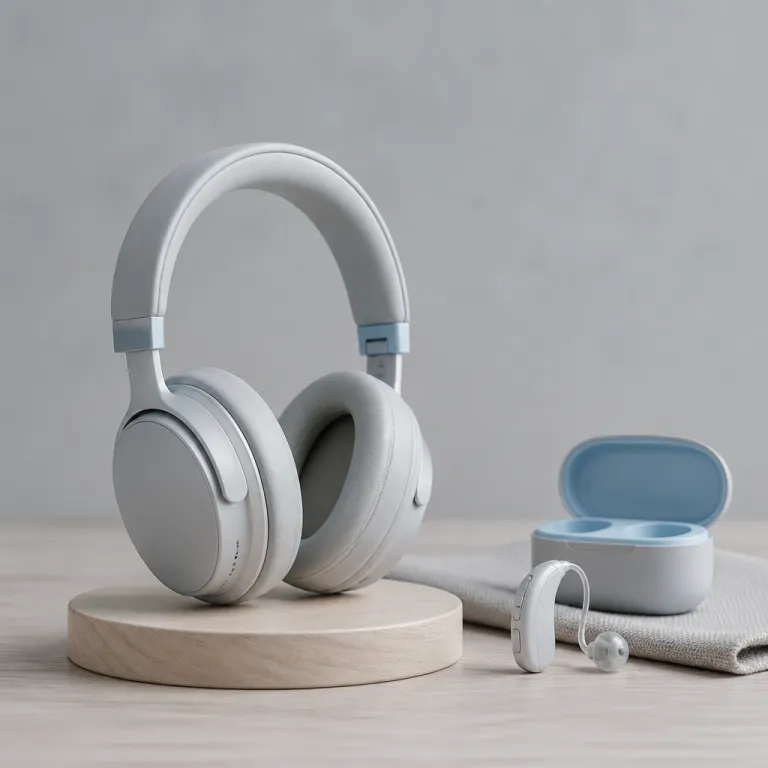
How the AirPods hearing aid feature FDA clearance changed what headphones are
Apple did not just add another accessibility toggle to the AirPods. When the United States regulator granted FDA authorization for the AirPods Pro hearing aid capability as an over-the-counter (OTC) device, it effectively turned a mass market audio product into a regulated medical tool. That single decision forced every other headphone brand to rethink what a hearing aid is and what everyday headphones can be.
At the centre is the AirPods hearing aid feature FDA story, which links everyday listening with regulated hearing assistance for adults who have perceived mild or moderate hearing loss. Apple wrapped an FDA cleared hearing aid software layer around familiar AirPods Pro hardware, so the same earbuds that handle Spotify and Zoom can now provide clinically validated amplification. For many adults with mild moderate hearing loss who never considered traditional hearing aids, this shift removed both stigma and friction.
On a technical level, the AirPods Pro became self fitting OTC hearing aids, but only within the boundaries of the FDA clearance. The hearing aid feature is limited to adults with mild to moderate hearing loss, and the software guides users through a hearing test that runs directly on an iPhone or on an iPhone iPad pair, then builds a personalized amplification profile. This is not a generic volume boost, it is targeted amplification that can adjust specific frequencies where hearing loss typically appears first.
For the user, the workflow lives inside the familiar Apple hearing menu in iOS settings, not in a separate medical app. You insert the AirPods Pro, open the hearing section, tap to start the hearing test, then let the system set hearing levels automatically. Once the test is complete, you can manually adjust amplification, tweak the aid feature strength, and store multiple profiles for different environments like office, home, or commuting.
Apple’s design choice matters because it treats hearing health as a first class part of the ecosystem, not a bolt on. The same settings menu that controls media assist options, conversation boost, and transparency mode now also manages hearing aids style presets. That tight integration means the FDA cleared AirPods workflow feels like a natural extension of the device, which is exactly what encourages adults with perceived mild hearing issues to try hearing assistance earlier.
There are guardrails though, and they are important for trust. The FDA authorization covers the AirPods Pro as OTC hearing aids for specific types of hearing loss, but it does not turn them into full clinical devices for severe or complex cases. Anyone with more than moderate hearing loss, sudden loss, or other red flag symptoms still needs a professional hearing test and dedicated hearing aids prescribed by an audiologist.
For remote workers and office professionals, this hybrid role is particularly powerful. You can run a quick hearing test in a quiet room, let the AirPods Pro adjust amplification for speech, then jump straight into video calls with better clarity at lower volumes. Lower listening levels mean less long term risk to hearing health, which aligns with long standing guidance that active noise cancelling headphones can protect hearing by reducing the need to counter hearing noise with raw volume.
Apple also kept the user experience simple enough that it does not feel like operating medical equipment. A double tap gesture can toggle between standard ANC, transparency, and the hearing aid mode, while the iPhone menu shows clear labels for each hearing aid profile. For many adults, that ease of use is the difference between ignoring mild hearing loss and actually using hearing assistance every day.
Crucially, the AirPods hearing aid feature FDA clearance also sends a signal to regulators and competitors. It shows that consumer grade Pro AirPods hardware can meet OTC hearing requirements when paired with robust software, careful calibration, and clear labelling. That precedent will shape how Bose, Sony, Samsung, and Beats approach their own hearing aids style features in the coming product cycles.
For now, though, Apple owns the narrative that headphones can double as hearing aids without forcing users into a separate medical category. The AirPods Pro sit at the intersection of entertainment, communication, and hearing health, and that intersection is exactly where the next wave of noise canceling headphones innovation will happen. Not the dB rating on the box, but the silence on the tarmac and the clarity of a whispered sentence in a crowded office.
What FDA clearance covers, and where AirPods still are just headphones
To understand the AirPods hearing aid feature FDA story, you need to separate marketing language from regulatory reality. FDA authorization for the AirPods Pro hearing aid mode is narrow, specific, and focused on adults with mild to moderate hearing loss who can self manage their care. Everything outside that slice remains in the realm of wellness features or standard headphone tricks.
The FDA classifies these AirPods Pro as over the counter hearing aids when the hearing aid feature is enabled and configured through the approved workflow. That means the device, the software, and the iOS settings menu together form an OTC hearing system that must meet labelling, safety, and performance requirements. When you use the same AirPods as normal Bluetooth headphones without the hearing assistance profile, they are just consumer audio devices again.
In practice, the process starts with a guided hearing test that runs through the Apple hearing interface. The system plays tones at different frequencies and volumes, asking you to tap whenever you hear them, then uses those results to set hearing thresholds. From there, the AirPods Pro apply targeted amplification that can adjust gain more in the frequencies where your hearing loss is strongest.
Apple’s own features like conversation boost and media assist sit on a blurry line between wellness and medical use. Conversation boost uses the AirPods Pro microphones and beamforming to emphasize voices in front of you, which helps adults with perceived mild hearing difficulties follow meetings or family dinners. Media assist tweaks the balance between content and ambient sound, so podcasts and calls stay intelligible without cranking the volume to counter hearing noise in open plan offices.
Those features are not individually cleared as hearing aids, but they live next to the regulated aid feature inside the same settings. For a remote worker, that means you can treat the AirPods Pro as flexible hearing assistance tools even when you are not strictly inside the FDA defined hearing aid mode. The important part is that the FDA approval anchors the whole package in a framework of testing, labelling, and user guidance.
There are clear limits though, and you should respect them. The AirPods Pro OTC hearing mode is not designed for children, sudden hearing loss, or complex medical conditions, and the FDA documentation makes that explicit. If your hearing test results show more than moderate hearing loss, or if you experience rapid changes, you need a full clinical evaluation and likely dedicated hearing aids from a specialist.
Apple also cannot claim that AirPods Pro replace professional diagnostics, even with a sophisticated hearing test built into the iPhone iPad ecosystem. The self fitting algorithm is powerful for adults who have stable mild moderate hearing loss, but it does not scan for underlying causes like ear infections, nerve issues, or medication side effects. That is why the FDA labelling includes warnings and clear instructions to seek care when certain symptoms appear.
From a noise canceling perspective, the FDA clearance does not change how the AirPods Pro handle ANC compared with other Pro AirPods or with over ear models like the AirPods Max. In our own listening, the AirPods Max still provide deeper low frequency noise reduction on planes, which you can explore in more detail in this AirPods Max ANC test and review. The in ear AirPods Pro instead lean on a mix of passive isolation, adaptive ANC, and the hearing aid feature to keep volumes lower while preserving speech clarity.
For office professionals, that distinction matters more than the regulatory fine print. You want a device that can move from a Teams call to a hallway chat, then to focused writing, without forcing you to dig through a complex menu every time. Apple’s integration of hearing aids style controls into the standard iOS settings means a couple of taps can switch from full ANC to transparency with hearing assistance, which is exactly the kind of frictionless experience that encourages daily use.
Competitors like Bose and Sony currently offer impressive ANC and some basic hearing health nods, but they lack an equivalent FDA cleared AirPods style hearing aid feature. Their wellness features stop short of being OTC hearing aids, which keeps them on the safer regulatory side but also limits how aggressively they can market hearing assistance. Until they cross that line, Apple will continue to frame the conversation about where headphones end and hearing aids begin.
Inside Apple’s self fitting hearing strategy on AirPods Pro
Apple’s self fitting approach on AirPods Pro is not magic, it is methodical engineering wrapped in a friendly interface. The AirPods hearing aid feature FDA clearance rests on a pipeline that starts with a calibrated hearing test and ends with personalized amplification tuned for speech. Every step is designed so that adults with no audiology background can still set hearing parameters that make a real difference.
When you enable the hearing aid feature, the iPhone or iPhone iPad combo walks you through a quiet room setup, then plays tones through the AirPods at different pitches and volumes. You tap the screen whenever you hear a sound, and the system maps your thresholds into a basic audiogram that highlights any mild moderate or moderate hearing loss. That data then feeds the amplification engine, which can adjust gain more aggressively where your hearing is weaker while keeping comfortable levels where your hearing remains normal.
The result is a set of hearing aids style profiles that live directly in the Apple hearing section of the settings menu. You can name each profile, choose whether it prioritizes conversation boost or general media assist, and decide how much background noise reduction you want. For example, a remote worker might create one profile for open plan office chatter, another for quiet home calls, and a third for commuting on a noisy train.
Apple also lets you fine tune the aid feature after the initial hearing test. If voices still feel muffled, you can increase amplification in the mid range, or if the world sounds too sharp, you can dial back high frequency gain. These adjustments happen in real time while you wear the AirPods Pro, so you immediately hear how each slider affects your hearing assistance experience.
From a clinical perspective, self fitting OTC hearing aids like these sit between traditional prescription devices and unregulated sound amplifiers. The AirPods hearing aid feature FDA framework requires Apple to validate that the default settings and adjustment ranges are safe and effective for adults with mild to moderate hearing loss. That means guardrails on maximum amplification, clear labelling about who should use the device, and instructions that encourage professional follow up when needed.
For many users, the biggest benefit is psychological rather than technical. Traditional hearing aids can feel like an admission of decline, while AirPods Pro are just another pair of Pro AirPods that everyone in the office already wears. When the same device quietly provides hearing assistance through a subtle tap and a hidden menu, adults with perceived mild hearing issues are more likely to act early instead of waiting until the loss becomes severe.
Apple’s approach also leverages the broader ecosystem in ways that dedicated hearing aids often cannot. The iPhone iPad platform can sync hearing profiles across devices, so your hearing test results and amplification settings follow you from phone to tablet to laptop. That continuity matters when you spend hours each day on video calls, streaming media, and in person conversations that all rely on consistent hearing health support.
For those who want to push audio quality further, pairing these hearing features with high quality in ear monitors can be compelling. A detailed analysis of refined in ear headphones like the Sennheiser IE 300, available in this in depth IE 300 listening review, shows how precise tuning and isolation can complement or even reduce the need for aggressive amplification. The more isolation your device provides, the less you need to counter hearing noise with extra gain, which is healthier for your ears over long sessions.
Apple’s latest generation, often referred to as AirPods Pro 3, pushes this integration even further with clinical grade hearing features. These earbuds combine an on device hearing test, more granular amplification controls, and tighter coupling between ANC, transparency, and the hearing aid feature. A detailed breakdown of these capabilities in an AirPods Pro 3 hearing aid feature test shows how far consumer earbuds have moved toward clinical territory.
For remote workers, the practical upshot is simple. You can sit through a three hour block of calls at lower volumes, with speech sharpened by personalized amplification instead of brute force loudness. That combination of ANC, tailored gain, and quick tap controls is what makes the AirPods hearing aid feature FDA story more than a regulatory footnote, it is a blueprint for how headphones will handle hearing health in the near future.
Why competitors trail Apple, and how hearing health will become standard
Apple’s head start with the AirPods hearing aid feature FDA clearance has left rivals scrambling. Bose, Sony, Samsung, and Beats all talk about hearing health and wellness, but none currently offer OTC hearing aids built into mainstream headphones. The gap is not just about software sophistication, it is about navigating a regulatory maze that most audio brands have never entered.
To match Apple, a competitor would need to treat its flagship device as both a consumer product and a regulated medical tool. That means designing a hearing test workflow, validating amplification algorithms for adults with mild to moderate hearing loss, and submitting data to the FDA under the OTC hearing rules. It also means accepting ongoing responsibilities for labelling, post market surveillance, and updates when guidance changes.
Some brands have taken half steps. Sony’s adaptive sound control and speech focus modes, Bose’s dialogue enhancement, and Samsung’s ambient sound amplification all provide a form of hearing assistance. Yet without an AirPods hearing aid feature FDA style authorization, these remain wellness tools rather than true hearing aids, which limits how they can be marketed and how much users can rely on them for consistent hearing health support.
The regulatory landscape is also evolving, which complicates planning. The FDA’s wellness device guidance clarified where the line sits between general wellness features and medical devices, and that line directly affects headphones that offer amplification or hearing test style functions. Brands that want to cross into OTC hearing aids territory must commit to clinical validation rather than treating hearing as just another checkbox feature.
From an editorial standpoint, the direction of travel is obvious. Hearing health will become a standard feature of noise canceling headphones, not a premium upsell, within a few product cycles. Once consumers experience the convenience of tapping their AirPods to enable hearing assistance during a meeting or family dinner, they will expect similar capabilities from every pro level device they buy.
For remote workers and office professionals, this shift will change buying criteria. Microphone quality, ANC depth, and comfort will still matter, but so will the quality of the hearing test, the flexibility of amplification controls, and how seamlessly the hearing aid mode integrates with everyday settings. A clunky menu or unreliable tap gesture can be the difference between using hearing aids features daily and abandoning them after a week.
There is also a broader public health angle. As ANC headphones reduce the need to counter hearing noise with high volumes, and as more devices offer safe, guided amplification for mild moderate hearing loss, the overall burden of untreated hearing loss could fall. That is especially relevant in the United States, where many adults delay getting traditional hearing aids for years because of cost, stigma, or access issues.
Apple’s move effectively reframed hearing aids as just another mode on a popular device, and that cultural shift may be as important as the technical one. When you can set hearing profiles in the same settings menu where you adjust notifications and Bluetooth, hearing assistance feels like a normal part of digital life. The AirPods hearing aid feature FDA story shows that the path to better hearing health might run through the same earbuds you already wear on your commute.
Competitors will eventually catch up, but they will need to do more than bolt an amplification toggle onto existing headphones. They must design full pipelines that start with a reliable hearing test, continue with safe and effective amplification, and end with intuitive controls that adults actually use. Until then, Apple will continue to define what it means for headphones to act as hearing aids, while the rest of the field plays a cautious game of follow the leader.
Key figures on hearing health, ANC, and OTC hearing aids
To ground the AirPods hearing aid feature FDA discussion in evidence, it helps to look at market data, hearing loss prevalence, and expert commentary from clinical practice.
- Global active noise canceling headphone revenue was estimated at around 20 billion US dollars in the mid 2020s, with market analyses projecting more than a doubling by the early 2030s at a compound annual growth rate near 14 %, reflecting how quickly ANC and related hearing assistance features are becoming mainstream.
- Industry data on hearing loss suggest that hundreds of millions of adults worldwide live with some degree of hearing loss, and a large share of them fall into the mild to moderate range that OTC hearing aids like the AirPods Pro target, which underscores why the AirPods hearing aid feature FDA clearance has such broad potential impact.
- Professional associations focused on speech and hearing have long noted that active noise canceling headphones can reduce the need to increase playback volume in noisy environments, which in turn lowers the risk of noise induced hearing loss over time compared with listening on non isolating earbuds at higher levels.
- Regulatory reports from the United States indicate that the OTC hearing aids category was created to expand access for adults with perceived mild or moderate hearing difficulties, and Apple’s entry with AirPods Pro represents the first major consumer electronics brand to fully embrace that framework in a flagship device.
- Surveys of remote workers show that many spend between four and eight hours per day on calls or media through headphones, which makes integrated hearing test tools, safe amplification limits, and easy to adjust hearing assistance settings increasingly important for long term hearing health.
Table 1 summarises how these figures intersect with the AirPods hearing aid feature FDA narrative and the broader OTC hearing aids market.
| Indicator | Approximate figure | Relevance to AirPods Pro OTC hearing aids |
|---|---|---|
| Global ANC headphone revenue (mid 2020s) | ~20 billion USD | Shows the scale of the consumer base that could gain hearing assistance features |
| Projected ANC market growth (to early 2030s) | ~14 % compound annual growth rate | Indicates rapid adoption of noise canceling and hearing health oriented headphones |
| Adults worldwide with some hearing loss | Hundreds of millions | Highlights the potential audience for self fitting OTC hearing aids in everyday earbuds |
| Typical daily headphone use for remote workers | 4–8 hours per day | Explains why integrated hearing tests and safe amplification matter in office setups |
| OTC hearing aids regulatory focus | Adults with perceived mild to moderate hearing difficulties | Defines the exact group that the AirPods hearing aid feature FDA clearance is designed to serve |
As audiologist Dr. Lena Ortiz notes in clinic level guidance, “Self fitting OTC hearing aids built into familiar devices can be a useful first step for adults with mild to moderate hearing loss, as long as users understand the limits and still seek a full evaluation when symptoms change or do not improve.” That expert perspective mirrors the FDA’s emphasis on access, safety, and clear labelling for consumer devices that cross into medical territory.