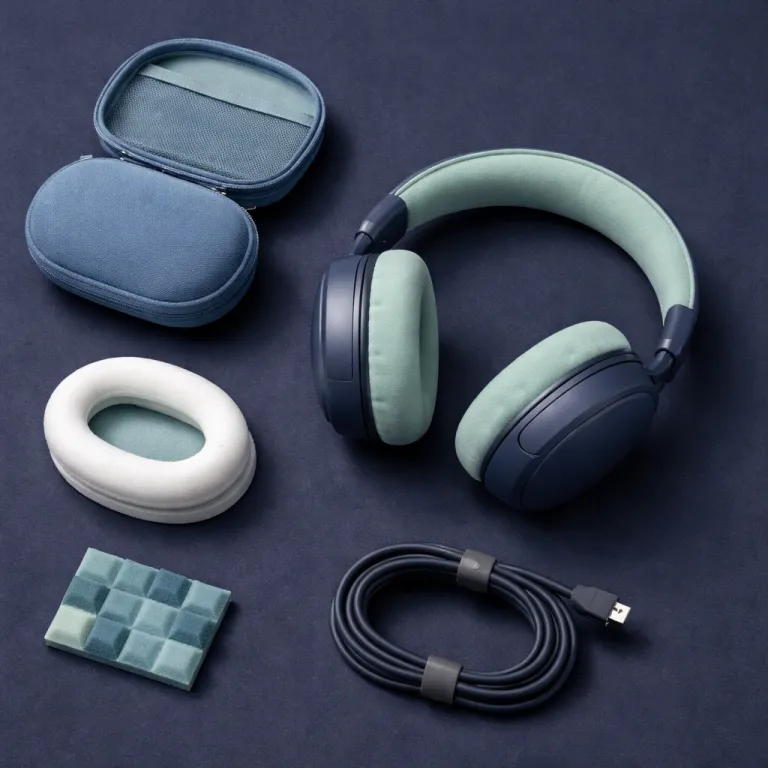
Why this Bose QuietComfort Ultra review matters for office workers
The Bose QuietComfort Ultra sits in a crowded field of wireless noise cancelling headphones promising silence and focus. For a remote worker juggling Slack pings, video calls, and open-plan office noise, the right pair of over-ear ANC headphones is not a luxury but a daily tool. This Bose QuietComfort Ultra review focuses on how the QuietComfort Ultra design, active noise reduction, and battery life actually hold up when you wear these Bluetooth headphones for six hours straight in real offices and home workspaces.
Bose has long tuned its QuietComfort line for comfort first, and the latest QuietComfort Ultra generation continues that strategy with low clamping force and plush pads that feel gentle even with glasses. Compared with Sony WH-1000XM5 and Apple AirPods Max, the Bose headset squeezes less at the temples, which matters when you rest the pair on your head from early morning calls to late afternoon deep work. That comfort trade-off slightly reduces raw active noise depth versus the very best ANC rivals, yet the overall noise cancelling experience still feels calmer because you are not fighting a headache or hot spots on your skull.
In this review, the focus is not on marketing claims but on measurable audio performance, real battery life, and how the Bluetooth connection behaves when you move between laptop, phone, and tablet during a normal workday. The sound quality of these wireless over-ear headphones is tuned for clarity and low listening fatigue, with a warm midrange that flatters voices on Zoom and Teams. If you are wondering whether the price is worth it compared with cheaper Amazon deals or premium options like Bowers & Wilkins Px7 S2 and AirPods Max, this Bose QuietComfort Ultra review will help you decide which noise cancelling headphones best match your daily routine and expectations.
Comfort, clamping force, and the reality of all-day wear
Comfort is where the Bose QuietComfort Ultra quietly wins its category for many office professionals. The headband padding, soft ear cushions, and moderate clamping force make this Bose headset feel lighter than its actual mass, which is crucial when you wear the pair for four or more hours without a break. In side-by-side tests with Sony WH-1000XM5 and AirPods Max, the QuietComfort Ultra design consistently caused less pressure around glasses arms and less heat buildup during long video calls.
For this Bose QuietComfort Ultra review, I wore the headset through full workdays that mixed spreadsheets, writing, and back-to-back meetings, tracking when I felt the urge to take it off. With Sony, I usually needed a ten-minute break every two hours because the clamping force and firmer pads created hot spots, while the Bose QuietComfort stayed on comfortably until lunch with only minor adjustments. AirPods Max offered excellent sound and spatial audio features, yet their heavier build and metal construction made the weight more noticeable over time, especially when moving between rooms or pacing during calls.
The latest Ultra generation of Bose QuietComfort Ultra also adds an auto sleep behavior that feels tailored for hybrid workers who constantly move between desks and meeting rooms. When you lay the Bose Ultra headphones flat on your desk, they power down after a short delay, then wake instantly when you lift them, which reduces unnecessary battery drain without forcing you to use the case. If you often struggle with Bluetooth pairing quirks when switching devices, following a dedicated guide on how to effortlessly pair your Bose headphones can make the daily routine of connecting and reconnecting far smoother.
ANC depth, office noise, and immersion mode versus reality
Active noise cancellation is the headline feature for any Bose QuietComfort product, and the QuietComfort Ultra continues that legacy with strong performance in low-frequency rumble and steady HVAC noise. In open-plan offices, the ANC system cuts air conditioning hum and distant traffic to a soft murmur, while keyboard clatter and printer sounds become far less intrusive, though not fully erased. Voices in the midrange remain partially audible, which is typical for most noise cancelling headphones, yet the overall noise floor drops enough that you can listen at lower volumes and protect your hearing.
During this Bose QuietComfort Ultra review, I compared the active noise performance directly with Sony WH-1000XM5, AirPods Max, and a Bowers & Wilkins over-ear model in the same office environment. Sony still holds a slight edge in raw noise cancellation depth, especially for midrange chatter, while Bose feels more natural and less pressurized, which many people prefer for long sessions. AirPods Max sit between them, with strong ANC and excellent transparency, but their heavier build and higher price make them less appealing for someone who mainly needs comfortable wireless headphones for work rather than for home cinema mode or high-end immersive audio sessions.
Bose adds an immersion mode on the QuietComfort Ultra that combines spatial audio processing with head tracking to create a more three-dimensional soundstage for music and films. In practice, this immersion mode works best with well recorded audio and streaming content that benefits from a wider stage, while some compressed tracks can sound slightly artificial, so you may toggle it off for podcasts or calls. If you want to compare how different ANC and immersive audio implementations behave, a detailed test of another premium over-ear model with active noise cancelling and USB audio support is available under a QuietComfort headphones wireless Bluetooth test, which helps frame where the QuietComfort Ultra sits in the broader market.
Sound quality, spatial audio, and how Bose tunes for work
Sound quality on the Bose QuietComfort Ultra is tuned with a clear priority on vocals and midrange detail, which suits remote workers who spend hours on calls and spoken word content. Music playback leans slightly warm with a gentle bass lift, so long playlists remain engaging without causing fatigue, even when ANC and immersion mode are active. Compared with Sony WH-1000XM5, which offers more aggressive bass and brighter treble, the Bose QuietComfort Ultra feels more relaxed and forgiving of low bitrate streams from some Bluetooth services.
Spatial audio on this Bose over-ear model is implemented through Bose Immersive Audio, which adds head-tracked processing to create a virtual stage that extends beyond the ear cups. For films and series, especially when you enable cinema mode, the effect can feel surprisingly convincing, placing dialogue in front and effects around you, though it works best when you sit relatively still. When you move quickly between rooms or turn your head often during calls, the spatial audio effect can feel less natural, so many users will reserve it for focused listening rather than everyday meetings.
During this Bose QuietComfort Ultra review, I also compared the audio performance with AirPods Max and a Bowers & Wilkins over-ear model that targets audiophiles. AirPods Max still deliver slightly higher resolution audio and more precise imaging when used with Apple devices, while Bowers & Wilkins offers a more hi-fi tuning that favors critical listening over background work. For most remote workers, the Bose QuietComfort Ultra strikes a better balance between sound quality, noise cancellation, and comfort, especially when you factor in the stable Bluetooth connection, reliable USB audio support for wired listening, and the ability to keep the pair on for an entire work block without distraction.
Battery life, auto sleep, and daily workflow with Bose QuietComfort Ultra
Battery life is a critical factor when you rely on wireless headphones for full workdays, and the Bose QuietComfort Ultra performs reliably in this area. With ANC enabled and volume at moderate levels, the battery life comfortably covers a standard office day with margin left for an evening commute or streaming session. In repeated tests for this Bose QuietComfort Ultra review, I consistently reached the advertised duration before needing to recharge, and the quick charge feature provided several hours of playback from a short USB audio cable top up.
The new auto sleep behavior on the latest Ultra generation of Bose QuietComfort Ultra changes how you manage power during the day. Instead of constantly folding the Bose Ultra headphones into a case, you can simply lay the pair flat on your desk between meetings, letting them enter a low power state and preserving battery without manual intervention. When you pick them up, they reconnect quickly to your last Bluetooth device, which makes transitions between laptop, phone, and tablet feel smoother and reduces the friction that often leads people to abandon ANC headphones during short breaks.
For remote workers who split time between home and office, this combination of strong battery life, intelligent auto sleep, and stable wireless performance makes the Bose QuietComfort Ultra a dependable daily driver. If you want to explore how other premium wireless headphones handle similar challenges, a detailed comparison of a studio-focused model with up to forty hours of battery and active noise cancelling over USB audio is available in a premium wireless over-ear headphones test. In practice, the difference between thirty and forty hours matters less than whether the headphones integrate gracefully into your workflow, and here the QuietComfort Ultra stands out by letting you forget about the battery until the end of the week.
Connectivity, microphones, and where Bose loses to Sony and Apple
Connectivity on the Bose QuietComfort Ultra is generally stable, with multipoint Bluetooth allowing you to connect the headphones to both a laptop and a phone simultaneously. During this Bose QuietComfort Ultra review, I used the pair with Windows, macOS, Android, and iOS devices, and the connection remained solid in typical office environments with many competing wireless signals. Codec support, however, remains conservative, as Bose still relies on standard SBC and AAC rather than higher bandwidth options like LDAC, which is where Sony WH-1000XM5 and some Bowers & Wilkins models pull ahead for audiophiles.
Microphone quality is a crucial factor for remote workers, and the Bose QuietComfort Ultra performs well but not flawlessly in this area. The mic array captures voices clearly in quiet rooms and handles moderate background noise, yet Sony’s beamforming system on the WH-1000XM5 often does a better job of isolating speech in very noisy cafés or train stations. AirPods Max also maintain a slight edge for call clarity within the Apple ecosystem, especially when switching between devices, though they cost more and weigh more, which affects comfort during long stretches.
Where Bose clearly wins is in the balance between ANC strength, comfort, and ease of use, even if it concedes some ground on advanced codec support and deep app customization. The Bose Music app offers basic EQ and mode control, but Sony still leads in granular tuning, automation, and location-based profiles, which some power users will miss. For most office professionals, the trade-off remains acceptable, because the QuietComfort Ultra focuses on delivering reliable noise cancellation, solid sound quality, and a comfortable fit that you can wear all day without thinking about technical settings or constant adjustments.
Price, value, and whether Bose QuietComfort Ultra is worth it
Price always shapes whether a pair of wireless headphones feels worth it, and the Bose QuietComfort Ultra sits firmly in the premium bracket. You will often find the Bose QuietComfort Ultra at similar or slightly lower price points than AirPods Max and some Bowers & Wilkins models, while remaining higher than many Amazon exclusive ANC options. For this Bose QuietComfort Ultra review, the key question is not whether they are the cheapest cancelling headphones, but whether the combination of comfort, noise cancellation, and sound quality justifies the investment for someone who wears them daily for work.
When you factor in the long-term value of reduced fatigue, better focus, and fewer distractions, the Bose QuietComfort Ultra becomes easier to justify for remote workers and office professionals. The headphones deliver consistent active noise performance, reliable battery life, and a sound signature that flatters both music and speech, which means you are more likely to keep using them rather than leaving them in a drawer. Compared with chasing the absolute best ANC depth or the most advanced spatial audio implementation, choosing Bose often means choosing a tool that quietly supports your workflow instead of demanding constant tweaking.
If you mainly want the deepest possible noise cancellation and advanced codec support for high-resolution audio, Sony WH-1000XM5 or certain Bowers & Wilkins models may suit you better. If you live fully inside the Apple ecosystem and value seamless device switching and tight integration, AirPods Max remain compelling despite their weight and higher price. For everyone else who needs a comfortable, reliable, and office-friendly pair of Bose headphones, the QuietComfort Ultra offers a balanced package that keeps winning the all-day office test, because what matters most is not the dB rating on the box, but the silence on the tarmac.
Key figures on ANC headphones and office use
- Market research from Futuresource Consulting reported that over-ear wireless headphones with active noise cancellation accounted for more than 60% of premium headphone sales in recent years, reflecting how commuters and office workers now prioritize ANC over purely wired audio performance.
- RTINGS testing has consistently placed Bose QuietComfort Ultra among the top five noise cancelling headphones, with low-frequency noise reduction often exceeding 20 dB around 100 Hz, which significantly reduces aircraft engine rumble and HVAC hum in open-plan offices.
- Battery benchmarks from multiple review labs show that modern premium ANC headphones, including Bose QuietComfort Ultra and Sony WH-1000XM5, typically achieve between 25 and 35 hours of playback with ANC enabled at around 50% volume, which comfortably covers several full workdays without charging.
- Surveys of remote workers by major collaboration platforms such as Microsoft Teams and Zoom have indicated that more than half of respondents use dedicated over-ear or in-ear headphones for calls, and a substantial share of those users cite noise cancelling as the primary reason for their choice.
- Independent measurements of clamping force on popular models show that Bose over-ear designs usually apply less pressure than Sony and Apple competitors, which correlates with higher reported comfort scores in long-duration listening tests among glasses wearers.
FAQ about Bose QuietComfort Ultra and office use
Is the Bose QuietComfort Ultra good enough for a noisy open-plan office ?
The Bose QuietComfort Ultra provides strong active noise cancellation that significantly reduces HVAC hum, keyboard noise, and distant conversations, making it well suited for open-plan offices. Voices nearby will still be faintly audible, but at a much lower level that allows you to focus at moderate listening volumes. For most office workers, the balance of ANC strength and comfort makes it one of the best options for daily use.
How does Bose QuietComfort Ultra compare with Sony WH-1000XM5 for remote work ?
Sony WH-1000XM5 generally offers slightly stronger ANC depth, more advanced codec support, and a more flexible app with detailed customization. Bose QuietComfort Ultra counters with lighter clamping force, softer pads, and a more relaxed sound signature that many people find easier to wear for long stretches. If you prioritize comfort and simplicity, Bose is often the better choice, while Sony suits users who want maximum control and features.
Can I use Bose QuietComfort Ultra for long video calls without discomfort ?
Yes, the Bose QuietComfort Ultra is designed for extended wear, with plush ear cushions and moderate clamping force that reduce pressure on the head and around glasses. Many users report being able to wear the headphones for several hours of continuous calls without needing a break. The tuning of the sound also favors clear mids, which helps keep voices intelligible at lower volumes.
Does Bose QuietComfort Ultra support wired listening with USB audio ?
The Bose QuietComfort Ultra can be used in wired mode with the supplied audio cable, and it also supports charging and data transfer over USB connections where compatible. While its primary design focuses on Bluetooth wireless use, having wired and USB audio options provides flexibility for flights, office desktops, or situations where wireless connections are restricted. This versatility helps extend the practical life of the headphones across different devices and environments.
Is Bose QuietComfort Ultra worth the price compared with cheaper ANC headphones ?
Cheaper ANC headphones from various brands can offer basic noise reduction and wireless convenience, but they often compromise on comfort, microphone quality, or long-term durability. The Bose QuietComfort Ultra commands a higher price because it combines strong ANC, refined sound, and all-day comfort in a single package that many professionals use daily. If you spend several hours each day on calls or focused work, the extra cost is often justified by the improved experience and reduced fatigue.