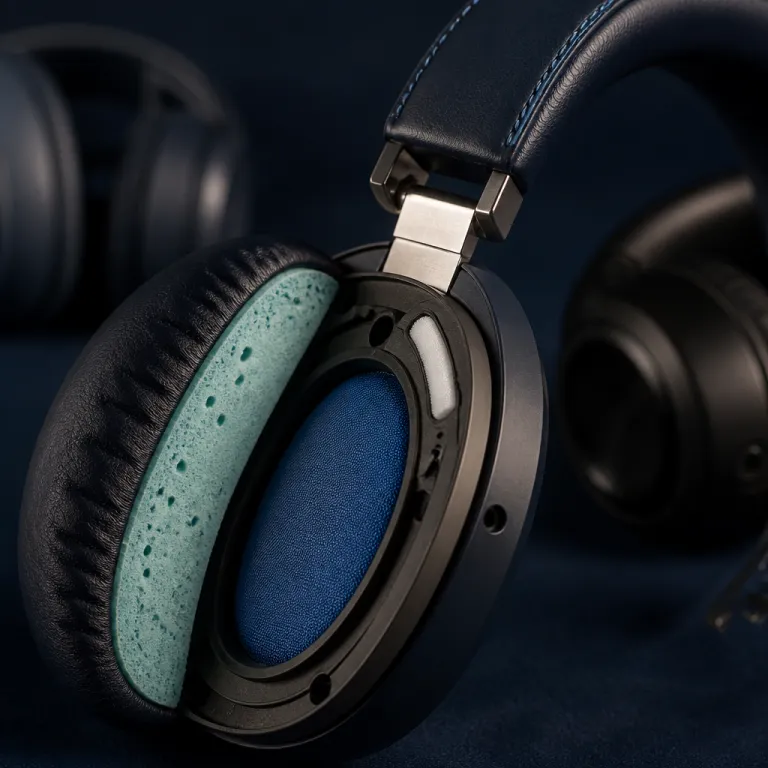
Why mid range noise cancelling headphones hit the value sweet spot
Mid range noise cancelling headphones in the 200 to 300 dollar bracket give you most flagship sound and anc performance without the luxury markup. You move far beyond cheap cancelling headphones that hiss, distort music, and lose noise reduction the moment a subway door slams, yet you avoid paying for prestige materials and niche software tricks that barely change real world performance. For a remote worker or office professional who lives in over ear headphones for hours, this is where the best noise to price ratio quietly sits.
At this level, over ear headphones typically share the same core anc chip architecture as their brand’s top models, so the noise cancellation depth on low frequency rumble feels surprisingly close to the best noise cancelling flagships. Independent tests from outlets such as Rtings and SoundGuys often show only a small gap in low end attenuation between mid tier and premium anc headphones. For example, Rtings’ measurements on Sony WH-CH720N and Bose QuietComfort SE show low frequency noise reduction that trails Bose QuietComfort Ultra by roughly 3 to 5 decibels in airplane cabin simulations, which is audible but not night and day. You still get strong noise canceling against HVAC drones and bus engines, while mid range tuning now focuses on more natural sound quality instead of the boomy bass that plagued older budget headphones. The result is audio that feels balanced enough for immersive listening during focus playlists, yet honest enough for video calls where voices must stay clear.
What you give up is mostly cosmetic or convenience rather than raw performance, which is a good trade for most people. You may see more plastic in the design, slightly stiffer headbands, and fewer spatial audio party tricks, but you still gain reliable bluetooth multipoint, solid battery life, and companion apps with real equalizer control. For someone comparing 80 dollar models against 450 dollar flagships, mid range noise cancelling headphones often deliver better overall value, because they prioritize daily comfort, call performance, and stable anc over flashy marketing features.
What $200-300 buys that $50 noise cancelling headphones simply cannot
Cheap 50 dollar noise cancelling headphones can look tempting, yet their anc usually behaves more like a loudness button than real noise reduction. They often add hiss to quiet rooms, shift the sound balance when you toggle noise cancelling, and leak enough low frequency noise that airplane engines still roar through your playlists. After a few hours anc can also create pressure hotspots because the earpads use thin foam and the clamping force is rarely tuned for long listening sessions.
Step into the 200 to 300 dollar range and the difference in sound and comfort becomes obvious within minutes. You start seeing models from Sony, Bose, Sennheiser, and Anker that offer stable bluetooth multipoint, meaning you can pair the same headphones to a laptop and phone, then switch calls without digging into settings. For example, Sony’s WH-CH720N and Sennheiser Accentum Wireless both support two device pairing and maintain a steady connection in most office environments. These mid range noise cancelling headphones usually deliver 25 to 40 hours of playback with anc on, so a remote worker can cover several days of meetings and focus blocks before thinking about usb charging.
Microphone quality also jumps, which matters if you spend hours on Zoom or Teams. Budget cancelling headphones often compress your voice and let office noise bleed through, while mid range models use beamforming mics and better digital signal processing to keep speech intelligible. Tests on headsets such as Bose QuietComfort SE and Anker Soundcore Space One show clearer vocal pickup and less keyboard clatter than typical entry level anc sets. If you need something safer for children, you can still keep a separate pair from a dedicated guide to top noise canceling headphones for kids, but for adults who care about sound quality and daily performance, the mid range is where good anc finally meets durable design.
Where $400+ flagships pull ahead, and why it matters less than you think
Flagship anc headphones like Bose QuietComfort Ultra, Sony WH 1000XM5, and Apple AirPods Max cost far more than mid range noise cancelling headphones, yet their core noise cancellation is not always dramatically better. Measurements from reviewers such as Rtings often show only a few decibels of extra low frequency reduction compared with strong mid range competitors. For instance, Rtings’ airplane cabin graphs typically show Bose QuietComfort Ultra and Sony WH 1000XM5 beating solid mid tier models like Sony WH-CH720N by roughly 3 to 6 decibels below 200 Hz, which is noticeable but still keeps mid range anc in the same performance ballpark. You do gain sleeker design details, lighter materials, and more refined clamping force, which helps during very long sessions when every gram on your head counts. You also see proprietary tricks such as spatial audio head tracking, automatic ear shape calibration, and ecosystem switching that mostly benefit power users locked into one brand.
For many remote workers, those extras feel nice rather than necessary, especially when mid range models already deliver strong anc and respectable sound quality. A 250 dollar pair with LDAC or aptX Adaptive can offer audio performance that comes surprisingly close to a 450 dollar flagship, particularly if you take a few minutes to tune the equalizer in the companion app. The codec gap has narrowed enough that the better mid range headphones now sound good enough for critical listening, while still handling compressed conference calls and podcasts without fatigue.
Where flagships still win decisively is in long term comfort and some advanced software features. Bose QuietComfort Ultra and Bose QuietComfort lines, for example, often feel more comfortable after three or four hours anc use because their earpads breathe better and their headbands distribute weight more evenly. Future facing technologies such as personalized anc, where your headphones scan your ear canals for a custom noise profile, are already being explored in pieces like why personalized anc makes generic cancellation obsolete, yet the raw value for most people still sits firmly in the mid range.
Comfort, design, and battery life in the real workday
For a knowledge worker who wears headphones through back to back calls, comfort and design matter as much as pure anc numbers. Mid range noise cancelling headphones tend to weigh slightly more than their flagship cousins, and their clamping force can feel firmer after several hours of continuous wear. That extra pressure is the tax you pay for lower price tags and less exotic materials, yet many models still remain comfortable enough for a full workday when you take short breaks.
Battery life is one of the quiet strengths of this bracket, because manufacturers now understand that remote workers hate mid meeting shutdowns. It is common to see 30 to 40 hours anc playback with noise canceling enabled, and even more if you switch anc off for quiet home office sessions. For instance, Anker’s Soundcore Space One and Sony’s WH-CH720N both test around the 35 hour mark with anc active in third party reviews, while Sennheiser Accentum Wireless often lands near 35 to 50 hours depending on codec and volume. With usb charging and sometimes usb audio support, you can plug into a laptop and keep listening while topping up the battery, which turns a dead pair into a wired backup in seconds.
Design choices also influence sound and noise reduction in subtle ways. Deeper earpads improve passive isolation, so anc does not need to work as hard to cancel low frequency noise from air conditioners or traffic. A well tuned mid range pair can therefore deliver immersive audio that feels stable across genres, while still letting you toggle transparency mode quickly when a colleague walks up to your desk.
Connectivity, codecs, and why bluetooth multipoint changes office life
Connectivity is where mid range noise cancelling headphones quietly outclass most budget options, especially for people juggling multiple devices. Reliable bluetooth multipoint means your headphones can stay paired to both your work laptop and your phone, automatically routing audio from whichever device starts playing sound. That single feature removes a daily annoyance that no spec sheet fully captures, because you stop digging through menus every time a call comes in.
Codec support also improves significantly in this bracket, which matters for both music and meetings. Many mid range models now support at least one high resolution codec such as LDAC or aptX Adaptive, narrowing the audio quality gap with expensive flagships and making streamed music feel more detailed. When combined with well tuned anc and good microphones, you get a package where performance feels balanced across music, movies, and voice calls instead of optimized for only one scenario.
Wired options are still relevant, especially in corporate environments that restrict wireless devices. Some mid range noise cancelling headphones offer usb audio over a standard usb C port, letting you bypass Bluetooth entirely while still using anc and spatial audio features on compatible platforms. If you want to understand how cabin pressure changes and new anc processors affect connectivity and stability, a deeper technical breakdown on cabin pressure changes and mid range anc processors shows why not all wireless implementations behave the same at 10 000 meters.
How to choose the right mid range noise cancelling headphones for you
Picking the best noise cancelling headphones under 300 dollars starts with your actual environment, not with brand names. If you work mostly in a quiet home office, prioritize sound quality, microphone clarity, and comfortable design over the absolute strongest anc, because aggressive noise cancellation can sometimes create ear fatigue. In a loud open plan office or on frequent flights, stronger anc and better passive isolation become reasons to buy, even if you sacrifice a little style or a few smart features.
Next, think about how many hours anc you really need each day. Someone who wears headphones for two or three hours can live happily with a 25 hour battery life rating, while a frequent traveler should aim for 35 hours or more to cover long haul flights and layovers. Check whether the model supports fast usb charging, because a quick 10 minute top up that adds several hours of playback can rescue you between meetings.
Finally, pay attention to how the headphones handle different types of noise. Some mid range models excel at low frequency noise reduction from engines and fans, while others do a better job softening mid range chatter in cafés and offices. The right choice is not the one with the highest anc marketing number, but the one that makes your specific workspace feel calm, turning the chaos around you into something closer to silence on the tarmac.
Key figures on mid range noise cancelling headphones
- Market research from firms such as Futuresource Consulting shows that wireless anc headphones in the 200 to 300 dollar range account for a significant share of premium headphone sales, reflecting strong consumer interest in value rather than ultra luxury pricing.
- Battery benchmarks from multiple independent reviewers, including Rtings and What Hi-Fi, indicate that many mid range anc models now achieve around 30 to 40 hours of playback with noise canceling enabled, which is roughly double the endurance of early generation anc headphones.
- Objective anc measurements published by specialist audio labs and review sites often show only a small difference, sometimes less than 5 decibels, between mid range anc headphones and top tier flagships in low frequency noise reduction on airplane cabin simulations.
- Surveys of remote workers by technology publications consistently report that comfort and microphone quality rank alongside sound quality as top purchase criteria, which explains why mid range designs increasingly focus on lighter builds and improved call performance.
- Adoption of bluetooth multipoint has grown rapidly in the mid range segment, with many new models supporting at least two simultaneous connections, reflecting the reality that most professionals now switch between a laptop and smartphone throughout the day.
| Model | Typical street price (USD) | Tested anc strength (airplane low end) | Rated battery with anc on | Best use case |
|---|---|---|---|---|
| Sony WH-CH720N | ~150–200 | Strong; trails Sony WH 1000XM5 by roughly 4–6 dB below 200 Hz in Rtings-style tests | Up to about 35 hours | Remote work and commuting with light, comfortable design |
| Sennheiser Accentum Wireless | ~180–230 | Moderate to strong; a few decibels behind Bose QuietComfort Ultra on airplane simulations | Roughly 35–50 hours depending on codec | Travelers who want long battery life and balanced sound |
| Anker Soundcore Space One | ~100–150 | Competitive mid range anc; typically within about 5 dB of premium models at low frequencies | Around 35 hours in third party reviews | Budget conscious buyers who still want effective anc |
| Bose QuietComfort SE | ~200–300 (often discounted) | Very strong; close to Bose flagship anc curves in airplane cabin tests | Up to roughly 24 hours | Office professionals who prioritize comfort and calls |
FAQ about mid range noise cancelling headphones
Are expensive noise cancelling headphones worth it compared with mid range models ?
High end anc headphones can be worth the extra cost if you value maximum comfort, the lightest materials, and advanced ecosystem features such as seamless device switching or personalized spatial audio. For many people, though, mid range noise cancelling headphones deliver similar anc strength and sound quality at a much lower price. The premium becomes harder to justify unless you spend many hours a day wearing headphones or rely heavily on brand specific features.
What are the best noise cancelling headphones under 300 dollars for remote work ?
The best noise cancelling headphones under 300 dollars for remote work usually come from established brands that balance anc, microphone quality, and comfort. Models like Sony’s mid tier WH series, Bose QuietComfort variants on sale, and Sennheiser Momentum or Accentum lines often perform well in independent tests. Look for reliable bluetooth multipoint, at least 25 hours of battery life with anc on, and a companion app that lets you adjust sound and noise cancellation levels.
How much battery life do I really need in anc headphones ?
Most remote workers are comfortable with 25 to 35 hours of rated battery life with anc enabled, which covers several days of calls and music between charges. Travelers who take long flights or often forget to charge should aim for 35 to 40 hours anc endurance to avoid mid trip shutdowns. Fast charging via usb C is also valuable, because a short top up can add enough hours for an afternoon of meetings.
Do mid range anc headphones work well for both music and calls ?
Modern mid range anc headphones are designed to handle both music and calls, with tuning that keeps voices clear while still delivering engaging sound for playlists. Many models include multiple microphones and beamforming algorithms to reduce background noise during meetings. When combined with decent sound quality and stable Bluetooth, they offer a balanced performance that suits most remote workers.
What is the main reason to buy mid range anc instead of budget models ?
The main reasons to buy mid range anc instead of budget models are more effective noise reduction, better build quality, and far more comfortable long term wear. You also gain features such as bluetooth multipoint, higher quality codecs, and more accurate anc tuning that does not distort your audio. In daily use, these improvements matter more than chasing the absolute cheapest price tag.