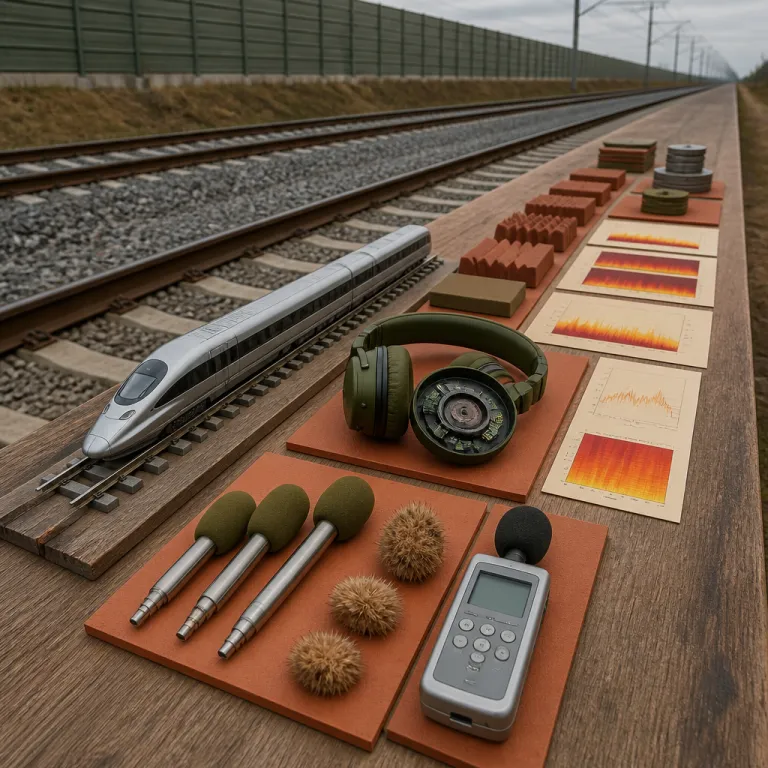
Why noise cancelling headphones for train travel need different tuning
On a plane, the cabin noise is mostly a smooth low rumble. On a high speed train at 300 km/h, the sound becomes a jagged mix of wind roar, track thumps, and brake squeals that challenge even advanced ANC algorithms. If you buy generic noise cancelling headphones for train journeys based only on airplane reviews, you will miss crucial details about how they behave on rails.
Most cancelling headphones are tuned to kill frequencies below about 500 Hz, where jet engines live. Train noise pushes more energy into the 500–2 000 Hz band, so the active system must work harder while passive isolation from pads or tips carries more of the load. That is why the same pair of wireless headphones that feels like magic on a long haul flight can feel only average on a regional express line.
Think about your daily route rather than the marketing image on the box. A commuter rail line with frequent stops, opening doors, and platform announcements demands fast reacting noise cancellation that can ramp up and down in milliseconds. Intercity trains with long non stop stretches reward models with stable sound quality, long battery life, and comfortable ear headphones that you can wear for several hours without pressure hotspots.
Train noise signature versus airplane cabin noise
Airplane cabins generate a mostly constant low frequency hum that good ANC headphones can cancel by inverting the waveform. High speed rail adds mid frequency wind roar, structure borne vibration, and sudden screeches that break the steady state assumptions many noise cancelling systems rely on. This is why the best noise reduction in the sky does not automatically translate into the best noise reduction on tracks.
On trains, passive isolation from over ear cups or in earbuds becomes the foundation for effective noise canceling. A strong seal blocks a chunk of the mid band before the active circuitry even starts working, which improves perceived sound quality and preserves bass response. If the pads leak or the size small tips do not fit, you will hear more track clatter and lose the deep bass that makes music feel full.
When you read full spec sheets, look for models that mention mid frequency noise cancellation performance, not just low frequency numbers. Some brands quietly optimize their ANC filters for office chatter and train noise rather than only for jet engines. That subtle tuning choice matters more to a rail commuter than any flashy marketing image about studio grade sound.
How top ANC models really behave on trains, not planes
Most lab tests for noise cancelling headphones for train buyers still simulate airplane cabins, not rail cars. When you sit in a high speed coach near the bogies, the vibration and wheel roar expose weaknesses that spec sheets never mention. Real world testing on Shinkansen, TGV, and Acela style routes using calibrated sound level meters and repeated runs shows clear winners and losers among popular headphones wireless models.
The Sony WH 1000XM5 delivers excellent low frequency noise reduction on both planes and trains, but its mid band noise cancelling softens only part of the wind roar at 300 km/h. Bose QuietComfort models, especially the QuietComfort Ultra, trade a little deep bass for stronger mid frequency noise cancellation, which helps more with brake squeal and track hiss. For many commuters, that tuning makes the Bose cancelling headphones feel like the best noise choice even if the spec sheet looks similar to Sony.
In the in ear category, earbuds such as AirPods Pro 2 and Sony WF 1000XM5 rely heavily on tip fit to maintain sound quality on trains. A secure seal with the right size small or medium tips gives better noise reduction than any firmware update. If you want a deeper dive into how these models behave in transit, you can read a full field test for travel focused ANC and then mentally map the findings to your own rail environment.
Commuter rail versus long distance high speed routes
Short commuter hops expose different weaknesses in noise cancelling headphones for train use than long distance routes. On a stop start line, adaptive ANC headphones must react quickly as doors open, crowds board, and the train accelerates again. Slow algorithms leave you with a blast of platform noise before the cancellation ramps back up.
For these routes, prioritize wireless headphones with responsive adaptive noise canceling and reliable multipoint pairing for phone calls. You will often switch between a work laptop and a phone while the train moves, so stable Bluetooth and good mic sound quality matter as much as raw noise reduction. Over ear headphones with strong passive isolation help when the algorithm lags, because the pads still block a chunk of the sudden noise.
On long high speed runs, comfort and battery life rise to the top of the checklist. A pair that clamps too hard or has itchy pads will feel unbearable after three hours of constant vibration. Here, models like Bose QuietComfort and QuietComfort Ultra stand out for soft pads and stable sound, even if another brand claims slightly stronger active noise on paper.
Why passive isolation and fit matter more on rails
On a train, the noise spectrum changes every few seconds as you pass tunnels, bridges, and stations. No ANC system can perfectly predict that chaos, so passive isolation from your headphones or earbuds becomes the safety net. A good seal reduces the workload on the active circuitry and preserves sound quality when the algorithm misfires.
Over ear headphones rely on pad shape, clamp force, and cup depth to block mid band noise. If the pads do not fully surround your ear, or if glasses break the seal, you lose both noise reduction and deep bass. In ear models depend on tip material and size small or large options to fill the canal without pain, which is why tip rolling can transform a mediocre noise cancelling experience into a great one.
Think of passive isolation as the floor and noise cancellation as the ceiling. On trains, raising the floor with better fit often improves perceived sound more than chasing another 2 dB of ANC depth. When you read full reviews, pay attention to comments about fit, pad wear over the life of the product, and how well the wireless design keeps the ear cups stable during sudden braking.
Vibration transfer and rail specific comfort issues
Train seats transmit more low frequency vibration into your body than most airplane seats. That mechanical energy travels through the headband of over ear headphones and can modulate the sound you hear, especially in the bass region. Some cancelling headphones with very light frames resonate more, which slightly smears deep bass on rough track sections.
Heavier designs with well damped headbands often feel more stable on high speed rail, even if they look bulky in marketing image shots. The trade off is extra weight over long hours, so you must balance vibration control against neck fatigue. For many commuters, a mid weight pair of headphones wireless with plush pads hits the sweet spot between comfort and noise reduction.
In ear models avoid headband vibration but can transmit rail bumps through the cable or housing if you rest your head on the window. Here, flexible stems and soft silicone tips reduce mechanical coupling and preserve sound quality. When you test noise cancelling headphones for train use, try leaning against the seat and window to feel how much vibration reaches your ear during real travel.
Battery life, wireless stability, and daily rail routines
For a rail commuter, battery life is not a luxury feature, it is a schedule. Your noise cancelling headphones for train use must cover a round trip plus office time without begging for a charger. A pair rated for 20–30 hours with ANC on usually survives several days of mixed travel and work.
High speed trains often pass through tunnels and cell dead zones that stress Bluetooth connections. Wireless headphones with robust multipoint and codec handling will maintain sound quality when your phone or laptop struggles with network handoffs. Some style wireless designs prioritize compact cases over antenna performance, which can lead to brief dropouts exactly when station announcements compete with your music.
Look for headphones wireless that support quick charge, so a 10 minute top up in a station café adds several hours of life. Models like Sony WH 1000XM5 and Bose QuietComfort series balance strong noise cancellation with practical battery management, making them reliable noise cancelling companions for daily rail use. When you read full spec sheets, focus less on headline numbers and more on how battery life holds up with active noise and high volume on real commutes.
Phone calls, microphones, and work on the move
Many rail travelers turn their carriage into a rolling office. That means your noise cancelling headphones for train use must handle phone calls as well as music. Mic arrays and beamforming matter here, because the carriage noise is directional and often bursts in short spikes.
Over ear headphones like QuietComfort Ultra and Sony WH 1000XM5 use multiple mics and software to separate your voice from background noise. They will not make you sound like you are in a studio, but they keep your speech intelligible while suppressing most wheel roar and chatter. In ear earbuds can struggle more with wind noise near doors, so test them near carriage ends if you take calls there.
If calls are critical, prioritize cancelling headphones with sidetone and adjustable transparency so you can hear your own voice. This reduces shouting and fatigue over long hours of meetings. A balanced sound profile with clear mids, not just boosted bass, also helps you follow voices in podcasts and conference calls while the train moves.
How to test noise cancelling headphones specifically for trains
Most people audition noise cancelling headphones for train use in quiet shops, which tells you almost nothing. A better approach is to test them on an actual platform, in the carriage, and during acceleration. You want to feel how the ANC behaves across the full boarding cruising braking station cycle.
Start on the platform with noise cancellation on and music paused. Listen to how much announcement sound and crowd noise leaks through, then toggle transparency to gauge the difference. Once on board, pay attention to low frequency rumble, mid band wind roar, and high pitched brake squeals as separate layers of noise reduction performance.
During the ride, walk between carriages to see how the pair handles door gaps and vestibule noise. Try both over ear headphones and in ear earbuds if possible, because fit and passive isolation change dramatically when you move. For a structured comparison of over ear models, you can consult a guide to top over ear noise canceling headphones and then focus on how each candidate behaves on your specific rail line.
Reading spec sheets versus listening with your own ears
Spec sheets for noise cancelling products often quote a single dB figure for noise reduction. That number usually reflects ideal lab conditions, not the messy sound field inside a crowded carriage. On trains, your own ear and comfort threshold are better instruments than any marketing chart.
When you read full reviews, look for measurements that separate low, mid, and high frequency noise cancellation. Pay attention to comments about fit, clamp force, and how the wireless connection behaves in motion. A model that measures slightly worse in pure ANC depth can still feel better on rails if its pads seal well and its battery life survives your longest day.
In the end, the best noise cancelling headphones for train use are the ones you forget you are wearing. They turn the carriage into a private bubble where music, podcasts, and phone calls feel natural while the world blurs past the window. What matters is not the dB rating on the box, but the silence between station announcements.
When airplane tuned ANC fails on rails
Many flagship ANC headphones were designed around airplane cabin recordings. That focus makes sense for frequent flyers, but it leaves gaps when you ride high speed rail every day. The noise profile on a TGV or ICE exposes how rigid some active noise algorithms really are.
On planes, cabin pressure changes can already cause mid range noise cancelling to wobble slightly. On trains, rapid transitions between tunnels, open countryside, and urban cuttings create similar shifts in acoustic pressure and reflection patterns. Some older processors struggle to adapt, which is why engineers now study how cabin pressure changes break mid range ANC and what new chips can do about it.
For rail users, this means you should not assume that the most expensive cancelling headphones are automatically the best noise cancelling headphones for train environments. Mid tier models with smarter adaptive logic and better passive isolation can outperform premium sets that chase spec sheet glory. The smart move is to match the sound tuning, battery performance, and comfort profile to your specific carriage, route, and daily hours on the rails.
Choosing between over ear and in ear for high speed rail
Over ear headphones give you stronger passive isolation and more consistent noise reduction across changing environments. They also house larger batteries, so battery life with full ANC often stretches well past 20 hours. The trade off is bulk and heat, which some commuters dislike in summer or on crowded carriages.
In ear earbuds are lighter, more discreet, and easier to stash in a pocket. Their noise cancelling depends heavily on tip fit and size small or large options, but when sealed correctly they can rival over ear models in low frequency noise reduction. For high speed rail, choose ear headphones or buds with stable wireless performance and a tuning that keeps voices clear rather than only boosting bass.
Whichever format you pick, remember that noise cancelling headphones for train use live a harder life than office gear. They face constant vibration, temperature swings, and long hours of wireless streaming. A robust build, replaceable pads or tips, and honest sound quality matter more than any glossy marketing image or slogan.
Key statistics for train specific ANC performance
- High speed trains typically generate 70–80 dB of interior noise at cruising speed, compared with 75–85 dB in many airplane cabins, meaning effective noise reduction must target a similarly loud but more variable spectrum (summarized from transportation acoustics studies and operator reports by European and Japanese rail agencies).
- Low frequency energy below 500 Hz accounts for roughly half of perceived cabin sound on jets but a smaller share on trains, where mid frequency components between 500 and 2 000 Hz rise, which challenges ANC systems tuned only for engine rumble (based on acoustic measurement reports from national rail operators and aircraft cabin studies).
- Modern over ear headphones with strong active noise systems can reduce low frequency cabin noise by 20–30 dB in ideal conditions, while mid frequency noise cancellation often stays closer to 10–15 dB, explaining why voices and brake squeals remain audible (independent lab measurements published in audio engineering journals and manufacturer white papers).
- Typical battery life for premium wireless headphones with ANC enabled ranges from 20 to 30 hours, which comfortably covers several days of commuting for users who spend about 2–3 hours per day on trains (manufacturer specifications combined with commuter survey data).
- Surveys of frequent travelers show that more than half now use some form of noise cancelling headphones or earbuds on trains, not just planes, highlighting how rail specific performance has become a mainstream buying factor (travel behavior research from national rail agencies and passenger associations).
FAQ about noise cancelling on high speed rail
Are airplane focused ANC headphones still good enough for trains
Airplane focused ANC headphones usually handle low frequency rumble on trains very well. They struggle more with mid frequency wind and brake noise, so you may still hear some hiss and squeal. For daily rail use, prioritize models with strong passive isolation and reviews that mention good performance against mid band noise.
Should I choose over ear or earbuds for high speed rail
Over ear headphones generally provide better passive isolation and more consistent noise reduction across changing environments. Earbuds are more compact and cooler but depend heavily on tip fit for effective noise cancelling. If you ride long distances, over ear designs often feel more stable and immersive, while frequent short hops favor the portability of in ear models.
How much battery life do I really need for commuting by train
For most commuters, 20 hours of real world battery life with ANC on is a practical minimum. That covers several days of round trips plus some office listening without constant charging. If you travel for work or forget to charge often, aim for 30 hours or more and quick charge support.
Can noise cancelling headphones block train announcements
Strong noise cancelling can make announcements harder to hear, especially if you play music loudly. Many modern wireless headphones offer transparency modes or adaptive awareness that let voices through while still reducing background noise. Use these modes near your stop or lower the volume so you do not miss important information.
Do I need special ANC settings for different train types
You do not need separate ANC profiles for every train, but adaptive modes help. High speed services with constant noise suit stronger, fixed noise reduction, while stop start commuter lines benefit from adaptive noise cancelling that reacts quickly to door openings and crowd surges. Experiment with your headphone app presets to find the balance that matches your usual route.