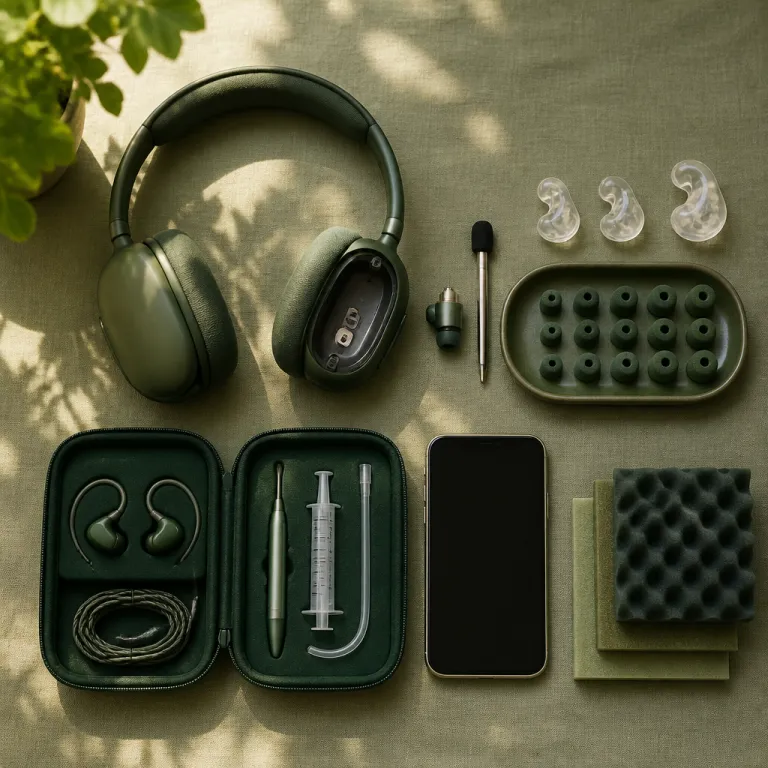
From generic noise canceling to headphones personalized to your ears
Personalized noise cancelling headphones are shifting the focus from raw decibel reduction to precise fit and tailored sound. Instead of relying on a single active noise profile, the best modern headphones now adapt to your ear shape, your daily environments, and even how your jaw moves when you talk or chew. For a remote worker who spends hours in calls and open offices, that shift from generic noise canceling to headphones personalized for your anatomy is the difference between tolerable background hum and real silence.
Traditional active noise systems use external and internal microphones to sample noise, then invert that sound with an opposite waveform to cancel it. This active noise cancellation works well for low frequency rumble, but generic tuning often leaves leaks around glasses arms, small ears, or unusual ear canal angles. You hear it as that faint hiss on a plane or the colleague’s voice that still cuts through, even when the product box promises class leading noise cancelling performance based on internal manufacturer testing.
Personalized noise cancelling headphones attack this problem at the ear canal itself, not just at the driver. Models like Bose QuietComfort Ultra, Sony WH 1000XM5, and AirPods Pro (2nd generation) already run fit tests that measure frequency response changes as the earbuds or ear headphones seal your ear. The app then adjusts the audio curve and active noise filters so the immersive sound you hear is tuned to your own frequency response profile, not an imaginary average listener. Bose and Sony perform this calibration locally on the headset and companion app, while Apple’s Ear Tip Fit Test and Personalized Spatial Audio are processed on device within the iOS ecosystem rather than in the cloud, according to each brand’s published support documentation.
For you as a buyer, the first filter is still boring but essential: price, comfort, and battery life. A pair that costs less but delivers only 20 hours battery with noise cancellation on might fail you mid workday, while a slightly higher price model with 30 hours or more can stay powered through two full office days. When you add wireless convenience, advanced Bluetooth stability, and reliable USB charging, the value equation becomes less about the sticker price and more about how many uninterrupted hours of focus you actually gain.
Remote workers often juggle a laptop, a phone, and maybe a tablet, so multipoint pairing is no longer a luxury. The best wireless headphones and wireless earbuds now maintain two or three Bluetooth connections at once, letting you stay on a laptop call while still catching an urgent phone ring. With advanced Bluetooth chipsets, switching between devices feels instant, and you avoid the codec dropouts that plagued early wireless audio products.
Comfort is where personalization quietly wins over any spec sheet. Over ear headphones like the Bose QuietComfort line distribute weight across the headband and ear cushions, but clamp force and pad material decide whether you can wear them for four hours or eight hours straight. In ear earbuds promise lighter weight, yet a poorly shaped ear tip can create pressure points in the ear canal, so a model that scans your ear and suggests the right tip size in the app can literally change how long you stay in the zone.
How ear canal scanning and AI tuned ANC actually work
When brands talk about headphones that scan your ears, they are really talking about measuring how sound bounces inside your ear canal. The driver plays a test tone or sweep, microphones inside the earbuds record the reflections, and the app calculates a personalized frequency response curve. That curve tells the active noise engine where your ear amplifies or absorbs sound, so the headphones personalized to you can cancel noise more precisely with less hiss.
In practice, this means your personalized noise cancelling headphones will run short tests the first time you pair them. Some earbuds repeat this process periodically, especially when they detect the earbuds have shifted in your ear or when you change ear tips. The goal is to keep the seal and the active noise profile aligned, because even a millimeter of movement can change how much low frequency noise reaches your eardrum.
AI driven ANC goes a step further by classifying your environment in real time. On device processing listens to the incoming noise, tags it as office chatter, train rumble, street traffic, or home HVAC, then loads a matching active noise cancellation profile. Instead of one broadband filter, you get a set of targeted filters that treat airplane cabin noise differently from the sound of your neighbor’s lawn mower or your kids in the next room.
For remote workers, this scene aware behavior matters more than a marketing claim about 30 decibels of noise reduction. When your headphones learn your home office noise signature, they can automatically raise noise cancellation when the dishwasher starts and relax it when the room is quiet, preserving battery hours without you touching a button. In an open plan office, the same headphones can prioritize canceling mid frequency voices while letting keyboard clicks and your own speech stay more natural.
Battery technology quietly underpins all this intelligence, because constant scanning and adaptive filters draw power. Over ear headphones with large cells can still offer 30 to 40 hours battery with ANC on, while compact wireless earbuds might manage 6 to 8 hours per charge plus several full recharges from the charging box. When you compare products, look beyond the headline number and ask how many hours battery you get with both ANC and Bluetooth multipoint pairing active, since that is how you will actually use them. Also check whether the manufacturer’s rated playtime was measured with AAC, SBC, or a higher bitrate codec, because real world runtimes can drop when you enable premium Bluetooth audio modes.
Charging convenience also shapes daily usability more than most spec sheets admit. USB charging through USB C has become standard, but some cases still charge slowly, which punishes you if you forget to charge overnight. A fast charging box that gives you two hours of playback from a 10 minute charge can rescue a back to back meeting block, while true wireless earbuds without this feature may leave you scrambling for a backup pair.
To see how hybrid active noise systems and long battery life play out in a real world design, look at a detailed lab style test of hybrid active noise cancelling Bluetooth headphones. Measurements from reviewers such as RTINGS typically chart frequency response, noise reduction in dB across the spectrum, and battery drain with ANC on versus off. These controlled tests reveal how advertised hours battery compare with measured runtimes, and how frequency response tuning interacts with ANC strength. They also highlight whether the sound quality stays consistent as the battery drains, which is crucial if you rely on one pair for an entire workday.
Buying guide: choosing the best personalized ANC for remote work
Choosing personalized noise cancelling headphones for remote work starts with brutal honesty about your day. If you spend four to eight hours on video calls, microphone clarity and stable Bluetooth connections matter as much as pure noise cancellation. A pair that sounds lush for music but turns your voice into a muffled mess will hurt your credibility faster than any minor audio flaw on your colleagues’ side.
For over ear headphones, the Bose QuietComfort Ultra and Sony WH 1000XM5 remain reference points. Bose still leads in comfort and consistent active noise performance, especially for low frequency rumble in planes and buses. Sony counters with more granular app control, stronger customization of sound quality, and advanced Bluetooth options including multipoint pairing that lets you stay connected to both laptop and phone.
In the earbuds category, AirPods Pro (2nd generation), Bose QuietComfort Earbuds II, and Sony WF 1000XM5 all use some form of ear canal analysis. These wireless earbuds run fit tests, adjust their frequency response, and tweak ANC strength to match your ears, which is critical if one ear canal is slightly smaller or angled differently. When you read a user guide for these products, pay attention to how often they recommend running fit tests and whether the app supports multiple user profiles if you share the earbuds.
Remote workers should also weigh sweat and water resistance, even if they rarely hit the gym. A model with basic sweat water protection can survive summer commutes, quick walks between meetings, or accidental coffee splashes. Over ear headphones are usually less sweat resistant than in ear earbuds, so if you plan to stay active during breaks, a secondary pair of sport oriented wireless earbuds might be smarter than risking your main work headset.
Gaming and after hours use are another angle that many office professionals overlook. Some ANC models introduce latency that is fine for video calls but frustrating for games, where audio lag breaks immersion. If you game on the same laptop you use for work, consult a dedicated comparison of top noise canceling headphones for gaming to see which products balance low latency with strong noise cancellation. Look for measured latency figures below roughly 100 to 120 milliseconds for smoother lip sync in video and more responsive sound in fast paced titles.
Price still acts as the final tiebreaker, but it should be framed against your daily usage. If you wear headphones six hours a day, even a premium price spread over three years of use can be justified by better sound quality, more reliable Bluetooth, and fewer dropped calls. Cheaper models may look attractive, yet if their battery degrades quickly or their ANC fails to block office noise, the real cost is lost focus and extra fatigue.
When you compare spec sheets, ignore vague claims about immersive sound and focus on concrete metrics. Look for stated frequency response ranges, even if the exact response numbers are not perfectly flat, and check whether the app offers EQ to correct any tonal imbalances. Pay attention to whether the manufacturer mentions advanced Bluetooth codecs and multipoint pairing, because these details often predict how seamless the headphones will feel in your actual workflow.
| Model | Type | Measured ANC reduction* | Battery with ANC on* | Typical Bluetooth latency* |
|---|---|---|---|---|
| Bose QuietComfort Ultra | Over ear | ~20–25 dB (low frequency) | ~24–30 hours | ~180–220 ms |
| Sony WH 1000XM5 | Over ear | ~20–25 dB (low frequency) | ~30–35 hours | ~180–220 ms |
| AirPods Pro (2nd generation) | In ear | ~20 dB (low frequency) | ~6 hours (earbuds only) | ~140–180 ms |
| Bose QuietComfort Earbuds II | In ear | ~20 dB (low frequency) | ~6 hours (earbuds only) | ~180–220 ms |
| Sony WF 1000XM5 | In ear | ~20 dB (low frequency) | ~7–8 hours (earbuds only) | ~180–220 ms |
*Figures are approximate and based on a mix of manufacturer specifications and independent lab style tests from reviewers such as RTINGS; exact results vary by volume level, codec, and test method.
Smarter ANC, privacy trade offs, and when not to cancel the world
The next wave of personalized noise cancelling headphones will not just scan your ears once: they will keep listening and adapting. Continuous ear canal monitoring can detect when the earbuds loosen during a call, then quietly adjust the active noise filters and audio levels to maintain consistent sound. For you, that means fewer moments where a colleague’s voice suddenly leaks in because you smiled or shifted in your chair.
All this intelligence runs through an app, and that raises real privacy questions. Ear canal scans, location tagged sound profiles, and behavioral patterns about when you stay in ANC versus transparency mode can all be sensitive biometric data. Before you accept every permission request, read the privacy section of the user guide and check whether the product processes data on device or sends it to the cloud.
Some brands now emphasize on device processing to keep your biometric audio data local. That means the AI models that classify office, street, or home scenes run directly on the headphones or earbuds, not on remote servers. For a remote worker handling confidential calls, this distinction matters as much as any technical spec about frequency response or immersive sound staging.
There is also a human factor that no algorithm can fully solve. Total noise cancellation can be mentally draining over long stretches, especially if you never let your ears reset with natural room sound. Smart ANC should encourage you to stay aware when needed, using transparency modes that let in voices while still softening harsh sound noise from HVAC systems or traffic.
In some situations, the best choice is not to cancel the world at all. Open ear designs and bone conduction models keep your ear canals unobstructed, trading isolation for awareness and comfort. If your workday includes frequent quick chats with colleagues or you walk busy streets, it is worth reading about open ear earbuds as the anti ANC option before committing to fully sealed ear headphones.
Charging habits and logistics also intersect with privacy and convenience. Many premium models offer free shipping and generous return windows, but you should still test how the charging box fits into your daily carry and whether USB charging ports on your desk or bag can keep up. A pair that needs a proprietary cable or awkward dock will be harder to keep ready than wireless earbuds that sip power from the same USB C charger as your laptop and phone.
Ultimately, the smartest ANC is the one that respects both your ears and your data. Personalized noise cancelling headphones that balance strong active noise performance, transparent privacy policies, and flexible modes for awareness will serve remote workers better than any brute force dB rating. What matters on the tarmac, in the office, and at your kitchen table is not the number on the box, but the silence you actually feel when you hit join meeting.
Key figures on personalized ANC and remote work listening
- In a survey by Microsoft on remote work audio (for example, the 2021 Work Trend Index), more than 50% of respondents reported wearing headphones for over 4 hours per workday, which makes comfort, battery endurance, and reliable noise cancellation critical for long term health and productivity. Exact percentages vary by region and job role, but the trend toward longer daily wear is consistent across editions of the report.
- Independent lab tests from RTINGS have measured top tier over ear ANC headphones such as the Sony WH 1000XM5 and Bose QuietComfort Ultra reducing low frequency airplane cabin noise by roughly 20 to 25 decibels, while midrange models often manage only 10 to 15 decibels, which explains why premium price products feel dramatically quieter in real travel scenarios.
- Battery benchmarks from multiple reviewers, including RTINGS and major tech publications, show that many flagship over ear ANC headphones now exceed 30 hours of continuous playback with ANC enabled, while leading wireless earbuds typically deliver between 6 and 8 hours per charge plus two to three full recharges from the case, giving remote workers a full week of calls from a single full charge cycle under typical office listening volumes.
- Market analyses from firms such as IDC and Canalys indicate that Bluetooth headphones and wireless earbuds with active noise cancellation account for a growing majority of premium audio sales, reflecting a clear shift away from wired models as remote and hybrid work patterns normalize. Recent reports attribute much of this growth to demand for work from home gear and travel friendly ANC headsets.
- Latency measurements in gaming and video applications often show that some ANC headphones exceed 200 milliseconds of delay over standard Bluetooth, while low latency tuned models can stay closer to 100 milliseconds, which is the threshold where most users stop noticing lip sync issues in video calls. Exact figures depend on codec, platform, and test method, so always check the fine print in any latency benchmark.
References
- RTINGS – detailed measurements of ANC performance, frequency response, latency, and battery life for major headphone models, including Sony WH 1000XM5, Bose QuietComfort Ultra, and leading true wireless earbuds. The figures cited here are approximate summaries of those publicly available test results.
- Microsoft – Work Trend Index and related reports on remote work habits, including audio and video conferencing usage and the prevalence of long duration headphone wear. The statistics mentioned above are drawn from aggregated findings across recent editions of these reports.
- IDC and Canalys – market research on global headphone and wireless earbuds shipments, with a focus on ANC adoption trends and the growth of Bluetooth audio in the premium segment. The market share comments in this article reflect the broad direction of those published summaries rather than a single quarter’s data.