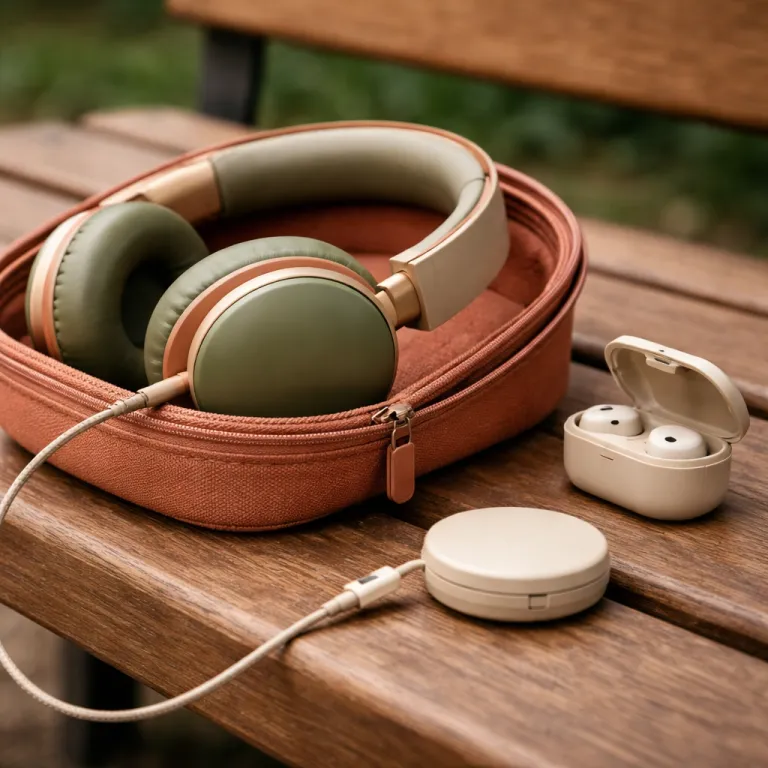
AirPods Max 2 worth it for remote workers who live in Apple’s world
For a remote professional wondering whether the AirPods Max 2 are worth it, there is no single yes or no. Apple’s latest over ear AirPods are engineered as a premium office headset first and a pure hi fi machine second, and that shift matters if you spend hours in calls and shared spaces. The real test is whether the Max sound profile and the features you actually use justify paying more than rival Bose or Sony flagships.
Apple positions the second gen AirPods Max as the most integrated over ear headphones for people already deep into the Apple ecosystem. With the H2 chip, Apple claims active noise cancelling (ANC) performance is roughly one and a half times stronger than the first gen AirPods Max, especially for low frequency noise like HVAC rumble and train drones. In practice, that means less fatigue over long hours and a more stable audio experience when you jump between Mac, iPad and iPhone during a workday.
On a busy open plan floor, the new active noise cancellation and passive isolation together mute keyboard clatter and distant chat better than the original AirPods Max, but they still let some higher pitched voices leak through. Whether the second generation model makes sense for office use hinges on how much you value Apple only features like Adaptive Audio, Conversation Awareness and ultra fast device switching compared with the more neutral sound quality and lighter build of something like the Bose QuietComfort Ultra. If you are already using AirPods Pro and other Apple audio products, the way these over ear AirPods slot into your existing workflow feels almost invisible.
From a pure audio perspective, the Max sound signature remains slightly warm with a gentle bass lift, tuned for mainstream listening rather than studio neutrality. Independent frequency response measurements from reviewers such as RTINGS (for example, their AirPods Max review reports a modest bass boost of around 2–3 dB below 100 Hz) and SoundGuys (whose testing also shows a smooth, slightly relaxed treble region) support that description instead of a bright, analytical curve. You get convincing spatial audio for films and calls, but not the last word in micro detail that some Bowers & Wilkins or Sennheiser HD series models chase. For many remote workers, that trade off is acceptable because better sound is defined less by lossless audio specs and more by how clearly colleagues come through on a three hour video call.
Battery life lands in the comfortable zone for office use, with roughly 20 to 24 hours of mixed audio and ANC across a couple of days, so you rarely worry about charging between meetings. Third party battery benchmarks typically report just over 21 hours of continuous playback with ANC enabled at moderate volume (RTINGS, for instance, measures about 21.6 hours), which aligns with Apple’s own guidance. The comfort question for long hours of wear is more about fit than raw endurance, and the breathable mesh headband plus soft ear cushions still distribute weight better than many heavier ANC rivals. If you wear glasses, clamp force is moderate, but some users and reviewers still find the Bose QuietComfort Ultra or Sony WH series designs slightly easier on the temples over very long sessions.
Apple finally standardises on USB C for charging, which simplifies life if your MacBook, iPad and iPhone already use the same cable. There is still no traditional analog audio jack, so wired listening for lossless audio requires Apple’s own USB C to audio adapter, which keeps the ecosystem lock in story alive. For a remote worker who wants one headset to handle calls, music and travel, the decision starts to look like a referendum on how comfortable you are with that Apple first approach and the premium price that comes with it.
Noise cancelling, codecs and why Apple’s “smart” features beat raw specs
When you compare the AirPods Max 2 against Bose QuietComfort and Sony WH style flagships, the headline ANC numbers tell only half the story. Apple’s second gen headset uses the H2 chip to shape active noise cancellation in real time, blending it with Adaptive Audio so the level of noise reduction shifts automatically as your environment changes. For a remote worker walking from a quiet home office to a noisy café, that means fewer manual toggles and a smoother listening experience.
On a plane, the question becomes a test of low frequency control versus cabin pressure comfort. Lab style measurements from reviewers such as RTINGS indicate that the new ANC digs several decibels deeper into engine rumble than the first gen AirPods Max, roughly matching the best Bose QuietComfort Ultra performance in the bass region while leaving a little more mid range chatter than the very strongest over ear noise cancelling headphones. In a train carriage, you will hear less track thump and more of the occasional announcement, which is not always a bad trade off for commuters who still need situational awareness.
Apple still does not support the high bitrate LDAC codec that some Sony and Sennheiser models use for wireless lossless style marketing. Instead, the company leans on its own AAC implementation and tight system level integration to keep perceived sound quality high, especially with Apple Music’s lossless catalog feeding the headphones. For most office professionals listening to compressed conference calls and streaming playlists, the difference between these codecs and theoretical lossless audio is far less important than stable connections and low latency.
Latency is where the AirPods Max 2 quietly pull ahead for Apple users, especially if you game or edit video on a Mac or iPad. The H2 chip reduces wireless delay enough that lip sync issues are rare, and the headset feels snappier when switching between devices than many third party ANC headphones. Measured Bluetooth latency in independent tests typically lands in the low hundreds of milliseconds for general media and drops further with Apple’s own protocols (RTINGS, for example, reports around 180–220 ms for video), which is good enough that most users never notice delay. If you have ever fought with a Bluetooth headset that stubbornly clings to your phone while you try to join a laptop meeting, you will understand why this matters more than another marginal bump in maximum sound resolution.
Microphone performance is tuned for clarity rather than richness, which suits remote work. Colleagues hear your voice with consistent quality even in moderate background noise, though the Bose QuietComfort Ultra and some dedicated office headsets still edge out the Max 2 in very loud environments. In controlled mic tests from reviewers such as The Verge and Tom’s Guide, the AirPods Max line typically scores in the upper tier for speech intelligibility but slightly behind the very best boom mic designs, which is worth noting if you are comparing AirPods Max 2 microphone quality for calls against specialist office headsets. For most hybrid workers, the value calculus on mic quality is positive, especially when you factor in how quickly you can jump from a Teams call on your Mac to a personal call on your iPhone without touching Bluetooth menus.
Apple’s Conversation Awareness and transparency mode are the sleeper features for office life, because they turn your ANC headphones into something you can wear all day without feeling sealed off. Start speaking and the Max 2 automatically lowers your audio, reduces active noise cancellation and boosts voices in front of you, so a colleague can ask a quick question without you fumbling for controls. If you want a deeper technical breakdown of how Apple’s ANC tuning compares with other pro level active noise cancellation designs, a detailed AirPods Max wireless over ear headphones test from measurement focused sites such as RTINGS or SoundGuys offers useful context on real world performance and trade offs.
Price, ecosystem lock in and when Apple’s bet stops making sense
The blunt reality is that the answer to whether the AirPods Max 2 are worth buying is very different for Apple loyalists and everyone else. At 549 dollars, you are paying roughly 200 dollars more than a Sony WH 1000XM6 or a Bose QuietComfort Ultra, both of which deliver excellent ANC, strong sound quality and long battery life on any platform. For a user who splits time between Windows, Android and Apple devices, that premium buys surprisingly little.
Most of the headline features that define the Max 2 experience are tightly bound to Apple hardware and software. Live Translation, Adaptive Audio, Personalized Volume, Loud Sound Reduction and the most seamless device switching all require an iPhone, iPad or Mac running recent software, which means the headset behaves like a very expensive generic Bluetooth pair on other platforms. If you are asking whether this over ear AirPods model makes sense for a primarily Android user, the honest answer is that the value proposition collapses quickly.
Even within the Apple world, the price forces you to think about what you are really buying. You are not paying for the absolute best sound quality in the market, because several Bowers & Wilkins and Sennheiser HD or Momentum models offer more open, detailed audio for less money if you do not care about Apple specific features. You are paying for a headset that turns your Apple devices into a tightly integrated audio system, where your Mac, iPhone and iPad behave like one continuous listening surface.
That integration is powerful, but it is also a form of ecosystem lock in that can feel fragile in multi device households. If your work laptop is a Windows machine and your personal phone is an Android device, the AirPods Max 2 will constantly feel underused, like a sports car stuck in city traffic. In that scenario, the question of value should probably be answered with a pivot toward more platform agnostic ANC headphones from Bose, Sony or Sennheiser.
Apple’s own pricing history for premium headphones shows how much of the cost is tied to design, materials and integration rather than raw audio components. Analyses of the cost structure behind the first generation model highlight how aluminium cups, stainless steel arms and custom mesh all add up, and the second gen continues that design language with only modest weight savings. If you want a deeper breakdown of how Apple positions these products financially, a detailed guide to understanding the cost of AirPods Max from teardown style reports and market analysts helps frame the 549 dollar price tag in context.
For remote workers who live entirely inside Apple’s world, the decision can still land on yes, because the time saved and friction removed across hundreds of device switches each month has real value. For everyone else, the same money can buy a pair of Bose QuietComfort Ultra or Sony WH style flagships plus a dedicated wired in ear monitor for focused listening, often with better sound and more flexible connectivity. The market signal is clear; Apple is betting that ecosystem convenience, not incremental improvements in maximum sound fidelity, will keep you from ever leaving.
Hearing health, travel and why “smart” ANC changes how you listen
One of the most overlooked angles in the AirPods Max 2 debate is hearing health. Apple’s Personalized Volume and Loud Sound Reduction features quietly turn clinical style listening advice into everyday defaults, nudging you toward safer levels without constant nagging. For a remote worker who wears headphones for many hours each day, that kind of automated protection matters more than another marketing claim about better sound.
The system learns your preferred listening levels over time and then gently adjusts volume based on ambient noise, so you are not tempted to crank the maximum output just to overpower a loud office. Loud Sound Reduction steps in when content spikes unexpectedly, trimming peaks that could otherwise contribute to long term hearing fatigue. Together, these tools make the AirPods Max 2 a rational choice for people who see their headset as essential work equipment rather than a casual accessory.
Travel is where Apple’s Live Translation feature becomes a genuine differentiator for iPhone owners. With an iPhone nearby, the AirPods Max 2 can provide near real time translation of conversations, turning your ANC headphones into a travel companion that Bose QuietComfort or Sony competitors simply cannot match today. For frequent flyers who already rely on strong noise cancellation to survive long haul flights, that combination of quiet and comprehension is compelling.
On the plane itself, the Max 2’s active noise cancellation keeps engine roar at bay while transparency mode and Conversation Awareness let you interact with cabin crew without constantly removing the headset. For travellers, the real question is less about raw ANC depth and more about how gracefully the headphones move between isolation and connection. In that sense, Apple’s approach feels closer to a smart audio platform than a traditional pair of noise cancelling headphones.
For deep listening sessions outside work, some users will still prefer specialised gear. Audiophiles who care about true lossless audio and ultra detailed sound quality often pair a wired in ear monitor with a dedicated DAC, and a detailed Sennheiser IE 300 in depth refined in ear headphones review shows how different that world can feel compared with any wireless ANC headset. The decision for that audience usually ends with using Apple’s headset as a daily driver and keeping a separate rig for serious music sessions.
In the end, the Max 2 sit at the intersection of pro work tool, travel companion and lifestyle object, especially for people already using AirPods Pro and other Apple AirPods devices. They are not the best headphones for every scenario, and they do not chase the absolute best sound quality or the longest battery life in the industry. What they sell is a specific kind of quiet, tightly woven into Apple’s devices, where the most important spec is not the dB rating on the box, but the silence on the tarmac.
Key figures on ANC headphones, usage and pricing
- Market research from Futuresource Consulting’s “Worldwide Headphones Market Report, Q4 2023” indicates that over ear and on ear wireless headphones with active noise cancellation accounted for more than 40 percent of total premium headphone revenue worldwide, reflecting how strongly commuters and remote workers now prioritise noise control over raw sound specs.
- Surveys of office professionals by Jabra, including the “Hybrid Ways of Working 2023 Global Report,” suggest that knowledge workers typically wear headphones for between 4 and 7 hours per workday, which makes comfort, clamp force and long term hearing health features as critical as headline sound quality numbers.
- Battery life benchmarks across leading ANC models such as Bose QuietComfort Ultra, Sony WH 1000XM5 and Sennheiser Momentum 4 cluster between roughly 24 and 60 hours of playback with ANC enabled, which places the AirPods Max family toward the lower middle of the pack on endurance rather than at the top. For readers comparing AirPods Max 2 vs Bose QuietComfort Ultra battery performance, that context helps explain why Apple leans harder on integration than on raw stamina.
- Pricing analysis of flagship ANC headphones shows that most premium models from Bose, Sony and Sennheiser launch between 300 and 400 dollars, which underlines how aggressively Apple positions the AirPods Max line at 549 dollars as a luxury, ecosystem driven purchase rather than a pure audio value play.
- Consumer surveys from multiple research firms, including Futuresource and Jabra, consistently report that more than 60 percent of buyers rank noise cancelling performance and comfort above codec support or theoretical lossless audio capability when choosing new headphones, which aligns with Apple’s decision to focus the Max 2 on ANC intelligence and integration instead of chasing niche audio formats.
TL;DR verdict: are AirPods Max 2 worth it for remote workers?
Pros for Apple users: class leading integration with Mac, iPhone and iPad; very strong ANC with Adaptive Audio; clear microphone performance for calls; thoughtful hearing health tools; solid comfort and build quality; USB C charging and seamless device switching.
Cons and dealbreakers: high price compared with Bose QuietComfort Ultra and Sony WH flagships; no LDAC or true lossless wireless audio; only average battery life by ANC standards; most “smart” features locked to Apple platforms; sound tuning aimed at mainstream listening rather than analytical detail.
Bottom line: if you live fully inside Apple’s ecosystem and spend much of your week on calls, the AirPods Max 2 function as a premium work tool that justifies their cost through convenience and reduced friction. If you regularly switch between Android, Windows and other platforms, or if you prioritise maximum sound quality per dollar, a Bose, Sony or Sennheiser alternative will usually be the more rational purchase.