
Summary
Editor's rating
Is it worth the money? Depends what you care about
Simple look, light build… maybe a bit too light
Battery life: honest 24 hours that actually feels enough
Where these headphones really shine: all‑day comfort
Durability and case: fine for bags, not for abuse
Sound and noise cancelling: good, but not mind‑blowing
What you actually get with the QuietComfort SC
Pros
- Excellent comfort for long sessions thanks to light weight and soft ear pads
- Good overall sound quality with simple EQ control in the Bose app
- Solid battery life around 24 hours with handy fast charge and multipoint Bluetooth
Cons
- Build feels a bit plasticky and the soft case doesn’t offer strong protection
- Noise cancelling is good but not clearly ahead of main competitors
- Fewer features than similarly priced models from other brands (e.g. Sony XM4/XM5)

Specifications
View full product page →| Brand | Bose |
Comfort-first headphones that actually earn their name
I’ve been using the Bose QuietComfort SC for a few weeks now, mostly for working from home, commuting, and a couple of short flights. I’m not an audiophile, I just want something that sounds good, kills background noise, and doesn’t crush my head after an hour. On paper these tick all the boxes: 24‑hour battery, Bluetooth 5.1, noise cancelling, soft case, and the usual Bose reputation. In practice, it’s mostly accurate, but there are a few things you should know before throwing money at them.
The first clear point: comfort is the main selling point. These are the kind of headphones you forget you’re wearing. The clamping force is light, the cups are soft, and the weight is low, which is great for long sessions at a desk or on a plane. If you’ve ever had a headset that gave you a headache after two hours, this is the opposite experience. I’ve done full workdays (6–7 hours on and off) without feeling the need to rip them off.
On the other hand, if you’re looking for crazy features and deep customization, this is not the most advanced pair around. Sony’s WH‑1000XM4 and XM5 clearly offer more software tricks and a more premium feeling build. The Bose SC feels a bit more basic: you get noise cancelling modes, EQ in the app, multipoint Bluetooth, and that’s about it. No fancy 3D sound, no auto‑pause when you take them off, nothing flashy.
Overall, after living with them daily, my feeling is simple: they do their job well, especially for comfort and general use. The sound is good enough for most people, the noise cancelling is strong in typical travel situations, and the battery life matches what’s promised. But if you’re picky about materials or want the most tech for your money, there are better options. These are more like a reliable, comfy daily pair rather than a feature-packed toy.
Is it worth the money? Depends what you care about
In terms of value, the QuietComfort SC sits in that awkward zone where it’s not cheap, but not the absolute top tier either. Depending on sales (Black Friday, etc.), you can sometimes get them at a pretty fair price, and at those times they make a lot more sense. At full retail, you’re close to the Sony WH‑1000XM4 or even some discounted XM5 prices, and that’s where the comparison hurts a bit. Sony generally offers more features, a harder case, and a more premium feel for a similar amount of money.
Where Bose makes its case is comfort and simplicity. If you mainly want something to wear all day at work, on flights, or while studying, and you care more about comfort + decent sound + reliable ANC than having every feature under the sun, then the price is easier to swallow. You’re basically paying for a very comfortable daily tool that you don’t have to think about much. The noise cancelling, while not magical, is still strong enough to justify spending more than on basic Bluetooth headphones.
If you’re on a tighter budget and don’t need top‑tier ANC, there are mid‑range models that get the job done for less, especially from brands like Anker (Soundcore) or some older models from other brands. They won’t be as comfortable or as polished, but they’ll cost a lot less. On the other side, if you want the best ANC and the most features, you might be happier paying a bit more for Sony or the higher Bose models rather than this SC variant, which feels a bit stripped down in comparison.
So, is it good value? I’d say it’s fair value if you find it at a discount or if comfort is your top priority. At full price, it’s still a good product, but you’re paying partly for the brand and comfort rather than raw specs. If you’re the kind of person who wears headphones half the day, that trade‑off can be worth it. If you only use them occasionally and love gadgets, you might feel you could have gotten more features for your money elsewhere.
Simple look, light build… maybe a bit too light
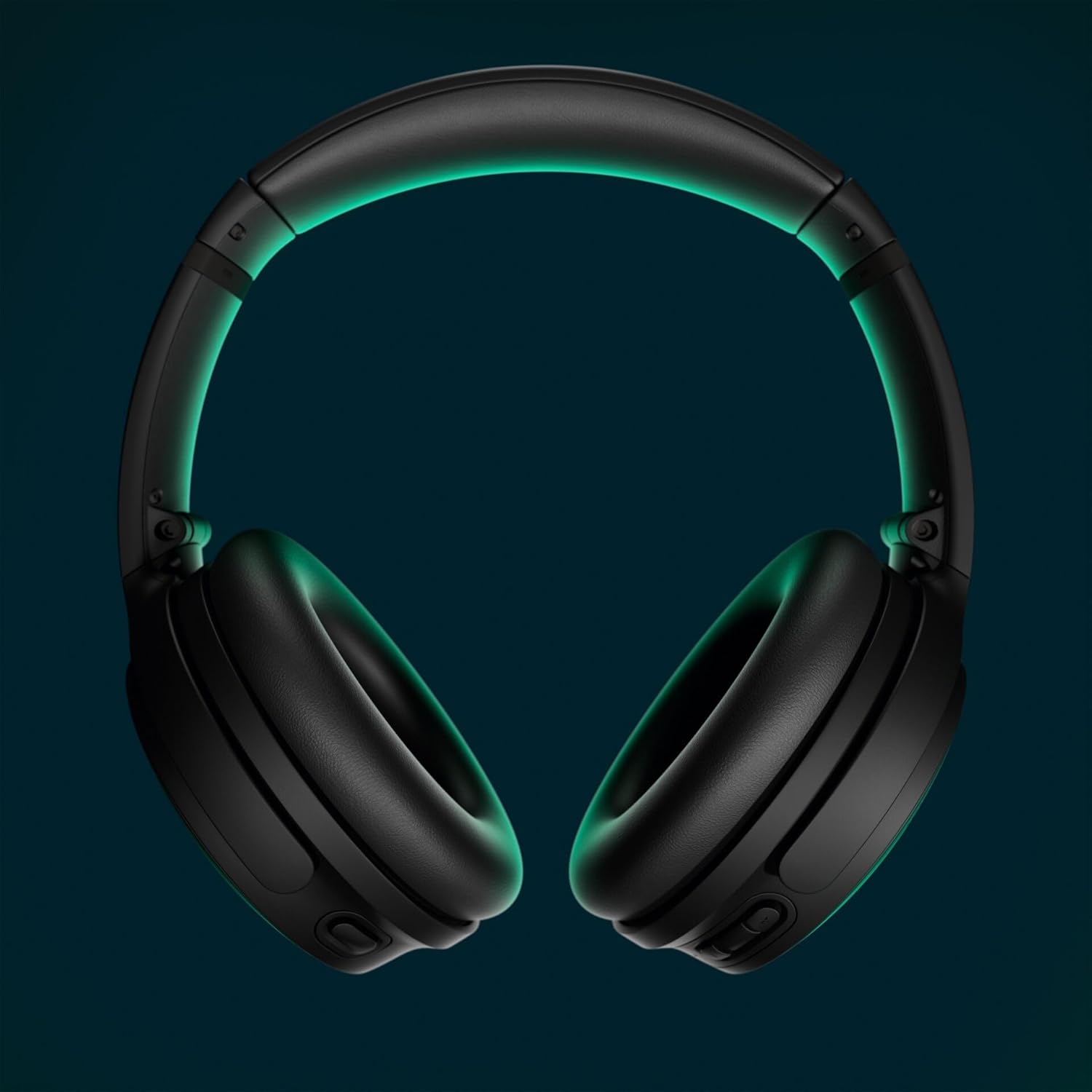
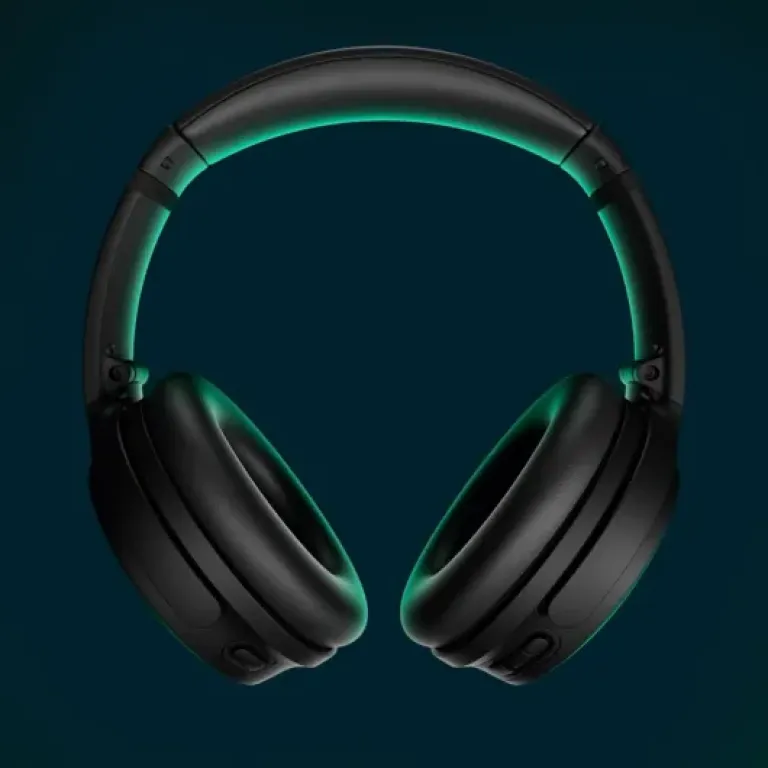
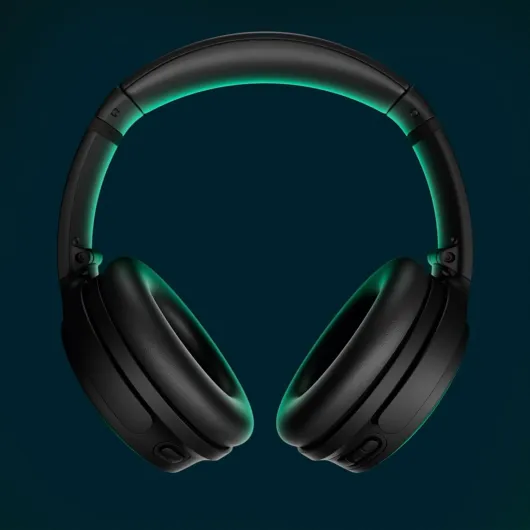
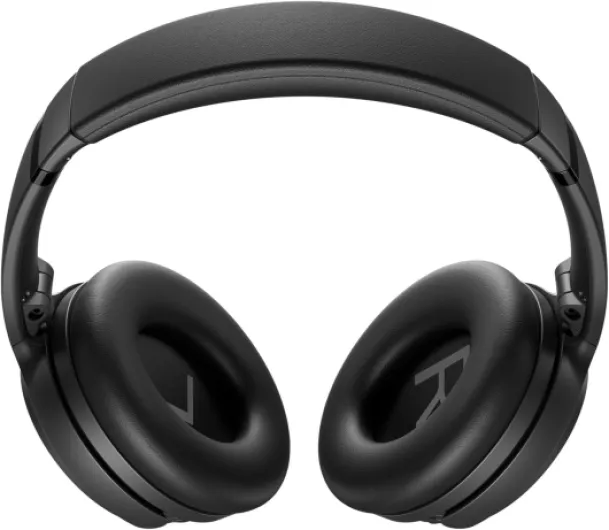
Design-wise, the QuietComfort SC goes for the classic Bose approach: black, discreet, nothing flashy. If you want something that looks loud or super techy, this isn’t it. Personally, I like that. They don’t scream “expensive headphones” on public transport, and they blend in fine at the office. The overall size is reasonable, not giant DJ cans, but still big enough to fully cover your ears. They fold flat and also fold inward to fit in the case, which helps if you’re packing them in a backpack or cabin luggage.
The flip side is the build feels lighter and a bit more plasticky than some competitors. When I compared them to a friend’s Sony WH‑1000XM4, the Sony clearly felt more premium in the hand: thicker plastics, more weight, and a harder, more protective case. The Bose doesn’t feel like it’s going to break instantly, but the first impression is “light and a bit cheap” rather than solid and rugged. The upside of that is comfort, but you do get the feeling you should avoid dropping them or twisting them too much.
Controls are fairly straightforward. You get a mix of buttons and touch, with the main actions being volume, play/pause, ANC mode switching, and Bluetooth. There’s no crazy touch gesture system to learn, which I actually like. The buttons are easy enough to find by feel after a day or two. The only minor annoyance for me is that the layout isn’t totally intuitive right out of the box, so you’ll probably press the wrong thing once or twice until your fingers learn where everything is.
In terms of design, I’d sum it up like this: clean, low‑key, comfort-focused, but not premium‑feeling for the price. It looks fine on your head, doesn’t draw attention, and fits easily into a bag. If you’re the type who cares a lot about materials and that solid “click” feeling, you might prefer Sony or higher‑end models. If you just want something that looks normal and doesn’t feel like a brick on your skull, this design does the job.
Battery life: honest 24 hours that actually feels enough
Bose claims up to 24 hours of battery life, and that lines up with what I’ve seen. With ANC on most of the time and volume around 50–60%, I got roughly a week of normal use (2–3 hours a day) before needing to plug them in. I didn’t count every minute, but I never had that “oh no, they’re dead again” feeling. For my use, charging once a week is fine. If you’re a heavy user doing 6–8 hours a day, you’ll probably be charging every 2–3 days, which is still acceptable.
The fast charge is handy: about 15 minutes of charge gives you roughly 2.5 hours of listening. I tested this once when the battery was nearly empty before a meeting. Plugged them in while I made coffee, and they had enough juice for a long call plus some music afterward. It’s not the fastest on the market, but it’s practical. Full charge takes around 2.5 hours, which is normal. You can also use the included cable when the battery is flat, which is a nice backup if you’re mid‑flight or forgot to charge the night before.
One thing I liked is the battery percentage and settings in the Bose app. You can quickly check how much is left instead of guessing from a vague LED. The app also pushes firmware updates, which can sometimes improve stability or features. Not the most exciting thing, but better than nothing. I didn’t notice any weird battery drain in standby either; they seem to manage power pretty well when not in use.
So, in day‑to‑day life, the battery is basically a non‑issue. It’s not the longest in the world (some models go to 30+ hours), but 24 hours is enough for most people, especially with fast charging. If you travel a lot, you can easily do a long‑haul flight plus airport time without worrying. If you’re just using them at home or the office, you’ll probably forget when you last charged them. For me, that’s good enough.

Where these headphones really shine: all‑day comfort
Comfort is clearly the strong point of the QuietComfort SC. The ear pads are soft and the clamping force is pretty light, so you don’t get that squeezing sensation that some over‑ear models have. I’ve worn them for 3–4 hours straight while working, with only short breaks, and I didn’t get hot spots on the top of my head or sore ears. Compared to my older, cheaper over‑ears, the difference is big: with those, I usually had to take them off after 90 minutes because my ears felt crushed.
The weight is also low, around 240 grams, which helps a lot. When you compare to something like the Sony XM4, they’re in the same general range, but the Bose feels lighter on the head thanks to how the weight is distributed. The headband padding is decent, nothing crazy thick, but enough that you don’t feel the plastic bar digging into your skull. The ear cups are deep enough that my ears don’t touch the drivers, which is a huge plus. Some people with larger ears complain about shallow cups on other brands; with these, that wasn’t an issue for me.
On a 2‑hour bus ride, I had them on the whole time with ANC active, and I honestly kind of forgot they were there. No pressure around the jaw, no heat build‑up that made me want to rip them off. They do get a bit warm after a while, like any closed over‑ear headset, but nothing out of the ordinary. You could definitely wear them on a long‑haul flight and not suffer. One Amazon reviewer even said they’re the most comfortable pair they’ve used, and I can see why. If you have a sensitive head or wear glasses, this kind of light clamp is a big relief.
If I had to nitpick, the only small thing is that because the clamp is light, they’re not the most stable if you move your head a lot. I wouldn’t use them for the gym or running; they feel like they could shift or slide if you start bouncing around. But for desk work, travel, or chilling on the sofa, they’re excellent. So in short: comfort is a solid 5/5 for me. If comfort is your top priority, these are a strong candidate.
Durability and case: fine for bags, not for abuse
On durability, I’d say the QuietComfort SC is okay but not tank‑like. The headset is made mostly of plastic, which keeps it light but doesn’t give that solid, indestructible feeling. The hinges and folding parts work smoothly, but when you twist them a bit in your hands, you can feel some flex. I haven’t had anything break, but I’m also not throwing them around. If you’re rough with your gear, this might not be the best match. If you’re a bit careful and keep them in the case when traveling, they should hold up fine.
The soft carry case is another point. It’s more like a dense‑foam pouch with a zipper than a hard shell. It protects against scratches, dust, and light pressure in a backpack, but I wouldn’t trust it if you tend to sit on your bag or cram it under heavy luggage. Inside, there’s a small pocket for cables, which is handy to avoid losing the audio cable and USB lead. For everyday commuting or office use, the case is enough. For heavy travel or if you’re clumsy, a harder case would feel safer.
There’s no water resistance rating, so I treated them like something that does not like rain. A bit of light drizzle probably won’t kill them, but I wouldn’t risk wearing them in a heavy downpour or sweating on them in the gym. That’s clearly not the target use anyway. The ear pads and headband padding seem well attached and haven’t shown signs of peeling or cracking yet, but only long‑term use will tell. Bose usually sells replacement pads if they wear out, which is good for extending their life.
Given the price, I would have liked slightly tougher materials or a sturdier case, to be honest. They’re not fragile toys, but they don’t give the same confidence as some rivals. So my take: durability is decent if you’re not careless. Treat them like a mid‑range electronic device, not like a rugged outdoor tool, and they should last several years. If you know you tend to drop or toss your stuff around, maybe look at something more robust.
Sound and noise cancelling: good, but not mind‑blowing
Let’s talk sound first. The overall audio quality is warm, clean, and pretty easy to listen to. There’s enough bass to enjoy pop, hip‑hop, or electronic music, but it doesn’t feel like a subwoofer strapped to your head. Mids are clear enough for vocals and podcasts, and the treble isn’t harsh. Out of the box, they lean slightly warm, so if you like more sparkle or brightness, you’ll probably want to tweak the EQ in the Bose app. The EQ is simple (bass, mids, treble sliders), but it does the job. I bumped the treble a bit and dropped the bass slightly and was happy with the result.
Compared to something like Sony’s WH‑1000XM4, I’d say the Bose sound is competitive but not clearly better. Some tracks sound nicer on the Bose, others on the Sony. One Amazon reviewer even said the Bose reminded them of their open‑back Sennheiser headphones, which I kind of get: they’re not super bass‑heavy, they’re more balanced. If you’re just streaming Spotify, YouTube, or Netflix, they’re more than good enough. If you’re a hardcore audiophile, you’re not looking at this model anyway.
Noise cancelling is where expectations need to be realistic. It’s very effective for steady noises like bus engines, air conditioning, plane hum, and background chatter. On my bus rides, it cut most of the low‑frequency rumble and made the ride much less tiring. On a flight, it took away a good chunk of the engine noise, enough that I could listen at a lower volume. But it’s not magic: sudden loud sounds, people talking right next to you, or clattering dishes in a kitchen still come through. It’s similar to Sony XM4 level: in some situations you’re impressed, in others you barely notice it’s on.
Call quality is decent. The microphones pick up your voice clearly and do a fair job of reducing background noise. In a quiet room, calls sound clean. On a street or bus, people can still hear you, but they’ll hear some of the environment too. It’s not a professional call center headset, but for normal phone calls or Teams meetings, it’s fine. Overall, I’d say sound is solid, ANC is good but not magic, and calls are perfectly usable. Nothing revolutionary, but it gets the work done for daily use.
What you actually get with the QuietComfort SC
The Bose QuietComfort SC is basically a slightly simplified version of the usual QuietComfort line. It’s an over‑ear wireless Bluetooth headset with active noise cancelling, a soft carry case, and a detachable audio cable with an in‑line mic. No headphone jack on the headset itself, so you either use Bluetooth or the supplied cable via whatever device or adapter you have. They’re clearly aimed at adults who commute, travel, or work in noisy environments, not really for sports or running since there’s no water resistance.
On the spec sheet, it’s pretty standard for this price range: Bluetooth 5.1, about 24 hours of battery life, active noise cancelling, and adjustable EQ in the Bose app. The frequency range is the usual 20 Hz – 20 kHz, 32 ohms impedance, so nothing exotic. There’s multipoint Bluetooth, meaning you can stay connected to two devices at once (for example, laptop + phone), which is honestly one of the most useful features day to day. I’ve been switching from Zoom calls on my laptop to music on my phone without having to reconnect each time.
In the box, you get the headphones, a soft carry case, a detachable audio cable with microphone, and a USB cable for charging. No wall charger, which is standard now but still a bit annoying if you don’t already have one lying around. The case is more of a minimalist pouch than a rugged shell, so it’s more for keeping things tidy in a bag than fully protecting from impacts. Amazon reviews sit around 4.6/5 with a few thousand ratings, which matches pretty well with my experience: mostly positive, a few gripes here and there.
So, in simple terms: this is a straightforward, travel‑friendly Bluetooth headset with solid basics, not a gadget packed with gimmicks. If you want something that just works, with decent controls and a good app, it fits the bill. If you like having 20 different ANC levels and head‑tracking and all that, you’ll probably feel it’s a bit barebones.
Pros
- Excellent comfort for long sessions thanks to light weight and soft ear pads
- Good overall sound quality with simple EQ control in the Bose app
- Solid battery life around 24 hours with handy fast charge and multipoint Bluetooth
Cons
- Build feels a bit plasticky and the soft case doesn’t offer strong protection
- Noise cancelling is good but not clearly ahead of main competitors
- Fewer features than similarly priced models from other brands (e.g. Sony XM4/XM5)
Conclusion
Editor's rating
After using the Bose QuietComfort SC as my main headphones for work, commuting, and some travel, my overall opinion is pretty clear: they’re very comfortable, sound good, and handle noise well enough for most people, but they’re not the toughest or most feature‑packed option in this price range. If you care a lot about comfort and just want something that works without fuss, they fit that role nicely. You put them on, the outside world calms down, and you can focus on your music or tasks without your head getting sore.
Where they fall a bit short is in build feel and features compared to some direct competitors. The plastics and soft case don’t feel as tough as Sony’s WH‑1000XM4, and the app doesn’t offer as many tricks. The ANC is good but not magic, and the design is very plain. That said, battery life is honest, multipoint Bluetooth is genuinely useful, and the sound quality is more than enough for streaming and everyday listening. If you’re someone who wears headphones for hours on end, travels often, and values comfort over flashy extras, these are a solid pick. If you want maximum features, premium materials, or the absolute strongest ANC for the price, you might be better off looking at Sony or higher‑end Bose models.