
Summary
Editor's rating
Good value if you know what you’re trading off
Looks more expensive than it is
Battery life is the main selling point
CloudComfort is mostly real, with one small catch
Build seems solid, but long-term is still a question mark
Sound quality and ANC: good, but not Bose or Sony level
What you actually get for your money
Pros
- Very long battery life (realistically close to the claimed 65–100 hours range)
- Comfortable pads and headband for multi-hour use, even with glasses
- Stable Bluetooth 6.1 with reliable multipoint and LDAC support on Android
Cons
- ANC and sound quality are good but clearly below top Bose/Sony models
- No 3.5 mm jack or wired mode at all, limiting use on planes or with DACs
- No wear detection (no auto-pause) and average transparency mode

Specifications
View full product page →| Brand | Baseus |
Serious spec sheet, mid-range price
I’ve been using the Baseus Inspire XH1 as my main headphones for a couple of weeks, swapping them in place of my usual Sony WH-1000XM4 and some older Bose QC. On paper, these things look a bit crazy for the price: “Sound by Bose”, Dolby, LDAC, 100-hour battery, Bluetooth 6.1, 5 mics, -48 dB ANC… it almost sounds like one of those overhyped TikTok gadgets. I went in a bit skeptical, especially with all the marketing stickers.
In real life, they’re much more down-to-earth. They’re not Bose QC Ultra killers, and they’re not magic. But they’re also not junk. What you actually get is a pair of wireless over-ear headphones that do a lot of things pretty well, a few things very well, and a couple of things just okay. For the money, that’s already not bad.
I mainly used them in three situations: open-plan office (pretty noisy), commuting on trains and buses, and at home on my laptop for music and Netflix. I also did a few calls outside on a busy street to see if the 5-mic setup is just a buzzword or actually useful. I didn’t baby them: they were tossed in a backpack without a case most days.
Overall first impression: pretty solid mid-range headphones with a premium vibe, especially if you care about battery life and Bluetooth stability. If you’re expecting Bose-level ANC and audiophile sound for a mid-range price, you’ll be a bit disappointed. If you just want something that sounds good, is comfy, and lasts forever on a charge, then they start to make sense.
Good value if you know what you’re trading off
Looking at the full package—sound, ANC, comfort, battery, features—the Inspire XH1 sits in that “very good for the price” zone. If you compare them directly to flagship Bose or Sony that cost two to three times more, you’ll notice the differences: ANC not as strong, sound not as detailed, no auto-pause, no wired mode. But if you compare them to other headphones around the same price, they start to look like a pretty smart buy.
Here’s what you’re really paying for and getting good value from:
- Battery life that crushes most competitors in this range
- Comfort that is genuinely good for long sessions
- Stable Bluetooth 6.1 with multipoint that actually works
- Decent ANC that’s enough for commuting and office use
- Customizable sound via app, with LDAC support on Android
On the flip side, you are giving up some things: there’s no 3.5 mm jack, no auto-pause, transparency mode is basic, and the marketing around “Sound by Bose” might give some people higher expectations than it should. These are not a secret Bose in disguise. They’re just well-tuned, mid-range headphones that borrow some tuning ideas and branding.
If you’re a casual listener who mostly uses Spotify, YouTube, Netflix, and wants something comfortable with long battery and decent noise cancelling without paying flagship prices, the value is strong. If you’re very picky about sound or you need top-tier ANC for constant flying, spending more on Bose/Sony still makes sense. For everyone else, these hit a sweet spot between price and performance, as long as you go in with realistic expectations.
Looks more expensive than it is
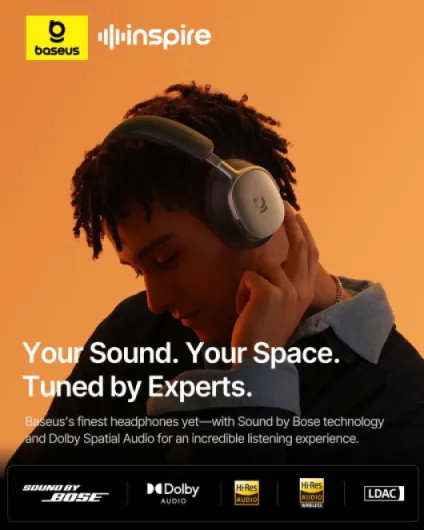
Design-wise, the Inspire XH1 looks like a mix between Sony WH-1000XM4 and some generic modern ANC headphones. Cosmic Black is basically a matte dark grey/black with some subtle accents. No flashy logos or RGB nonsense, which I appreciate. They’re the kind of headphones you can wear in the office without feeling like a gamer. The plastic shell has a slightly soft-touch feel and doesn’t pick up fingerprints too badly.
The buttons are all on one ear cup: power/Bluetooth, volume, and a multi-function button for ANC/transparency modes. No touch controls here, it’s all physical. Personally, I prefer that: fewer accidental swipes and it still works well with gloves. The buttons are a bit small but after a day or two I knew where everything was by feel. The only small annoyance: the mode button cycle is not super intuitive at first, and you’ll probably press the wrong thing a few times.
The ear cups swivel flat, which is nice for wearing them around your neck or dropping them in a bag, but they don’t fold inwards like some Sony/Bose models. That means they take a bit more space in a backpack. There’s no included hard case, so if you want real protection, you’ll need to buy a third-party one. I tossed them straight into my bag for two weeks, and they haven’t picked up any major scratches yet, so the finish seems reasonably tough.
Overall, the design feels more premium than the price suggests, but you can still tell it’s not top-tier like AirPods Max or the latest Bose if you look closely at the joints and plastic. No creaks so far, hinges feel solid, but if you’re rough with your gear long-term, I wouldn’t swear they’ll survive years of abuse without marks. Still, for a mid-range pair, the look and feel are honestly pretty good.
Battery life is the main selling point
This is where the Inspire XH1 really stands out. The battery claim is up to 100 hours with ANC off and about 65 hours with ANC on, and honestly, it feels believable. Over two weeks, I used them roughly 4–5 hours per day with ANC on most of the time, and I only had to charge them once. I never had that “battery anxiety” feeling I sometimes get with other wireless headphones, especially when traveling.
The battery indicator in the app isn’t pixel-perfect accurate, but it’s close enough to give you an idea. You can easily go through several full workdays plus some commuting without even thinking about the charger. If you’re the kind of person who always forgets to charge your gear, this alone makes them very appealing. With my Sony XM4, I usually charge every 3–4 days; with these, it’s more like once a week or even less.
There’s also a fast charge feature: 10 minutes for up to 12 hours of use (that’s Baseus’s claim). I tested a quick top-up from around 20% battery before heading out, and after 10–15 minutes plugged into a USB-C charger, the percentage jumped enough that I didn’t worry about them dying. I didn’t sit there timing exact hours, but in practice, yes, a short charge gives you a lot of extra listening time.
No wireless charging, but I don’t think that’s a big loss on over-ear headphones. USB-C is standard now, and you probably already have a cable and charger lying around. Overall, battery life is one of the strongest arguments for these headphones. If you travel a lot, work long days, or just hate charging things, you’ll appreciate how long they last way more than some fancy marketing features.
CloudComfort is mostly real, with one small catch
Baseus pushes this “Velvet-Like CloudComfort” thing pretty hard, and to be fair, comfort is one of the highlights here. The ear pads are thick, soft, and covered in a protein leather that feels smooth and not plasticky. Clamping force is medium: enough to keep them in place when you move your head, but not so tight that your skull feels crushed after an hour. I wore them for several 3–4 hour stretches at work without needing a break, which is better than a lot of cheaper ANC headphones I’ve tried.
The headband has decent padding and didn’t create a hotspot on the top of my head, which is something I often get with cheaper models. Weight is around 275 g, so not ultra-light but not heavy either. Compared to my Sony XM4, they feel slightly heavier in the hand, but on the head the difference is minor. If you wear glasses, the pads compress enough that the arms don’t dig in too badly; I’d rate them “good but not perfect” for glasses wearers.
The only real downside I noticed is heat buildup. Because the seal is quite good and the pads are synthetic leather, your ears do get warm after a while, especially in a warm room or on a crowded train. It’s not unbearable, but after 2–3 hours I sometimes took them off for a few minutes just to cool down. That’s pretty standard for over-ears with this kind of material, though, so not really a deal-breaker, just something to know.
There’s no auto-pause when you remove them, which I actually missed more than I expected. I’m used to taking off my headphones and having Spotify stop automatically. Here, you take them off, the music keeps going, and you have to reach for your phone or press the button. It’s a small quality-of-life thing, but when you’re in and out of conversations all day, it becomes noticeable. Still, if your main priorities are soft pads, decent clamp, and all-day wear, these do the job very well for the price.
Build seems solid, but long-term is still a question mark
In terms of durability, after a couple of weeks of fairly careless use, the Inspire XH1 is holding up well. I’ve thrown them in my backpack with keys and cables, used them in light drizzle walking outside, and worn them daily to and from work. No cracks, no peeling, no loose joints so far. The hinges still feel tight, and there are no worrying creaks when I twist the headband a bit.
The ear pads are the part I’m most curious about long-term. The protein leather feels nice now, but this type of material on many headphones tends to crack or flake after a year or two, especially if you sweat a lot or live in a hot climate. I can’t judge that yet with such a short test, but I wouldn’t be shocked if you eventually had to replace the pads. I don’t see any easy release mechanism mentioned, but usually third-party pads appear on the market for popular models after a while.
They’re listed as moisture resistant, not fully water-resistant. That means they’ll survive sweat or a bit of rain, but I definitely wouldn’t use them in heavy downpour or throw them in a gym bag soaked in water. The sliders are metal-reinforced, which helps with repeated adjustments. Compared to some ultra-cheap Amazon specials, these feel more trustworthy in the hands.
Baseus gives a 2-year manufacturer warranty, which is reassuring for this price bracket. It doesn’t guarantee they’ll last forever, but at least you’re not completely on your own if something fails early. Overall, I’d say durability seems perfectly acceptable for mid-range headphones: they don’t feel bulletproof, but they also don’t feel like they’ll fall apart in six months. Just don’t expect tank-level toughness, and maybe invest in a case if you travel a lot.
Sound quality and ANC: good, but not Bose or Sony level
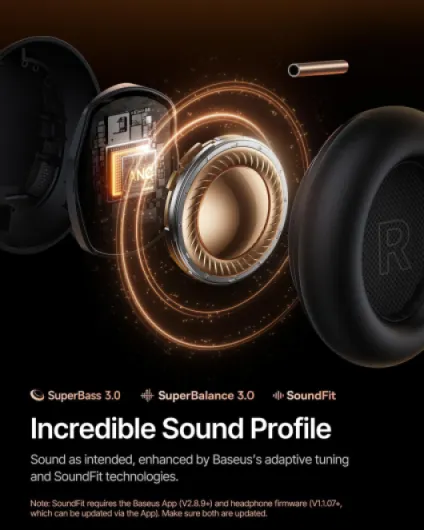
Let’s start with sound. Out of the box, the Inspire XH1 has a bass-leaning, consumer-friendly tuning. There’s a clear low-end boost, mids are slightly pulled back, and highs are present but not harsh. It’s the kind of sound that works well for pop, hip-hop, EDM, movies, and YouTube. If you’re coming from cheap Bluetooth headphones, you’ll probably think they sound great. If you’re used to high-end Bose or Sony, you’ll notice less detail, especially in vocals and instruments.
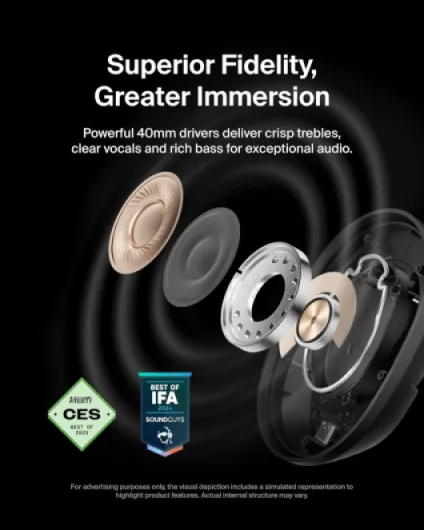
Using LDAC on Android and playing high-res tracks, you can squeeze a bit more detail and space out of them, but they still don’t suddenly turn into audiophile gear. The Baseus app helps a lot: there are different presets (including the “Sound by Bose” one) and a manual EQ. With a bit of tweaking—reducing bass a touch and lifting the mids—they sound more balanced and less boomy. The drivers are capable enough, they just lean toward a fun, bassy profile by default.
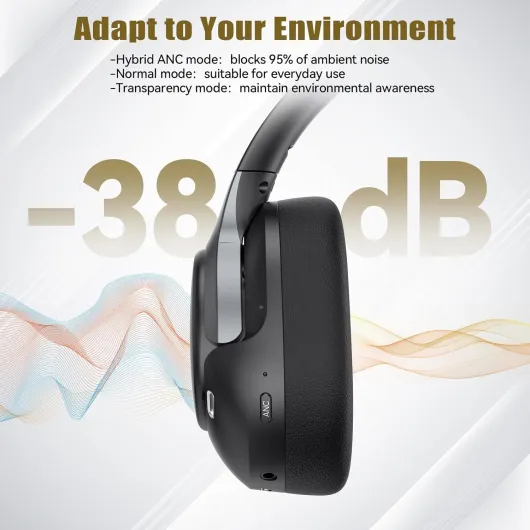
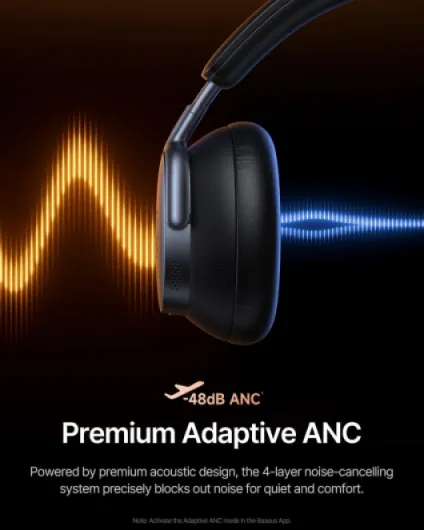
As for ANC, this is where expectations need to be realistic. The noise cancelling is solid for daily use: it cuts down low rumbles on trains and buses, reduces office chatter to a murmur, and makes a big difference compared to no ANC. But side-by-side with Bose QC or Sony 1000X series, you can tell it’s a step below. More mid and high frequency noise gets through, and there’s slightly more pressure feeling at stronger settings. For the price, I’d call it “good but not top-tier”.
Transparency / ambient mode is usable but not great. Voices come through, but as soon as you have music playing, it doesn’t balance outside sound and music very smartly. It’s fine for quick announcements or a short chat at the office, but it’s not that natural “open ear” feeling you get from the best transparency modes. Latency for video is acceptable; I didn’t notice lip-sync issues on Netflix or YouTube on phone or laptop. For gaming, there is some delay, even with the low latency mode, so I wouldn’t recommend these as your main headphones for competitive play.
What you actually get for your money
On the spec sheet, the Inspire XH1 are loaded: Bluetooth 6.1, up to 100 hours of playtime (ANC off) or about 65 hours with ANC, 5 microphones for calls and noise cancelling, LDAC, Hi-Res certification, and some audio tuning partnership labeled “Sound by Bose”. You also get Dolby Spatial Audio support and an app with EQ, ANC modes, and a hearing profile feature called SoundFit. It’s a long list, especially at this price point.
In the box, it’s pretty barebones: the headphones, a USB-C cable, and a user manual. No hard case, no 3.5 mm jack because there is no wired mode at all, which might be a problem if you like plugging into in-flight entertainment or a DAC. The packaging is eco-style cardboard, looks fine, nothing fancy, but it doesn’t scream cheap either. It’s the kind of box you throw away without thinking twice.
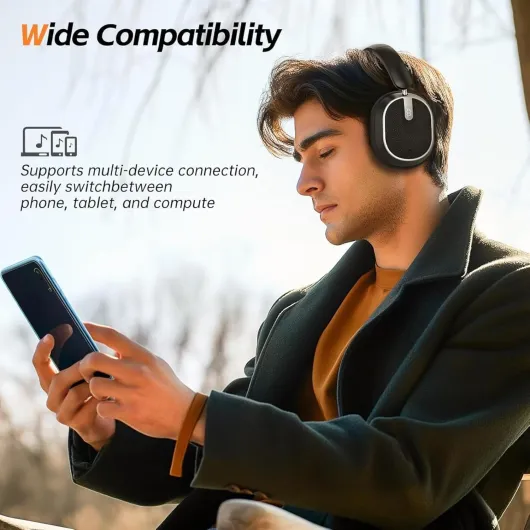
During my testing, I paired them with a Samsung phone (for LDAC), an iPhone, a Windows laptop, and a MacBook. Multipoint worked without drama: I could be on my laptop, get a call on my phone, and it switched over quickly. Range was very decent: I could walk to the kitchen two rooms away without drops, which I can’t say for all budget headphones. So wireless stability is one of the strong points.
Feature-wise, they tick most of the boxes people now expect: ANC, transparency mode, app control, EQ, firmware updates. But keep in mind: no wear detection, so they don’t auto-pause when you take them off, and no analog input. If you’re fine living 100% in Bluetooth, they’re well equipped. If you still like cables or you travel a lot on planes and use the in-flight system, that’s a real limitation.
Pros
- Very long battery life (realistically close to the claimed 65–100 hours range)
- Comfortable pads and headband for multi-hour use, even with glasses
- Stable Bluetooth 6.1 with reliable multipoint and LDAC support on Android
Cons
- ANC and sound quality are good but clearly below top Bose/Sony models
- No 3.5 mm jack or wired mode at all, limiting use on planes or with DACs
- No wear detection (no auto-pause) and average transparency mode
Conclusion
Editor's rating
After using the Baseus Inspire XH1 daily, my take is simple: they’re solid mid-range headphones with a flagship-style feature list, but the real strengths are comfort, battery life, and stable Bluetooth, not magic audio quality or world-class ANC. The sound is enjoyable and a bit bass-heavy out of the box, and with some EQ tweaks in the app it becomes nicely balanced for everyday listening. ANC is good enough for commuting and office work, just not at the same level as the latest Bose or Sony if you’ve tried those.
Where they really shine is practicality. The battery seems to last forever, multipoint works reliably, and the headphones are comfy enough to wear for several hours without much fatigue. If you mostly stream music, watch videos, and take calls, and you don’t want to babysit your battery or spend flagship money, they make a lot of sense. On the other hand, if you’re an audio nerd chasing maximum detail, or you absolutely need the strongest noise cancelling for constant air travel, you’ll probably be happier saving up for something higher-end.
So, who are these for? People who want good sound, very strong battery, and solid comfort at a reasonable price, and who don’t care too much about wired connections or fancy auto-pause features. Who should skip them? Anyone expecting true Bose-level ANC and sound just because of the “Sound by Bose” label, or anyone who needs a headphone that plugs into everything, including in-flight systems. If you’re clear on those trade-offs, the Inspire XH1 is a pretty smart, no-nonsense choice.