
Summary
Editor's rating
Value: strong comfort and ANC, but you pay for it
Design: low-key look, smart controls, a couple of quirks
Battery life: good enough, but immersive audio eats into it
Comfort: where Bose still does it best
Build and durability: solid enough, but not for rough treatment
Sound and noise cancelling: strong overall, with one annoying hiss
What you actually get and how it behaves in real life
Pros
- Top-tier comfort: light, soft ear pads and low clamp make long sessions easy
- Very effective noise cancelling and natural-sounding Aware (transparency) mode
- Simple controls with a useful touch volume strip and solid multipoint Bluetooth
Cons
- No way to fully disable noise processing, slight hiss in quiet rooms
- Heavy reliance on the Bose Music app, which can be slow to reconnect
- Expensive for mostly plastic build and only a basic 3-band EQ

Specifications
View full product page →| Brand | Bose |
High-end headphones I actually wear all day
I’ve been using the Bose QuietComfort Ultra for a few weeks now, mainly for working from home, commuting, and a couple of flights. I’m not an audiophile with golden ears, I just need something that blocks noise, sounds good, and doesn’t crush my head after an hour. I came from older Bose QC models and also spent some time with Sony XM4/XM5, so I had a decent idea of what to expect in this price range.
Right away, these feel like a very “Bose” product: simple to use, focused on noise cancelling and comfort, with some new tricks like spatial audio and head tracking. They’re not perfect, and there are a few things that annoyed me, especially around the app and the constant noise processing. But overall, they fit pretty well into the high-end ANC headphone world.
In day-to-day use, I mostly use them at my desk connected to a laptop and phone at the same time, then on trains and in a noisy open office. I also tried a couple of long calls and some Netflix and gaming with the immersive audio on. So this isn’t a lab test, it’s just how they held up in normal life: Slack calls, YouTube, Spotify, and a crying baby two rows back on a plane.
If you’re wondering whether to spend this kind of money versus sticking with cheaper ANC headphones or going for Sony, the short version is: the Bose are very strong on comfort and noise cancelling, sound quality is more than good enough for most people, but you have to accept that everything goes through Bose’s processing all the time and you’ll be living in the Bose app quite a bit.
Value: strong comfort and ANC, but you pay for it
These are not cheap, and that’s the main thing to keep in mind. You’re paying top-tier money, same league as Sony XM5, AirPods Max, etc. For that price, you do get a lot: very good noise cancelling, high comfort, multipoint Bluetooth, spatial audio, and decent sound quality. If you spend hours every day with headphones on – working from home, commuting, or flying – they start to make more sense. The comfort alone is a big deal; cheaper ANC headphones usually can’t match that.
Where the value feels a bit shaky is on the software side. The EQ is basic, the app can be slow and a bit annoying to reconnect to, and the constant noise processing with no true "off" might bother more sensitive users. Also, there’s no water resistance and they’re mostly plastic. At this price, some people will expect more flexibility and maybe a slightly more premium-feeling construction.
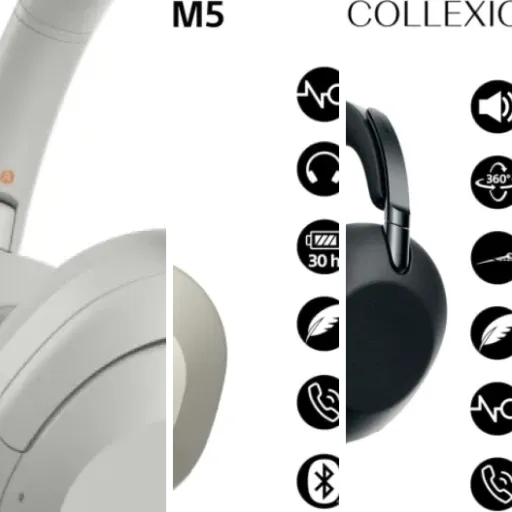
Compared to Sony XM4/XM5: Sony usually beats Bose on spec sheet value – longer battery, more detailed EQ, more codecs, often lower price on sale. But Sony can feel more fatiguing to wear for long periods (pressure feeling) and their touch controls are more finicky. If you value comfort and simple, predictable behaviour over endless features and tinkering, then the Bose price starts to feel more justified.
So, are they worth it? If you mostly want something for short listening sessions or occasional travel, honestly, you can save money with mid-range ANC headphones. If you use headphones many hours a day and you care about comfort and strong noise cancelling, then the Bose QC Ultra are a solid but expensive option. Not a bargain, not a rip-off – just a premium product that makes sense if you really use what you’re paying for.

Design: low-key look, smart controls, a couple of quirks
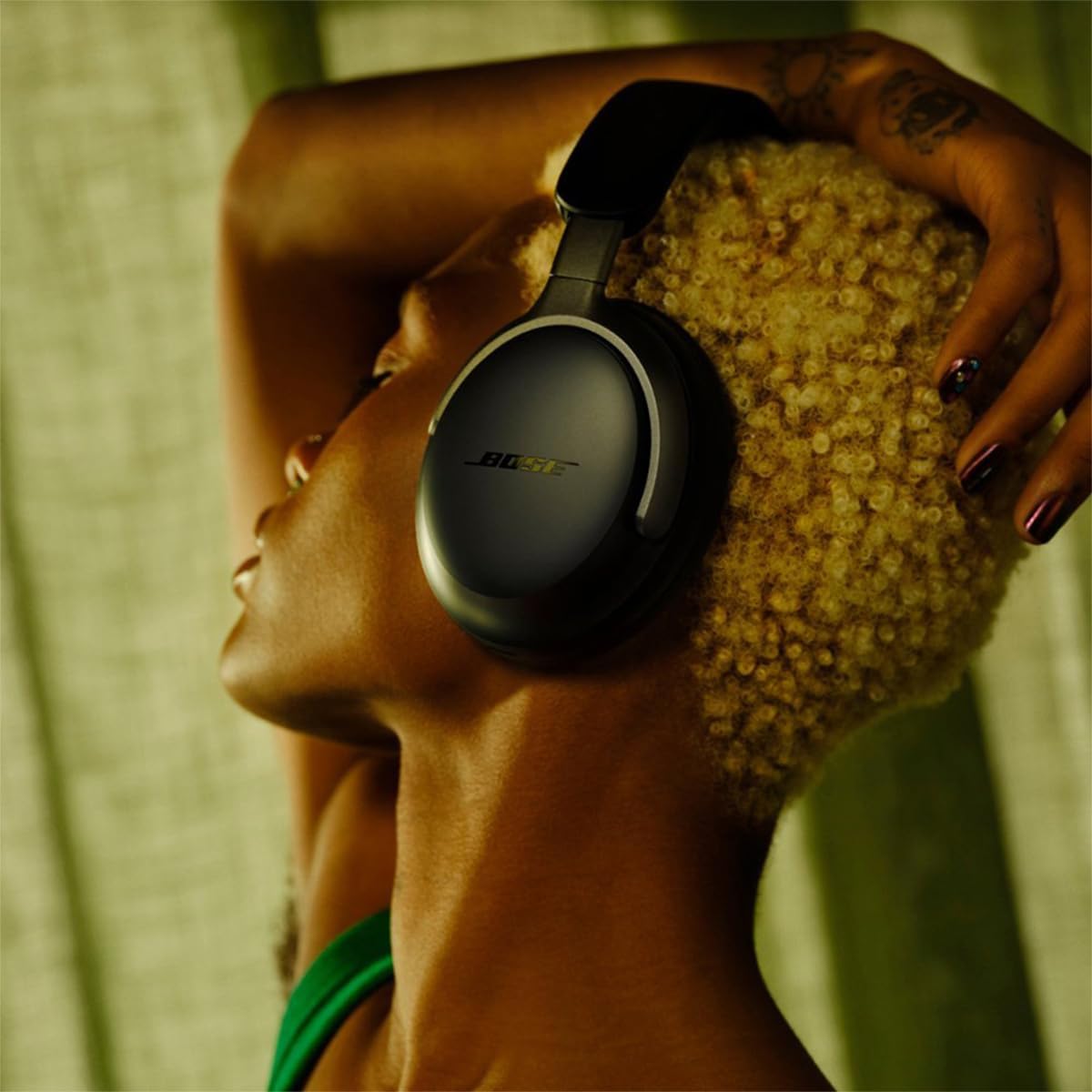
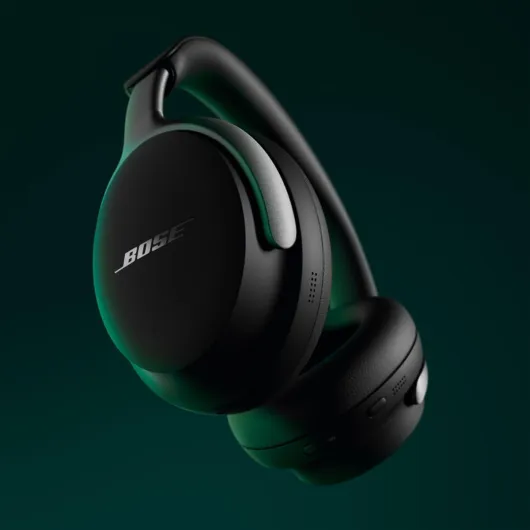
The design is very understated. In black, they look like standard Bose headphones: no flashy metal, no huge logos shouting for attention. Personally, I like that. On the train or in an office, they don’t scream “expensive gadget”, which is a plus if you’re worried about theft or just don’t like flashy gear. The build is mostly plastic with some metal in the headband sliders, but it doesn’t feel cheap. The weight is around 250 g, which is light enough that I never felt neck fatigue.
Controls are a mix of physical buttons and a touch strip. You get a power/Bluetooth button and a multi-function button on the right earcup, plus a touch volume strip you slide your finger along. The power button is slightly indented and the multi-function button is smooth, so you can tell them apart by touch. That sounds like a small thing, but when you’re walking and want to switch modes or pause, it matters. The touch strip works well for volume, and you can long-press it for a custom shortcut, like changing immersion mode, which I ended up using a lot when commuting.
One thing that’s a bit odd: the headphones want to be on both ears before they fully "settle" and personalize the sound. If you turn them on with one cup off your ear, they don’t behave quite right until both are in place. Not a deal-breaker, but it’s a little fussy compared to older models where you just flicked the switch and they were ready. Also, there’s no way to fully turn off the noise processing; you only slide between transparency and full ANC. That design choice affects how they sound in quiet rooms, which I’ll get into later.
From a practical point of view, the design is focused on comfort and simple operation, and it succeeds there. If you want something flashy or super compact, this isn’t it. If you want something that looks normal, disappears on your head, and just does its job, the design is well thought out, with only minor annoyances around the always-on processing and the dependence on the app for deeper settings.
Battery life: good enough, but immersive audio eats into it
Bose claims up to 24 hours of battery and about 18 hours with Immersive Audio on. In real use, I’d say that’s roughly accurate. With mixed usage (a few hours of Immersion on, the rest in standard Quiet mode), I was getting around two full workdays before needing to charge – so around 15–18 hours total. If you leave Immersive Audio on all the time and listen loud, you’ll be closer to the lower end of that range.
Charging is via USB‑C, which is standard now, and a full charge takes around 3 hours. There’s also a quick charge: 15 minutes on the cable gives you about 2–2.5 hours of listening, depending on whether Immersive Audio is on. In practice, that quick charge is enough if you forgot to plug them in overnight and notice in the morning. I’d just stick them on charge while making coffee and they’d be fine for a couple of meetings and a commute.
Battery reporting is okay but not super detailed. The app and the voice prompt give you a percentage or a rough level. It’s not hyper-precise, but I never had them die unexpectedly. They also auto-sleep and pause when you take them off, which helps save battery. I often forget to turn headphones off, and with these, I’d come back after an hour or two and still have plenty of charge because they had gone to sleep.
Compared to Sony XM4/XM5, the Bose are slightly behind on pure endurance, especially if you lean on Immersive Audio a lot. If you want the absolute longest battery life in this category, Sony still has the edge. But for day-to-day use – work, commuting, a couple of flights – the Bose battery is good enough that it never really stressed me out. Just don’t expect to run them hard for 3–4 days straight without plugging in if you use all the fancy features.
Comfort: where Bose still does it best
Comfort is the main reason I’d pick these over a lot of other high-end headphones. The ear cushions are thick, soft, and they really do hug your ears without feeling like a clamp. I have a fairly big head and usually after an hour with some headphones I start to feel pressure on the top of my skull or around my jaw. With these, I’ve done 3–4 hour stretches at my desk and on a flight with no real discomfort, just a bit of warmth, which is normal for over-ears.
The headband distributes weight evenly. There’s padding across the top and the clamping force is moderate: tight enough that they feel secure walking around or on public transport, but not so tight that you want to rip them off after a while. Compared to Sony XM5, I find the Bose lighter and less "head pressure" feeling. The Sony’s ANC gave me more of that ear/pressure sensation; the Bose are milder in that sense, which I prefer for long sessions.
One detail I really like: the ear cushions snap in with tabs, instead of needing to line up a tiny groove. If you ever have to replace them, it should be much easier and less fiddly. For blind or visually impaired users, this is a real plus, and one reviewer mentioned that specifically. The cups also fully surround the ear, so no cartilage rubbing on the inside, which is often what causes pain over time with smaller over-ears.
If you’re very sensitive to weight or pressure, these are honestly one of the better options out there. They’re not magic – your ears will still get warm over hours, and if you wear glasses, the seal can press a bit on the frames, like any over-ear. But compared to the Sony XM series and a few cheaper ANC models I’ve tried, I can keep the Bose on for much longer before thinking about comfort at all. For work-from-home and travel, that alone makes a big difference.
Build and durability: solid enough, but not for rough treatment
In terms of build, these feel like a typical Bose product: lots of plastic but well put together. There are no creaks when you twist the headband or adjust the cups, and the hinges feel smooth. The ear cushions are soft and nicely finished, and the way they snap in with tabs gives me some confidence that replacing them down the line won’t be a nightmare. Bose also sells replacement cushions, which is important if you plan to keep them for years and use them daily.
That said, they’re not rugged. There’s no water resistance rating at all, so I wouldn’t wear them in the rain or for sweaty workouts. They’re meant for travel, office, home – not the gym or running in a drizzle. The case is decent and will protect them in a backpack, but I wouldn’t just toss them loose in a bag and hope for the best. The finish on the plastic can pick up fingerprints and small scuffs; mine already shows minor marks after a few weeks, but nothing serious.
The headband adjustment feels sturdy enough, with metal inside the rails, but like most premium ANC headphones, they’re still something you want to treat with a bit of care. If you’re rough with your gear, throw bags around, or often sit on your headphones by accident, I wouldn’t count on these surviving that long. They’re more "premium electronics" than "worksite tool".
Overall, durability seems fine for normal use: commuting, office, flights, and being stored in the case. The included 2-year warranty is reassuring. Just don’t expect them to handle rain, sweat, or major drops without risk. If you want something truly tough, you’d probably look at a different category. For city and office life, they feel solid enough as long as you’re not careless.
Sound and noise cancelling: strong overall, with one annoying hiss
On sound quality, out of the box they have a slightly bass-leaning tuning, which is pretty typical for Bose. The bass is full but not ridiculous, mids are clear enough for vocals and podcasts, and the treble is present without being harsh. If you’re into super neutral, studio-style sound, these aren’t that, but for normal music listening (Spotify, Apple Music, YouTube), they’re easy to enjoy. I ended up nudging the bass down a bit and the treble up a touch in the app’s EQ. The EQ is limited though: only three bands (bass, mid, treble) with no clear info on the exact frequencies. It’s fine for basic tweaks but a bit too simple for the price.
The noise cancelling is where these really shine. In "Quiet" mode, they cut out fan noise, AC, train rumble, and office chatter very effectively. On a flight, the drone of the engines dropped to a low background hum and voices were heavily reduced. Compared to Sony XM4/XM5, I’d say they’re at least on par, maybe slightly better for constant low-frequency noise. The "Aware" mode (transparency) sounds quite natural; you can hear people and traffic without feeling like a robot. There is a faint background hiss though, especially when nothing is playing, and you can’t fully disable the processing – the slider just moves between transparency and ANC, but never to "off".
That constant processing means there’s always a bit of electronic noise in the background if you’re in a very quiet room and no music is playing. Some people won’t notice or won’t care, but if you’re sensitive to hiss or you want to use them just as passive muffs in silence, it’s annoying. One Amazon reviewer returned theirs specifically because of this. I didn’t return mine, but I do notice it when I’m working in a silent room and pause music. It’s not super loud, just present.
For calls, the microphones are solid. People on the other end said my voice was clear, even on a windy walk, though they still heard some wind and traffic. For meetings on Teams/Zoom they’re absolutely fine. Overall, performance is strong: great ANC, good sound, decent mics, but the inability to fully disable the processing and the basic EQ are the main negatives on this front.
What you actually get and how it behaves in real life
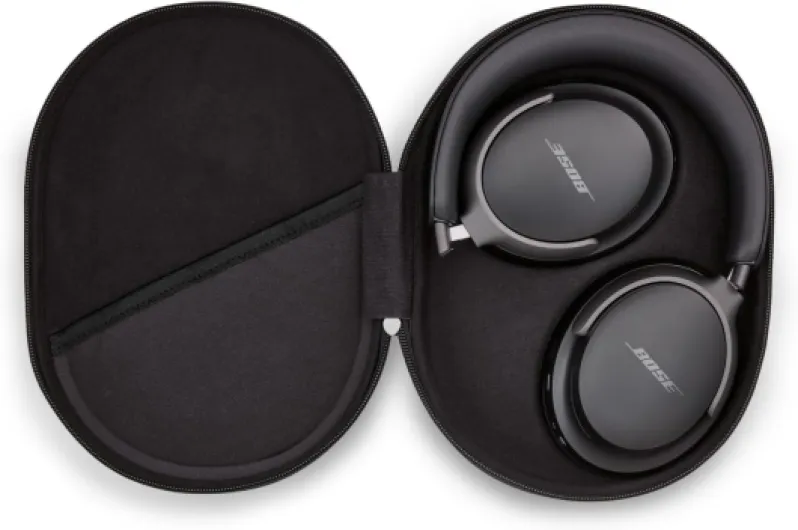
Out of the box, it’s pretty straightforward: you get the headphones, a hard case, a USB‑C to USB‑A charging cable, and a 3.5 mm audio cable. Nothing fancy, but it covers the basics. The case is more of an oval shape, slimmer than some older Bose cases, and fits fine in a backpack. It’s not tiny, but for over-ear headphones it’s reasonable. Inside, the headphones fold flat, and there’s a small compartment for the cables so they don’t rattle around.
Setup is simple: turn them on, they go into pairing mode, and you grab them from your phone or laptop Bluetooth list. Bose pushes you pretty hard to install the Bose Music app, and realistically you need it. Without the app you miss the EQ, ANC modes, and spatial audio settings. On my phone, the app works but it’s a bit slow to reconnect every time I open it. On iOS in particular, you sometimes wait a few seconds while it “finds” the headphones again, which gets old when you’re just trying to tweak one thing.
In terms of features, the big ones are: Bluetooth 5.3, multipoint with two devices at once, three main modes (Quiet, Aware, Immersion), and Bose Immersive Audio (their version of spatial audio/head tracking). There’s also auto pause when you take them off, and a shortcut gesture on the touch strip you can assign in the app. It’s a lot of stuff, but day to day I mostly switch between Quiet and Aware and rarely touch the rest once I set it up.
Overall, as a package, it’s pretty solid. It feels like a premium product, but not overly complicated. The main trade-off is that Bose hides a lot behind the app, and if you hate apps or you jump between devices all the time, that dependence on software might annoy you more than the hardware impresses you.
Pros
- Top-tier comfort: light, soft ear pads and low clamp make long sessions easy
- Very effective noise cancelling and natural-sounding Aware (transparency) mode
- Simple controls with a useful touch volume strip and solid multipoint Bluetooth
Cons
- No way to fully disable noise processing, slight hiss in quiet rooms
- Heavy reliance on the Bose Music app, which can be slow to reconnect
- Expensive for mostly plastic build and only a basic 3-band EQ
Conclusion
Editor's rating
Overall, the Bose QuietComfort Ultra are very comfortable, strong noise-cancelling headphones with a few quirks you need to accept. The sound is good enough for most people, slightly bassy but easy to tweak with the basic EQ. Noise cancelling is one of the best parts: planes, trains, fans, and office noise drop to a dull background, and the Aware mode sounds natural enough for conversations and city walking. Comfort is where they really stand out – light on the head, soft cushions, and no heavy clamping feeling, which makes them easy to wear for long workdays or long-haul flights.
On the downside, you’re tied to the Bose Music app for most settings, and the app can be slow and a bit annoying to reconnect to. There’s also no way to fully disable the noise processing, so in quiet rooms with no audio playing, you’ll hear a slight hiss. Battery life is good but not class-leading, and there’s no water resistance at all. For the price, some people will expect more flexibility and a more powerful EQ.
I’d recommend these to people who spend a lot of time with headphones on and care most about comfort and ANC – remote workers, frequent travellers, and anyone who wants to sink into music or podcasts without their head hurting after an hour. If you’re very picky about sound tuning, want longer battery life, or hate relying on an app, you might be happier with Sony or even a cheaper pair. For me, they land as a high-quality but expensive daily driver that gets the core things right, as long as you can live with the small annoyances.