
Summary
Editor's rating
Value: who should actually spend money on these
Looks good, but usability takes a small hit
Battery life and charging: no drama, just works
Comfort: great for most heads, not for everyone
Build quality and long-term feel
Sound and ANC: tuned for listeners, not for total silence
What you actually get in the box and on paper
Pros
- Warm, engaging sound with good bass and clear mids, especially for Bluetooth
- Solid build quality and decent comfort for average-sized heads
- Practical battery life (around 30 hours) with useful fast charging
Cons
- ANC is only average compared to Sony/Bose at this price
- Ear cups and headband can be too small for bigger heads and ears
- Buttons are small and fiddly to find by touch

Specifications
View full product page →| Brand | Bowers & Wilkins |
High-end sound without full high-end stress
I’ve been using the Bowers & Wilkins Px7 S3 in Frost Blue for a couple of weeks, mostly for commuting, working at home, and a few long evenings of music and Netflix. I’m not an audiophile with golden ears, but I’ve owned Sony XM4/XM5, Bose QC, and some cheaper ANC stuff, so I’ve got a decent idea of what’s good and what’s just expensive hype. These sit somewhere in the middle: clearly a premium pair, but not trying too hard with gimmicks.
The first thing that hit me was the sound. These clearly aim more at people who actually listen to albums than people who just want background noise on the bus. Out of the box they lean warm with good bass, but not the kind of muddy boom you get on a lot of mainstream Bluetooth headphones. After a couple of days, the drivers seemed to loosen up a bit and the low end got a bit cleaner and tighter.
On the practical side, they tick most of the boxes: USB‑C, 30‑hour battery, aptX Adaptive if you’re on Android, and a simple app with a 5‑band EQ and ANC control. Nothing mind-blowing in terms of features, but everything I actually need is there. No weird metaverse stuff, no useless gimmick modes that you try once and never touch again. They just connect and work.
They’re not perfect though. The ANC is fine but not class-leading, the buttons are annoyingly small, and if you’ve got a big head or large ears you might struggle with the fit. Also, if you’re chasing absolute top-tier detail and soundstage, these are a step below B&W’s own Px8. But for a daily pair that still sounds properly good, they’re pretty solid. I’ll break down the good and the bad in more detail below.
Value: who should actually spend money on these
Price-wise, the Px7 S3 sit in that awkward middle: not cheap, not the most expensive either. They cost less than the B&W Px8 and some B&O models, but more than a lot of mid-range ANC headphones. So you really have to know what you’re paying for here. You’re basically buying better-than-average sound, a solid brand, and a design that feels a bit more grown-up than the usual plastic crowd, but you’re not getting the very best ANC or the craziest feature list.
Compared to Sony XM5 or Bose QuietComfort, you’re trading some noise cancelling performance and smart features for sound quality and build feel. If your number one goal is blocking out airplane noise or office chatter as much as possible, Sony/Bose probably give you more for your money. If, like me, you care more about how your music actually sounds and you’re okay with “good enough” ANC, the Px7 S3 start to look more sensible.
Against B&W’s own Px8, the logic is different. The Px8 sound better – more detail, wider soundstage, tighter bass – but they also cost a fair bit more and feel like something you baby. The Px7 S3 give you maybe 80–90% of that B&W sound for a lower price and feel less stressful to toss in a bag. If you want a daily-driver pair that you’re not terrified of scratching, the Px7 S3 make more sense than dropping top money on the Px8 just to drag them on trains every day.
So in terms of value, I’d say they’re good value if you prioritize sound and build over maximum ANC and features. If you’re just looking for any noise-cancelling headphones to use once in a while on flights, they’re probably overkill and you could save money with something simpler. But if you want one pair you can keep for years, listen to properly, and use daily without babying them too much, the price starts to feel reasonable rather than excessive.

Looks good, but usability takes a small hit
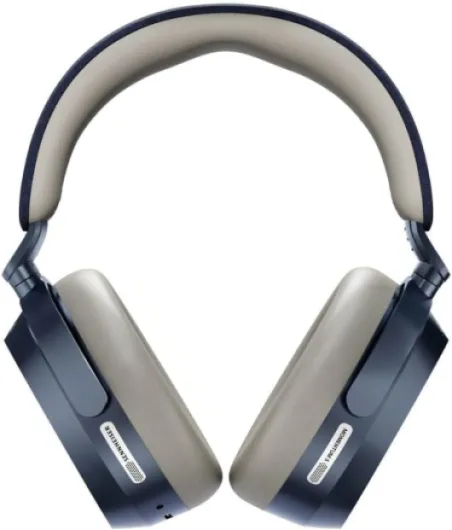
Design-wise, the Px7 S3 lean more toward the minimalist side. The Frost Blue color is actually pretty nice in real life: not too flashy, more of a muted blue-grey that doesn’t scream for attention. Compared to something like Sony’s XM5, these look a bit more grown-up and less plasticky. B&W kept the headband slim and the earcups fairly low-profile, so they don’t make your head look massive, which I appreciate.
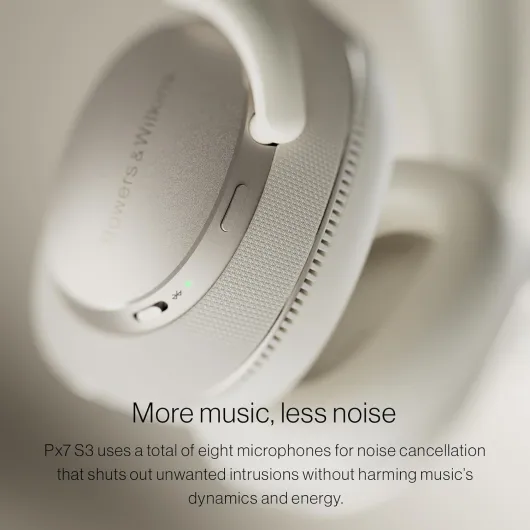
The downside of the slimmer design is the controls. The physical buttons on the right earcup are small and sit quite close together. After a week, I could mostly find them by feel, but even then I still sometimes hit the wrong one when trying to pause or change volume while walking. There’s also a dedicated ANC/ambient button on the left cup, which is useful, but again, it’s tiny. If you’re wearing gloves or you’re used to big, chunky buttons, you might swear at these a bit at the beginning.
There’s no crazy hinge system – they don’t fold inward like some headphones, they just swivel flat. That makes them a bit easier to slide into the case, but they’re not the most compact pair out there for travel. On the flip side, fewer moving parts usually means fewer things that can break over time. The earcups rotate enough to sit properly on your head without constantly needing adjustment, which is more important to me than fancy folding tricks.
In day-to-day use, the design feels thought-through but slightly sacrificed for the slim look. They look better on your head than some chunkier rivals, but you pay for that with more fiddly buttons and slightly less convenient portability. If you care a lot about how your headphones look in public and don’t mind a small learning curve with the controls, you’ll probably like this design. If you just want big, obvious buttons and maximum practicality, these are a bit of a mixed bag.
Battery life and charging: no drama, just works
Battery life on the Px7 S3 is rated at around 30 hours with ANC on, and in real use that feels accurate. I got roughly a week of commuting and evening listening (maybe 3–4 hours per day) before I felt the need to plug them in. I wasn’t babying them either – ANC on most of the time, volume around 40–50%, some calls here and there. They definitely aren’t the longest-lasting headphones on the market, but they’re more than enough for normal use.
The fast charging is actually handy. I tested the advertised “15 minutes for 7 hours” claim by letting them drop to around 10%, plugging them in for a quarter of an hour, and then using them the rest of the day. I didn’t time it exactly, but I easily got a full workday of mixed use after that short top-up. For travel, that’s great: even if you forget to charge the night before a flight, you can throw them on charge while you shower and be basically fine.
Charging is via USB‑C only, no wireless charging nonsense, which is fine. They also work while charging if you’re plugged into a laptop, so you can keep listening and topping up at the same time. There’s no super fancy battery stats in the app, just a percentage readout and a basic estimate, but I never felt caught out by it. Once you get a feel for your own usage, it’s straightforward.
In practice, the battery is one of those things you stop thinking about after a few days. You charge them once or twice a week, depending on how heavy you use them, and that’s it. If you’re coming from older headphones that barely last 10–15 hours, this feels like a relief. If you’re comparing spec sheets and see some models with 50–60 hours, keep in mind: most people don’t actually need that much, and 30 hours with good sound is more than enough for most everyday scenarios.
Comfort: great for most heads, not for everyone
Comfort is where my experience lines up pretty well with the mixed Amazon reviews. On my head (medium size, fairly normal ears), the Px7 S3 are comfortable for long sessions. The clamping force is firm enough that they feel secure when I’m walking or moving around the house, but I don’t get a headache or jaw pressure after a couple of hours. The weight is reasonable, and the padding on the headband spreads it out well enough that I don’t get a hot spot on the top of my head.
The earcups are on the smaller side for over-ear headphones. My ears fit just inside the pads, but if your ears stick out or are larger, there’s a good chance they’ll press a bit or even sit partly on-ear. That’s basically what that 1‑star review was saying: if you’ve got a big head or big ears, these may feel too tight and too small even at full extension. I tried them on a friend with a larger head, and he confirmed they were borderline – wearable, but not comfortable for more than an hour. So it’s not just one random complaint; there’s a real sizing limit here.
Another small thing: they can feel a bit slippy if you tilt your head forward or try to jog with them. The pads are smooth and the clamping force isn’t vice-like, so if you plan to run or work out in these, you’ll probably find them sliding around. For walking, commuting, trains, and desk work, they’re fine. For actual sports, I’d look at something else entirely, or at least accept you’ll be adjusting them a lot.
In short, comfort is good if you’re in the “average head” range, but I’d strongly recommend trying them on in a store if you know you struggle with headphone fit. Once on, they disappear fairly well – no major heat build-up, no sharp edges, just a gentle pressure around the ears. But the size range is limited, and that’s something B&W clearly didn’t design for very large heads.
Build quality and long-term feel
Build quality on the Px7 S3 feels solid for the price, but not bulletproof. There’s a mix of plastic, metal, and fabric/foam. The headband has a metal core, the yokes feel sturdy, and the earcups don’t creak when you twist them gently. After throwing them in a backpack a few times (inside the case), I didn’t see any scuffs or weird marks. The Frost Blue finish still looked clean, and the fabric on the headband didn’t snag on anything.
The moving parts – mainly the swivel on the earcups and the headband extension – feel reasonably tight and precise. Nothing wobbles or feels loose out of the box. That said, I always get a bit cautious with fabric and lighter plastics over a couple of years. If you’re rough on your gear, drop headphones often, or toss them around without the case, I wouldn’t expect them to stay pristine. They’re water-resistant, not waterproof, so light rain or sweat splashes are fine, but I wouldn’t wear them in heavy rain or to the gym regularly.
The included case helps a lot with durability. It’s firm enough to protect them from being crushed in a bag, and the inside has a simple slot for cables so they’re not grinding against the cups. One thing I did notice: the outer fabric of the case can pick up dust and lint pretty quickly, especially in lighter environments, but that’s cosmetic more than anything.
With normal use – commuting, office, home listening, occasional travel – I don’t see any obvious weak points that scream “this will break in six months.” The controls are the only area that feel slightly fragile just because they’re small and fiddly, but that’s more about usability than actual structural weakness. If you look after your stuff and use the case, these should easily last the length of the 2‑year warranty and probably longer. If you’re the type who throws headphones loose in a bag with keys and tools, you might want something more rugged or cheaper.
Sound and ANC: tuned for listeners, not for total silence
Sound-wise, this is where the Px7 S3 make the most sense. They clearly target people who actually sit and listen to music, not just podcast-and-go types. The overall tuning is warm and slightly bassy out of the box, but it’s not that bloated, one-note bass you get on cheaper sets. Kick drums have some punch without drowning out vocals, and bass guitars stay reasonably clean. If you’re coming from Sony XM4/XM5, these will probably feel more open and less muffled, especially in the mids.
The mids are where these do well: vocals are clear, guitars and pianos sound natural, and nothing feels too pushed back. Highs are present but not sharp. I never had that “ear fatigue” feeling even after a long playlist. Some owners say they’re a bit too polite, and I agree slightly – if you love super bright, ultra-detailed treble, these might feel a bit smoothed over. Compared to B&W’s own Px8, you lose some detail and soundstage. The Px8 feels wider and more 3D, while the Px7 S3 is more intimate and inside-your-head. For commuting, I actually don’t mind that; it makes them easier to listen to casually.
On the ANC side, they’re decent but not class-leading. They cut a good chunk of low-frequency noise (train rumble, bus engines, office AC), but they don’t create that “dead quiet bubble” like Sony or Bose do. Higher-pitched sounds – people talking near you, keyboard clacks – are reduced but not gone. For my use (open office, public transport), they were good enough, but if your main goal is maximum noise blocking, Sony or Bose still do it better. The trade-off is that those usually don’t sound as clean or engaging musically as these.
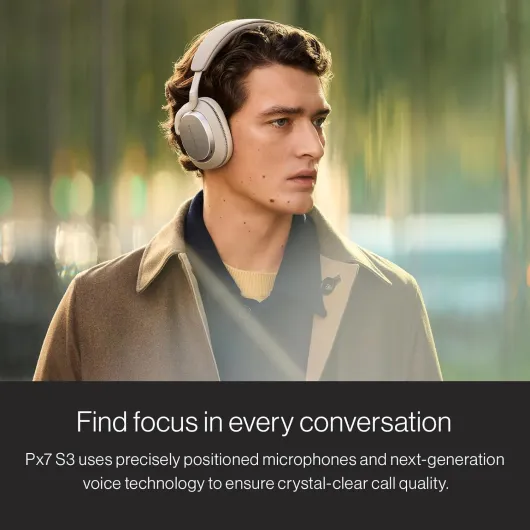
Call quality is solid. The people I spoke to said I sounded clear, even outside with cars passing. The 8‑mic system seems to do its job, although wind can still mess things up, like with most headphones. Latency for video is fine over aptX Adaptive – dialogue in Netflix and YouTube matched the lips well enough that I didn’t notice any lag. For gaming, they’re not ideal if you’re picky about delay, but that’s true for most Bluetooth cans anyway.
What you actually get in the box and on paper
Out of the box, the Px7 S3 feel like a mid-to-high-end product, but not super fancy. You get the headphones, a hard case, a USB‑C charging cable, and a 3.5 mm analog cable. That’s it. No pointless extras, no stand, nothing shiny. Personally, I’m fine with that. I’d rather have a decent case and a proper audio cable than a pile of junk I’ll never use. The case is compact enough to throw in a backpack but not pocketable, which is normal for over-ear ANC headphones.
On paper, the specs are pretty standard for this price range: Bluetooth 5.0, 30 hours of battery life, fast charging (about 7 hours of use from a 15-minute charge), 8-mic ANC system, 20 Hz–20 kHz frequency range, and support for aptX Adaptive and aptX Lossless on compatible devices. There’s also a 3.5 mm jack on the headphones, which is handy if you want to plug into a laptop, plane system, or a DAC. Impedance is 33 ohms, so they’re easy to drive even wired from a phone or laptop.
The app is pretty barebones but functional. You get ANC modes, passthrough, a 5‑band EQ, and some basic settings like auto-standby and wear sensor stuff. No insane customization like you see on Sony, but also less chance to break things. For me, once I set the EQ and ANC mode, I barely opened the app again. If you like to fiddle constantly, you might find it a bit too simple, but most people will be fine.
Overall, the presentation is straightforward: these are sold as serious listening headphones that still work for travel and commuting. No fake promises about “total silence” or “studio reference,” just a decent set of features and a focus on sound. If you want a spec sheet packed with every possible feature under the sun, you’ll probably look at Sony or Bose. If you just want a clean package that covers the basics well, this setup gets the job done.
Pros
- Warm, engaging sound with good bass and clear mids, especially for Bluetooth
- Solid build quality and decent comfort for average-sized heads
- Practical battery life (around 30 hours) with useful fast charging
Cons
- ANC is only average compared to Sony/Bose at this price
- Ear cups and headband can be too small for bigger heads and ears
- Buttons are small and fiddly to find by touch
Conclusion
Editor's rating
Overall, the Bowers & Wilkins Px7 S3 are a solid choice if you actually care about how your music sounds but still need Bluetooth and noise cancelling for everyday life. The sound is the main selling point: warm, full, and clear enough to enjoy real listening sessions, not just background noise. ANC is fine for commuting and office use, but it’s not the quietest out there, so if total isolation is your top priority, there are better options. Comfort is good for average-sized heads, but if you know you’ve got a big head or large ears, I’d be careful – the fit can be too small.
Battery life, build, and everyday usability are all in that “no drama” zone. They last long enough, charge quickly, and feel sturdy enough to handle daily use, especially if you actually use the case. The app is basic but covers the essentials, and once you’ve set your EQ and ANC mode, you don’t really need to mess with it again. For the price, they sit in a niche: better sound and feel than a lot of mainstream ANC headphones, but not quite at the level of true flagship models like the Px8 or the most aggressive ANC kings.
If you’re a listener first and a traveller second – someone who wants one pair of Bluetooth headphones for work, commuting, and home listening – these make sense. If you just want the strongest possible ANC, or you know you’re rough on gear and don’t care that much about sound, you might be better off with Sony, Bose, or something cheaper. But for people who want good sound without paying flagship money or stressing about every scratch, the Px7 S3 hit a pretty nice middle ground.