
Summary
Editor's rating
Are they worth the price compared to Sony and Apple?
Looks modern, but some small usability quirks
Battery life is good, not mind-blowing, but reliable
Comfort is where these really shine
Build feels premium enough, but I’d treat them with care
Sound quality, ANC behavior, and that "immersive" mode
What you actually get and how it behaves day to day
Pros
- Top-tier comfort for long sessions: light, soft pads, moderate clamp
- Strong ANC in most situations, especially for travel (planes, trains, office)
- Good, easy-to-like sound with punchy bass and clear vocals
- Useful extras: USB‑C audio, decent call quality, practical case and battery life
Cons
- Dynamic ANC behavior can feel odd and cause pressure feeling with some background noises
- Startup chime is loud and can’t be adjusted
- Smooth headband adjustment can shift and end up asymmetrical
- App EQ and settings are relatively basic for the price

Specifications
View full product page →| Brand | Bose |
High-end travel headphones that try to do everything
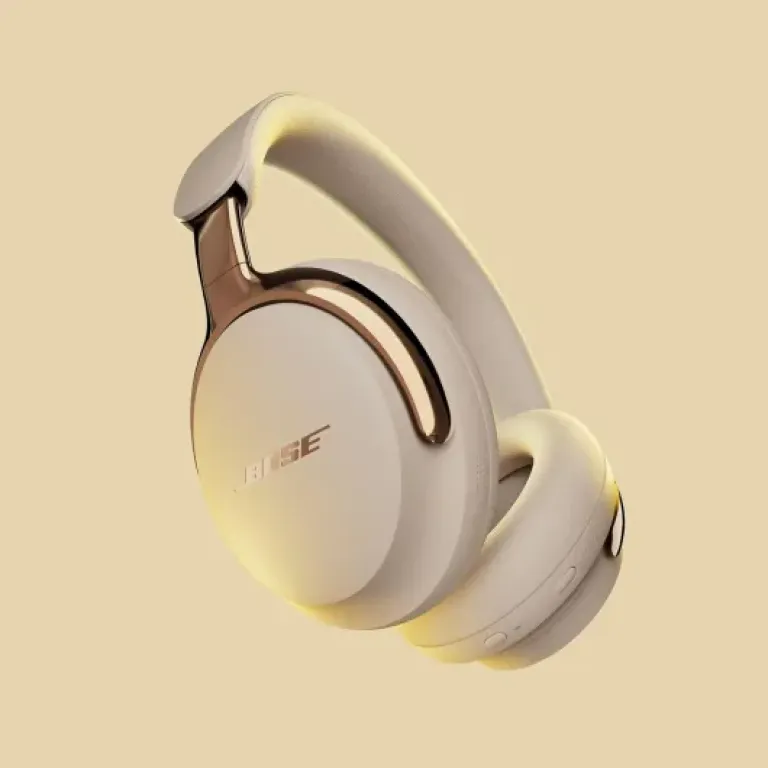
I’ve been using the Bose QuietComfort Ultra (2nd Gen) in Driftwood Sand for a couple of weeks now, mostly for work at home, commuting on trains, and a short flight. I’ve owned or tried a bunch of other ANC headphones before these: Sony XM4/XM5, AirPods Max, older Bose QC models. So I’m not coming to them fresh; I kind of know what to expect from this price range.
The short version: they’re very comfortable, the noise cancelling is strong most of the time, and the sound is good, but Bose made some odd choices with the new ANC behavior and the startup sound that might annoy you if you’re sensitive. The app is fine but a bit basic on EQ, and the fancy spatial/immersive audio is fun but not something I keep on all the time.
I used them mostly over Bluetooth with an iPhone and a Windows laptop, plus a bit of wired listening using the included 2.5mm-to-3.5mm cable. I also tried using them as a USB headset via USB‑C just to see if that feature is actually useful for calls and meetings. Battery was tested in mixed use: music + calls + some idle ANC time.
If you’re looking at these, you’re probably comparing them to Sony’s XM5/XM6, AirPods Max, or maybe B&O. In that context, I’d say they land as a very solid all-rounder with top-tier comfort, but not automatically the best choice for everyone, especially if you’re picky about how ANC behaves in changing background noise.
Are they worth the price compared to Sony and Apple?
Price-wise, these sit firmly in the premium bracket. You’re paying for brand, ANC, comfort, and extra features like immersive audio and USB‑C audio. At full price, they’re not cheap, and you can definitely find headphones that sound as good or slightly better for less if you don’t care about Bose’s ANC or comfort. When they’re on sale, the value starts to look much better.
Compared to Sony XM5/M6, I’d say: Sony usually gives you a bit more in terms of codec support and EQ/control options, while Bose wins on comfort and, in some situations, overall ANC strength. Sound quality is close enough that most people won’t care which is “better”; it’s more about the tuning you prefer. If you want the most technical feature set, Sony might be the smarter buy. If you want maximum comfort and simple operation, these Bose make sense.
Against AirPods Max, the Bose are lighter, more comfortable, and more flexible outside the Apple ecosystem. AirPods Max still integrate better with iPhones and Macs, but they’re heavier and more expensive. For mixed devices (Android + Windows + iOS), I’d pick Bose over Apple on value alone. Mic quality is good enough for calls and meetings, so you can skip buying a separate headset if you don’t need broadcast-level quality.
Overall, I’d call the value pretty solid if you travel a lot or wear headphones for hours every day. If you only use headphones occasionally at home, you’re probably overpaying for features you won’t fully use. Also, if you’re very sensitive to ANC pressure or hate loud startup sounds, factor that in before dropping this amount of money. For regular commuters, frequent flyers, and office workers who want comfort and strong ANC, the price is easier to justify—especially if you catch them during a discount.
Looks modern, but some small usability quirks
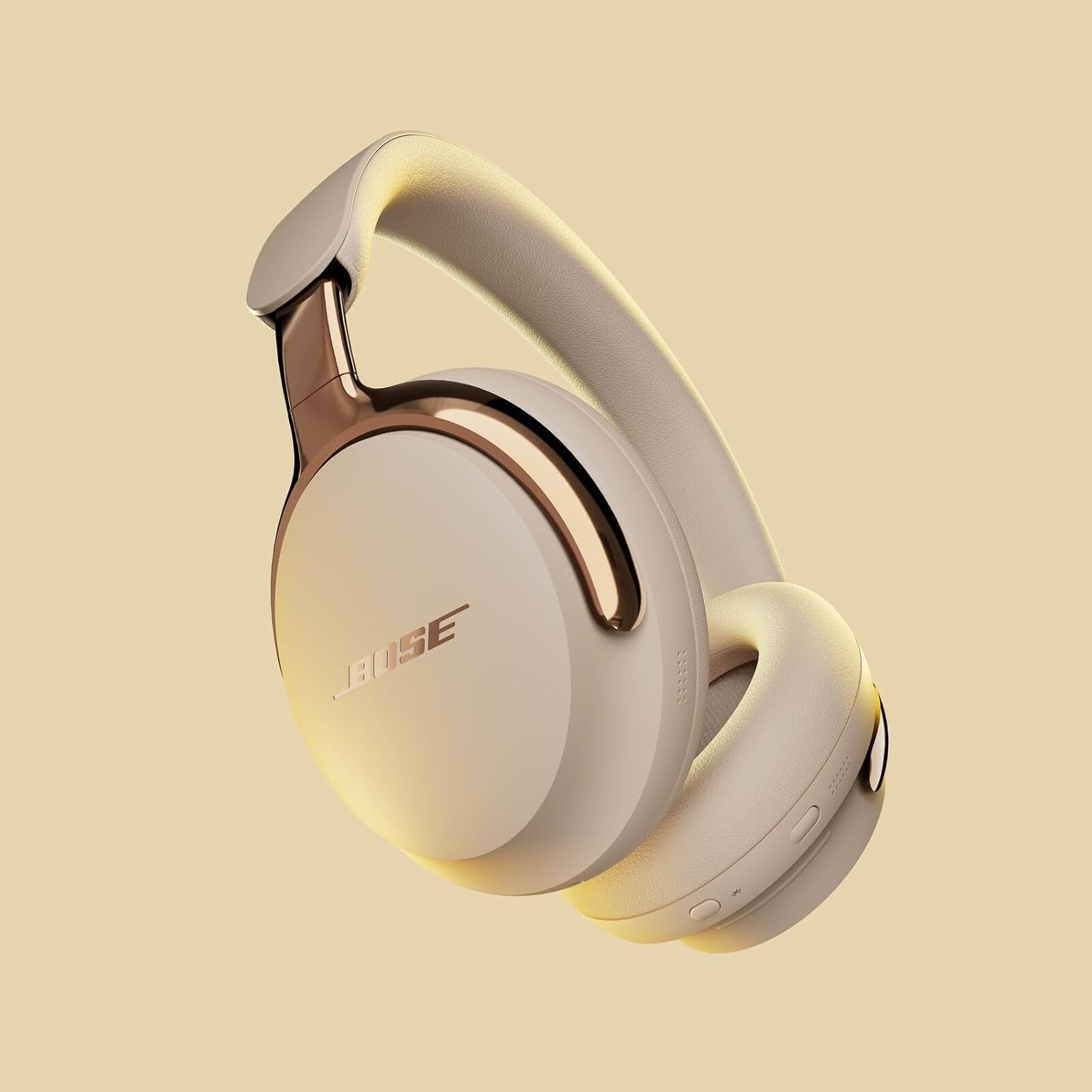
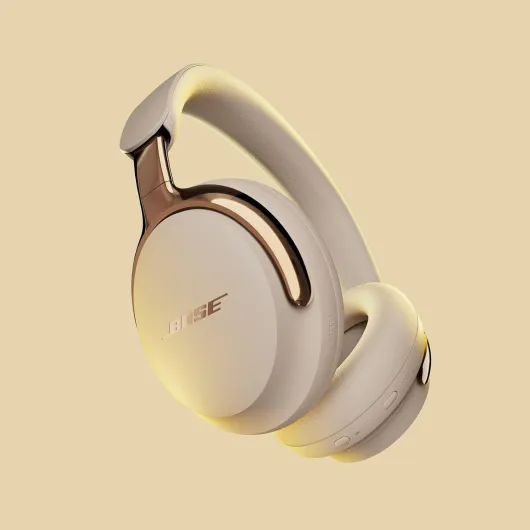
Design-wise, these are clearly in the "premium but not flashy" camp. The Driftwood Sand color is more interesting than plain black but still low-key enough to wear on a plane or in the office without looking weird. The headband has a metal core with a smooth slider (no clicks), and the earcups rotate and fold flat into the case. It all feels thought-through, but not overly complicated.
The main design choice that stands out is the smooth headband adjustment instead of a ratcheted system. Personally, I don’t love this. It’s easy to accidentally move one side when taking them on or off, and then you end up with an uneven fit until you fiddle with it. It’s not a deal-breaker, but for this price I’d rather have clear notches so I can set it and forget it. Some users will be fine, but if you’re picky about symmetry, you’ll notice.
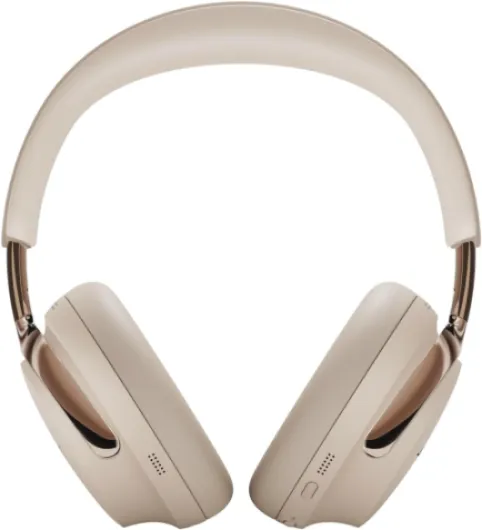
Controls are split between physical buttons and a touch slider. The power/Bluetooth button is clear and clicky, and the mode button is easy to reach. The touch slider for volume on the right cup works, but it takes a few days to get used to. I had a couple of accidental volume jumps while adjusting the headphones. Once you learn where to touch, it’s fine, just not as foolproof as actual buttons.
One thing I’m not a fan of is the startup chime. It’s loud, and you can’t lower it independently. Bose says it’s tied to their ear analysis/CustomTune feature, but honestly, it just feels unnecessarily aggressive when you put them on first thing in the morning. If you’re sensitive to sudden loud sounds, this will annoy you. Overall, the design is clean and modern, but not perfect from a usability point of view.
Battery life is good, not mind-blowing, but reliable
Bose advertises up to 30 hours of battery (about 23 with immersive audio). In my real-world use, with ANC always on, immersive mostly off, and volume around 50–60%, I was getting roughly 20–25 hours per charge. That’s spread over several days of commuting, working, and some idle ANC time. So the claim isn’t just marketing; it’s in the right ballpark, depending on how you use them.
I deliberately didn’t baby them: I left them on my desk with ANC running a couple of times, forgot to turn them off, and they still got through a full workday plus commute without going dead. For a long-haul flight plus airport time, you’re safe. You might not hit the full 30 hours, but it’s more than enough for a typical travel day or a week of regular office use without constantly charging.
Charging is via USB‑C, which is standard now and convenient. A full charge takes about 3 hours from low battery, which is fine. They also work while charging, so you can plug them into your laptop and keep listening, which is handy if you forget to charge them the night before a trip. There’s no crazy fast charge feature like "5 minutes for 5 hours" or anything, but the regular speed is acceptable.
The battery indicator in the app and the voice prompts are reasonably accurate. I didn’t see any big drops or weird behavior. If you’re coming from something older with weak battery, these will feel like a nice step up. If you already have modern Sony or Apple over-ears, battery life here is just solid and predictable, not a standout feature but definitely not a weakness.
Comfort is where these really shine
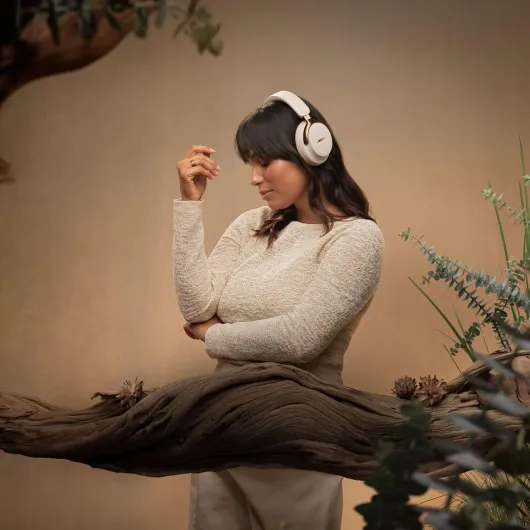
Comfort is probably the main reason to pick these over a lot of other high-end headphones. The ear pads are soft and plush, the clamping force is moderate, and the overall weight is low compared to something like AirPods Max. I wore them for a full workday (around 7 hours on and off, with short breaks) and didn’t get hot spots on the top of my head or sore ears.
Compared to Sony XM5, the Bose feel a bit lighter and less clampy on the sides. Compared to AirPods Max, it’s not even close: these are way more comfortable for long sessions. I also wear glasses, and the seal around the arms was decent without crushing my head. After about 3–4 hours straight, I felt a bit of warmth around the ears, but that’s normal for closed-back over-ears; nothing extreme.
The headband padding is thick enough that you don’t feel the metal, and the weight distribution is good. Because of the smooth slider, you might have to readjust the size every now and then if you’re constantly taking them on and off, but once they’re in place, they stay put. I didn’t feel like they were going to fall off when looking down at a laptop or walking briskly to catch a train.
If your main use case is long flights, long work sessions, or studying, comfort-wise these are one of the better options I’ve tried. You can genuinely keep them on for hours without thinking about them too much. The only people I’d warn are those who run hot or sweat a lot around the ears; the pads are synthetic and will get warm in a hot room or on a summer day, but that’s true for almost all ANC over-ears.
Build feels premium enough, but I’d treat them with care
The headphones use a mix of plastic for the cups, metal reinforcement in the headband, and synthetic leather pads. In the hand, they feel well-assembled: no creaks, no loose joints, and the folding mechanism is smooth. The finish on the Driftwood Sand version looks good, but because it’s a light color, I can already see it will pick up marks and general grime faster than a darker model.
Over the couple of weeks I’ve used them, I tossed the case in a backpack, wore them in light rain once, and generally treated them like normal everyday headphones. No obvious wear yet: no peeling, no scratches, no loose parts. The included case is rigid enough to protect them from random bumps in a bag, but it’s still plastic, not a heavy-duty hard shell. For normal travel and commuting, it’s fine.
The parts I’d watch over time are the ear pads and the smooth sliders. The pads feel soft and comfortable, but like most synthetic pads, they’ll probably wear and get flat after a year or two of heavy use. Bose usually offers replacement pads, so that’s not a disaster, just something to expect. The headband sliders being smooth instead of ratcheted means less mechanical clicking, but I’m always a bit cautious about long-term looseness. So far they’re firm, but you only really know after a year of use.
Given the price, I’d definitely use the case for transport and avoid throwing them naked into a bag with keys or anything sharp. They don’t feel fragile, but they also don’t feel like something you can abuse endlessly. For normal adult use—office, travel, home—they feel like they’ll hold up fine. Just don’t expect indestructible, and be aware that this light color will show dirt and oils, especially on the headband and pads.
Sound quality, ANC behavior, and that "immersive" mode
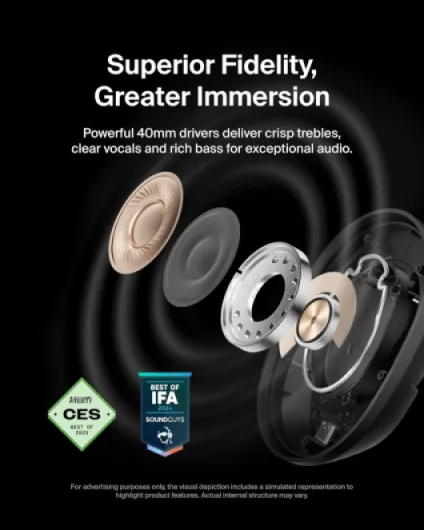
On sound, these are very capable but tuned for casual listening. Out of the box, you get a slightly boosted bass, clear vocals, and a generally smooth top end. For pop, hip-hop, electronic, and movies, they work really well. Classical and acoustic also sound good, but if you’re used to more neutral studio-style headphones, you’ll notice the low end is a bit emphasized. The app gives you a basic EQ (bass/mid/treble sliders), but it’s not very granular.
The immersive/spatial audio mode is interesting. It kind of moves the soundstage in front of you instead of inside your head. For movies and some live recordings, it actually feels more natural. For regular music, I found it hit or miss. Sometimes it adds a nice sense of space; other times it just feels like a slight reverb and I turned it off. I ended up using immersive mode mostly for video and keeping it off for playlists.
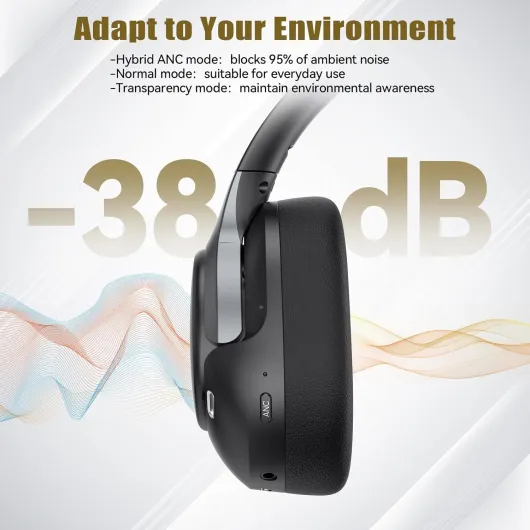
Noise cancelling is where things get a bit mixed. When it’s stable, the ANC is very strong—plane rumble, train noise, office AC, all get reduced heavily. On a flight, I was pretty happy; I barely heard the engine. But in some situations, especially at home with constant low-level noise (fans, a dryer), the new dynamic ANC behavior can be weird. You can feel it ramp up and down, and sometimes it gives that “pressure” feeling in the ears. One Amazon review mentioned this and I ran into similar behavior with a loud dryer: the ANC kept reacting and it was distracting.
Call quality is solid. The mics pick up your voice clearly and cut background noise well. On calls, people said I sounded clearer than with my older Sony XM4. Using them as a USB headset via USB‑C for video calls also worked nicely; plug in, select them as the audio device, and you’re good. Overall performance is strong, but the dynamic ANC tuning and the loud startup chime are the two things that held me back from calling them close to perfect for everyday use.
What you actually get and how it behaves day to day
Out of the box, you get the headphones, a hard-ish plastic case, a USB‑C to USB‑C cable, and a 2.5mm-to-3.5mm audio cable. Nothing fancy, but it covers the basics. The case is fairly compact for over-ear headphones and slides into a backpack without eating the whole compartment. The Driftwood Sand color in person is a light beige/cream tone; it looks nice but I can already tell it will show dirt faster than black or dark grey.
Feature-wise, these are very much in the premium category: Bluetooth 5.4, active noise cancelling with multiple modes (Quiet, Aware, Immersion), spatial/immersive audio, USB audio over USB‑C, and a Bose app where you can tweak some settings and EQ. They claim up to 30 hours of battery (about 23 with immersive audio). In my mixed usage, I was getting roughly 3–4 days between charges with 3–4 hours of use per day, so the claim isn’t insane.
Daily use is straightforward: hold the power button, they start with a loud chime and connect quickly to the last devices. Multipoint works decently; I had them paired to a phone and a laptop and they switched automatically when calls came in. There’s a touch strip on the right earcup for volume, plus physical buttons for power/Bluetooth and mode switching. The controls are easy enough to learn, but the touch slider can sometimes be a bit too sensitive if you adjust the cup on your head.
In practice, these feel like headphones designed mainly for travel, commuting, and office work. They’re not really gym-proof (they’ll handle light use, but I wouldn’t sweat heavily in them), and if you’re a hardcore audio nerd who wants super granular EQ and codec options, you might find the app and settings a bit basic compared to some competitors. For most people though, it’s a pretty straightforward, high-end wireless ANC experience.
Pros
- Top-tier comfort for long sessions: light, soft pads, moderate clamp
- Strong ANC in most situations, especially for travel (planes, trains, office)
- Good, easy-to-like sound with punchy bass and clear vocals
- Useful extras: USB‑C audio, decent call quality, practical case and battery life
Cons
- Dynamic ANC behavior can feel odd and cause pressure feeling with some background noises
- Startup chime is loud and can’t be adjusted
- Smooth headband adjustment can shift and end up asymmetrical
- App EQ and settings are relatively basic for the price
Conclusion
Editor's rating
After using the Bose QuietComfort Ultra Headphones (2nd Gen) for a while, my takeaway is pretty clear: they’re excellent for comfort and everyday use, but not flawless. The sound is very good in a mainstream way—punchy bass, clear vocals, easy to enjoy for long sessions. ANC is strong overall, especially on planes and trains, but the new dynamic behavior can feel odd with certain constant noises like fans or dryers. The loud startup chime and lack of control over it is also a real annoyance if you’re sensitive to sudden volume.
Where they really stand out is comfort. If you wear headphones for hours—work, travel, studying—these are some of the easiest to live with that I’ve tried. Light, soft, no aggressive clamp. Battery life is solid, build quality feels decent, and the case is practical enough. The immersive audio is a nice extra, good for movies, but not a must-use feature in my opinion. The app is fine but a bit basic on EQ and controls compared to some competitors.
I’d recommend these mainly to frequent flyers, commuters, remote workers, and anyone who prioritizes comfort and strong ANC over having the most tweakable sound. If you’re an audio nerd who wants advanced EQ and codec control, you might be happier with Sony. If you’re deep in the Apple world and care most about ecosystem features, AirPods Max still have the edge there. Also, if you already love the behavior of the first-gen Ultra and are sensitive to ANC pressure changes, I’d test these in person before upgrading. Overall, they’re a very good pair of premium ANC headphones with a few quirks you should be aware of before buying.