Summary
Editor's rating
Value for money: depends what you care about most
Design: premium feel without flashy nonsense
Battery life and charging: reliable, no drama
Comfort: good for long sessions, if you’re okay with a snug fit
Materials and build: mostly premium, with some trade-offs
Sound & ANC performance: strong sound, ANC a step behind Sony/Bose
What you actually get with the PX7 S2e
Pros
- Clean, detailed sound with tight bass and clear vocals
- Comfortable oval ear cups that work well even with glasses and bigger ears
- Solid build quality and premium feel with simple, reliable physical controls
Cons
- Noise cancelling is good but behind top competitors like Sony/Bose
- High price at full RRP, with fewer features and a basic app compared to rivals

Specifications
View full product page →| Brand | Bowers & Wilkins |
High-end cans without the marketing fairy dust
I’ve been using the Bowers & Wilkins PX7 S2e for a few weeks now as my main headphones for work, commuting, and gaming. Before these, I mostly used Sony WH-1000XM3 and some cheaper wired Sennheiser over-ears at home. So I’m not new to noise cancelling headphones, and I’m definitely not easily impressed by big claims on the box. I just want stuff that connects quickly, sounds good, and doesn’t make my head hurt after two hours.
What pushed me to try these was the mix of price drop and the reputation of Bowers & Wilkins for sound. I don’t really care about brand names, but I do care if vocals sound clear and bass doesn’t drown everything. The PX7 S2e is clearly aimed at people who care more about sound than about having 50 ANC modes and a crazy app. The app here is basic on purpose: a bit of bass/treble control and that’s it.
In day-to-day use, I’ve taken these on trains, worn them in a busy open-plan office, used them for Netflix on my laptop, and plugged them into a console controller for a few gaming sessions. So this isn’t a "listened 10 minutes and wrote a review" situation. I’ve had them on my head for several hours straight more than once, and I’ve recharged them a few times, so I have a pretty clear picture of where they shine and where they’re just okay.
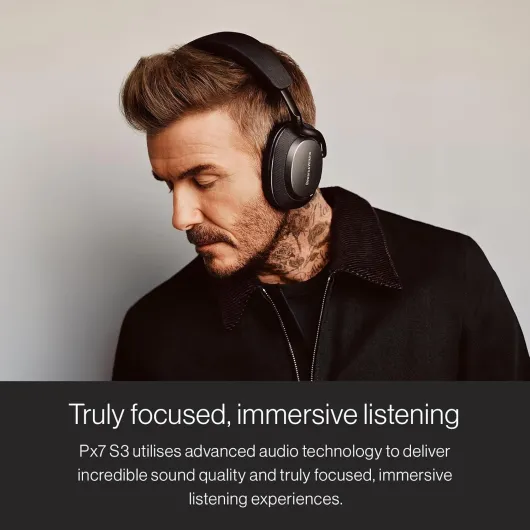
If I had to sum it up in one line: the PX7 S2e is all about sound quality and comfort first, with ANC and features taking second place. If you’re after the strongest noise cancelling or tons of smart tricks, there are better picks. If you mainly want your music to sound clean and you like a more premium feel, these start to make sense despite the price.
Value for money: depends what you care about most
Price-wise, the PX7 S2e sits in that higher bracket where you start comparing them directly to Sony WH‑1000XM5, Bose QuietComfort Ultra, and sometimes even Apple AirPods Max (depending on deals). If you pay full RRP, they’re not cheap. I got to try them around the £200–£250 mark, and at that level they start to make more sense, especially if sound quality is your main priority. If you only care about ANC strength, then Sony or Bose often give you more isolation for similar or less money during sales.
What you’re basically paying for here is: sound quality that’s a clear step up from typical mid-range ANC headphones, a more premium-feeling build, and a straightforward experience without a bloated app. You’re not paying for tons of gimmicks or heavy integration with a specific ecosystem. For someone who just wants their Spotify or Qobuz library to sound cleaner and more detailed on the go, that’s worth something. On the other hand, you don’t get fancy stuff like multi-device auto-switching as polished as Apple or the deepest ANC tuning options you see on some Android-focused models.
Compared to my older Sony pair, the trade is pretty clear: Sonys win on ANC and features, B&W wins on sound and build feel. If you can find the PX7 S2e at a good discount, they feel like solid value for people who put sound first. At full list price, you really need to care about that sound difference, otherwise the more mainstream options might look more attractive on paper.
So in terms of value: not a budget pick, not a rip-off either. It’s a headphone for someone who’s okay paying a bit extra to get a more hi-fi leaning sound in a travel-friendly package, and who doesn’t mind that the ANC is "good enough" instead of market-leading. If that sounds like you, the price can be justified. If you just want silence on planes for as little money as possible, this isn’t the most logical choice.
Design: premium feel without flashy nonsense
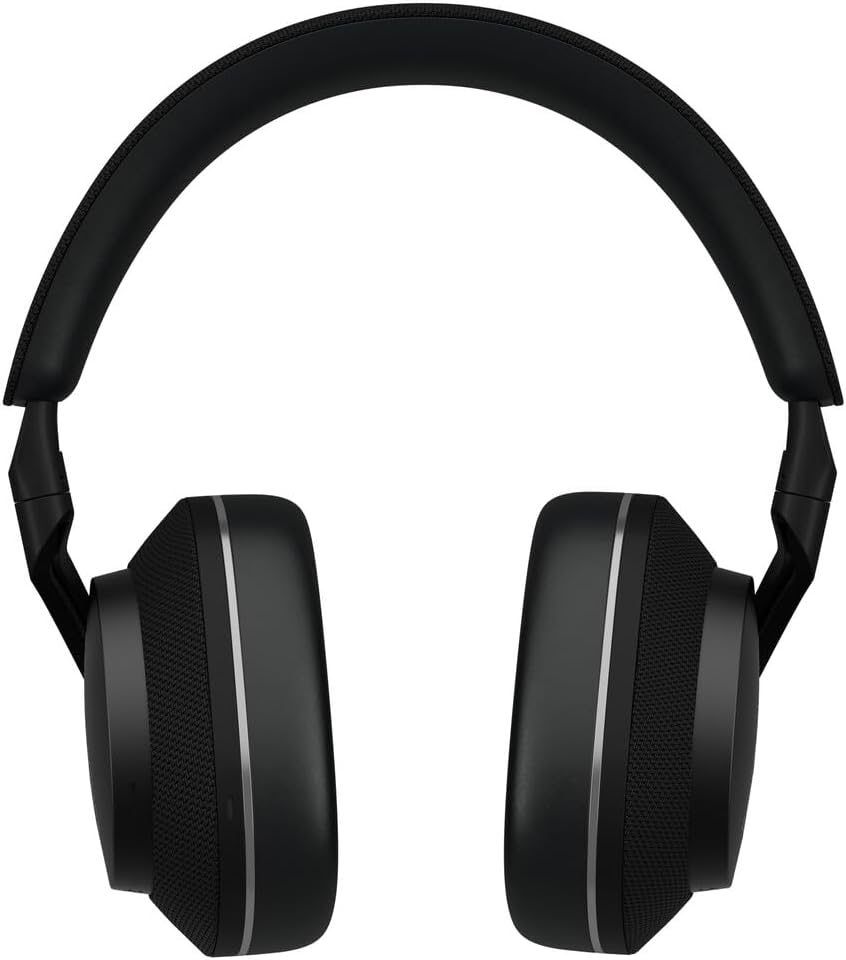
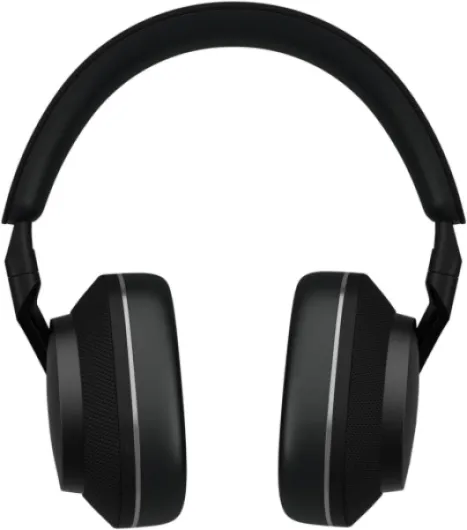
Design-wise, the PX7 S2e hits that "grown-up" look. No RGB, no chrome, no weird shapes. Just a clean over-ear design with oval cups and a padded headband. I’ve worn them in the office and on the train and they don’t scream "gamer" or "DJ". If you want something that looks low-key but clearly not cheap, these fit that role nicely. They look better in person than in most product photos, mainly because the texture and finish on the cups feel more refined than glossy plastic.
The ear cups swivel flat enough to sit comfortably around your neck, and they rotate just enough to find a good seal on your head. There’s no annoying creak when you twist them, which I’ve had with cheaper headphones. The headband adjustment is the usual sliding metal-style system. It holds its position well; I didn’t have to re-adjust every time I put them on, which is something that annoyed me on my older Sony pair after a year of use.
Button layout is straightforward, which I really appreciated. On the right side: volume up/down and a center button that does play/pause (single press), skip (double), previous (triple), and call controls. On the left: a single button to switch between noise cancelling, pass-through (hear the outside), and off. After a day, I didn’t need to think about what to press anymore. No random touches triggering volume changes like on touch-controlled models. If you’re often wearing gloves or just hate touch controls, this is a big plus.
Overall, the design feels aimed at people who want a clean, professional look and simple, reliable controls. It’s not trying to stand out visually, and that’s kind of the point. If you like flashy or super minimal Apple-like designs, you might find it a bit plain. For me, it hits a nice balance between discreet and clearly high-end.
Battery life and charging: reliable, no drama
The spec sheet says around 30 hours of playback, and in practice that’s roughly what I’ve seen with ANC on most of the time and volume at a normal level (around 50–60%). I managed a full work week of 2–3 hours per day plus some evening use before needing to recharge, which is perfectly fine. I’m not counting every minute, but it doesn’t feel like they’re draining faster than advertised. You don’t get the 40+ hours some other brands claim, but 30 “real” hours is enough that you’re charging maybe once a week if you’re a regular user.
Charging is via USB‑C, and they support quick charge. From my tests, about 15 minutes on a USB‑C charger gave me around a few hours of use, which is handy if you forget to plug them in the night before a trip. A full charge from low battery seemed to take around 2 hours on a regular charger. There’s no wireless charging, but frankly, for headphones that’s not something I really miss. A simple cable does the job and is faster anyway.
The app and the headphones themselves give clear battery feedback. You get a voice prompt on power-on telling you the approximate level, and the app shows a percentage. I never had a case where they died suddenly without warning; you get enough heads-up to plug them in. They can also be used wired even if the battery is low, although ANC obviously needs power.
So on the battery front: nothing flashy, but stable and predictable. If you’re travelling long-haul or you forget to charge often, the mix of 30-hour life and quick top-ups is more than enough. There are headphones that last longer on paper, but I never once felt limited by these in real use.
Comfort: good for long sessions, if you’re okay with a snug fit
Comfort is usually where I get picky. I have a slightly larger head and I wear glasses, so a lot of headphones end up either clamping too hard or pressing the frames into my skull. With the PX7 S2e, the clamp is firm but not painful. Out of the box, they felt a bit tight the first hour, but after a few sessions they seemed to loosen just enough. I can wear them for 2–3 hours without needing a break, which is better than my older Sony pair but not as effortless as super light studio headphones.
The ear cups are oval and fairly tall, which is nice if you have bigger or longer ears. My ears fit fully inside without touching the drivers, which is not always the case. The padding around the ear feels soft and seals well without turning into a sauna too quickly. After long sessions, my ears do get a bit warm, but that’s standard with over-ears; nothing extreme. With glasses on, the pads press a bit on the frames, but the foam is soft enough that it doesn’t become a headache, even on a full train ride.
Headband comfort is solid. The weight is spread decently across the top of the head and there’s enough padding to avoid a pressure point. I’ve worn them while working on the laptop for entire mornings, taking them off only for short breaks, and I didn’t feel that relief "finally" moment when you rip off something uncomfortable. They just felt like a firm but manageable hug on the head.
If you’re very sensitive to clamp force or you absolutely want super-light headphones, you might prefer something softer and looser. But if you’re okay with a secure, slightly snug fit that helps with isolation and stability, the PX7 S2e sits in a good spot. I wouldn’t run with them, but for commuting, office, and couch use, they’re well suited.
Materials and build: mostly premium, with some trade-offs
In the hand, the PX7 S2e feels solid. The headband has a metal core (or at least it feels like it) with a soft padded top, and the yokes that hold the cups feel sturdy. The outer part of the cups is a mix of metal and plastic, with a textured finish that hides fingerprints pretty well. It doesn’t feel cheap or hollow like some mid-range models. You can flex the headband a bit and it doesn’t crack or complain, which is reassuring if you’re rough with gear or throw it into bags a lot.
The ear pads feel like some kind of synthetic leather over memory foam. They’re soft but not squishy to the point of collapsing. After a few weeks, I didn’t see any peeling or flattening, but obviously long-term wear is another story. Compared to my older Sony WH-1000XM3, they feel slightly firmer and better shaped around the ear. The headband padding is decent, not super thick, but enough that I never had a hot spot on the top of my head, even after two or three hours of use.
One thing to note: these are not super light. At about 300 g, you feel them more than some plastic-heavy competitors. The trade-off is that they feel more solid and "serious" in the hand, but if you’re sensitive to weight, you’ll notice it during longer sessions. In my case, the weight never turned into pain, but I was aware I was wearing something more substantial than basic travel headphones.
Overall, the materials give off a premium and durable vibe, not luxury jewelry-tier but definitely above the usual mid-range plasticky stuff. I’d still be careful about getting the pads sweaty all the time, since synthetic leather always wears faster that way, but for normal office and commuting use, I’d expect these to hold up well over a few years.
Sound & ANC performance: strong sound, ANC a step behind Sony/Bose
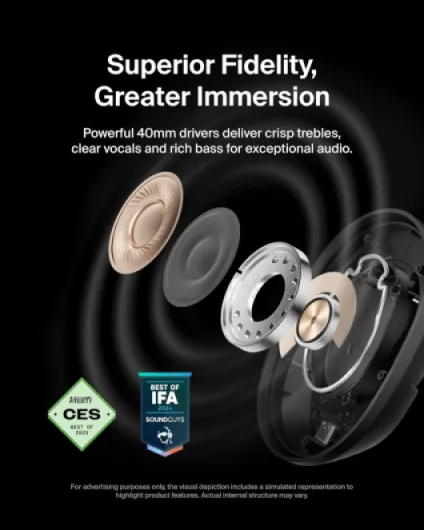
Let’s start with the sound. The PX7 S2e clearly aims for clean, detailed audio with a controlled but present bass. Compared to my Sony WH-1000XM3, the bass here is tighter and less boomy. You still get punch on electronic and hip-hop, but it doesn’t smear over the vocals or instruments. On rock and acoustic stuff, guitars and voices come through clearly, and you can pick out layers in the mix without needing to crank the volume. I used them with Spotify, Qobuz (hi-res), and some FLAC files over cable, and in all cases they sounded more precise and less "muffled" than the Sonys.
The soundstage (how wide it feels) is good for closed-back ANC headphones. Not as open and airy as true open-back hi-fi cans, obviously, but for travel headphones they do a nice job of not feeling stuck inside your head. I watched a few films and YouTube videos and dialogue was always easy to follow, with effects and music sitting in a good place. For gaming (plugged into a controller with ANC off to avoid latency), positional cues were decent, and the bass hit hard enough in action scenes without drowning footsteps.
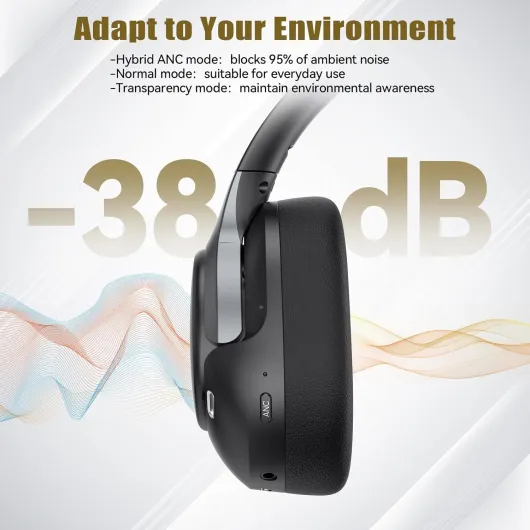
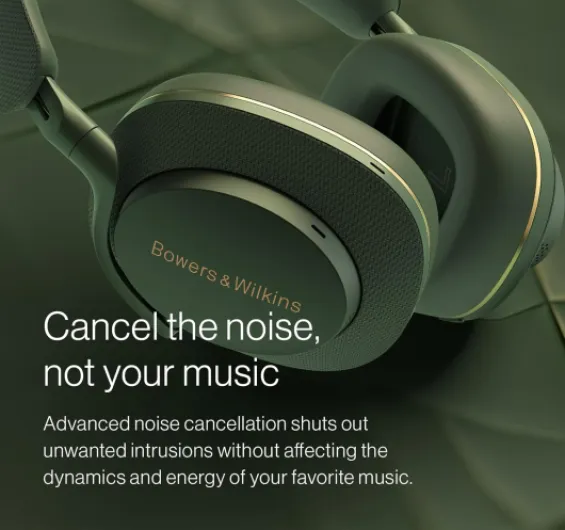
Now, the noise cancelling. It’s good but not top-tier. On a train, it knocks out a lot of the low rumble and general noise, but some higher-pitched sounds and voices still come through more than on recent Sony or Bose models. In an office, it cuts air-con and background chatter to a low murmur, but you’re not in a total bubble. If your main goal is maximum isolation, this isn’t the strongest in the market. Transparency (ambient) mode is useful for short conversations or station announcements, but it feels a bit less natural than Apple’s or Sony’s equivalents.
Call quality is fine. I took a few work calls and no one complained, even in a café. They’re not magic at killing background noise, but they’re perfectly usable for day-to-day calls and video meetings. Overall, performance-wise I’d say: sound quality is the star, ANC is decent but not class-leading, and the rest (calls, video watching, gaming over cable) is handled competently without any nasty surprises.
What you actually get with the PX7 S2e
Out of the box, you get the headphones, a hard case, a USB‑C to USB‑C cable, and a USB‑C to 3.5 mm cable. No wall charger, which is normal now but still a bit annoying if you don’t already have one lying around. The case is fairly compact for over-ears and fits easily in a backpack. It’s rigid enough that I’m not worried about throwing it in a bag with other stuff. Inside the case, there’s a little flap hiding the cables, which keeps them from rattling around.
The headphones themselves come in this anthracite black finish. In person it looks more like a very dark grey with some texture, not a shiny plastic toy. There’s a Bowers & Wilkins logo on each side, but it’s not screaming at you. On the right ear cup, you have the usual volume rocker and a multi-function button for play/pause/track skipping. On the left, you get the ANC/ambient button. No touch gestures; it’s all physical buttons. Personally I prefer that because swiping on ear cups never works reliably for me.
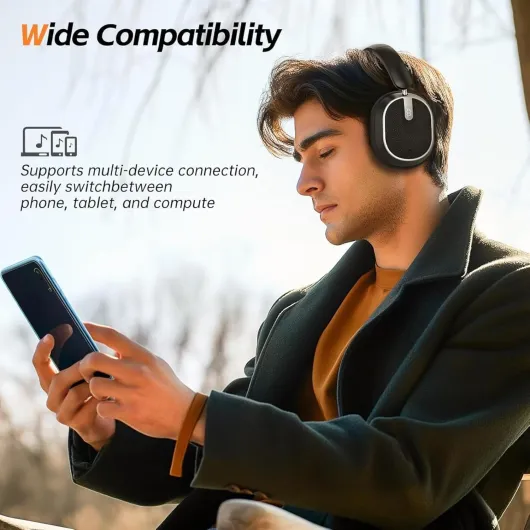
Setup is simple: hold the power button to enter pairing, connect through Bluetooth like any other device, and then the B&W Music app picks them up. The app walks you through the controls and lets you tweak bass and treble a bit. No 10‑band EQ or fancy sound modes here. It can remember multiple devices, and I had them paired to a phone, a tablet, and a laptop. Switching isn’t instant multi‑point like some newer models, but they do reconnect quickly to the last used device and I didn’t have major pairing headaches.
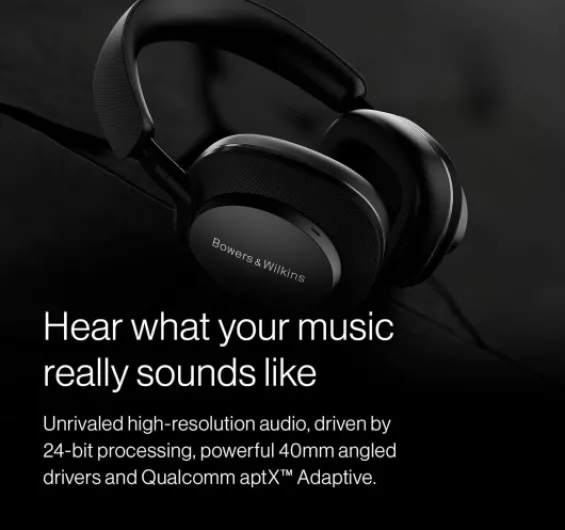
On paper, they support aptX Adaptive, 30 hours of battery, and quick charge. In reality, they behave like a fairly high‑end pair of wireless headphones that focuses on clean audio and simple controls rather than feature overload. If you come from Sonys or Bose, the feature set feels a bit stripped down, but if you just need solid wireless listening with a wired backup option, everything essential is here.
Pros
- Clean, detailed sound with tight bass and clear vocals
- Comfortable oval ear cups that work well even with glasses and bigger ears
- Solid build quality and premium feel with simple, reliable physical controls
Cons
- Noise cancelling is good but behind top competitors like Sony/Bose
- High price at full RRP, with fewer features and a basic app compared to rivals
Conclusion
Editor's rating
After living with the Bowers & Wilkins PX7 S2e for a while, my view is pretty clear: these are sound-first headphones with decent ANC, not the other way around. The audio quality is the main reason to buy them. Music has good clarity, bass is punchy but controlled, and they handle everything from electronic to classical without turning into a muddy mess. If you’re used to more bass-heavy, soft-sounding ANC headphones, you’ll likely notice the more precise character here right away.
The downsides are mainly around value and noise cancelling. The ANC is fine for commuting and office use but doesn’t hit the same level as the latest Sony or Bose in cutting out voices and higher-pitched noise. The app is very basic, which I personally like, but some people will see that as a missing feature. And the price, especially at full RRP, puts them in direct competition with models that offer stronger ANC and more bells and whistles.
I’d say these are for people who care more about sound quality and build feel than maximum isolation and smart features. If you want a comfortable, premium-feeling pair of over-ears mainly for music and some travel, they’re a strong option, especially if you catch them on sale. If your top priority is the strongest possible noise cancelling on planes or in very loud environments, or you want lots of software tricks, you’re probably better off with Sony or Bose instead.