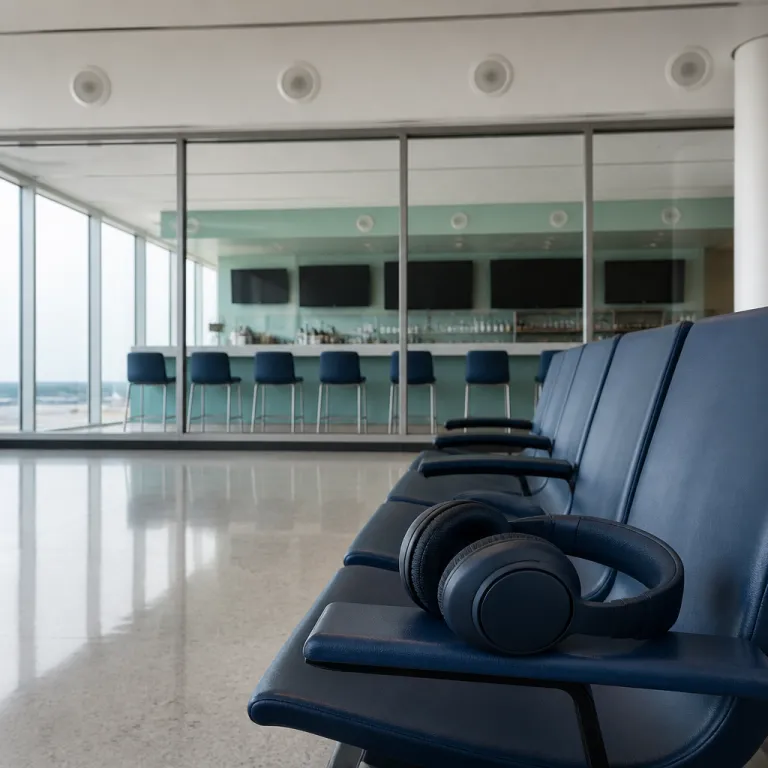
From private bluetooth audio to shared auracast broadcast soundscapes
Noise canceling headphones used to be about shutting the world out. With auracast Bluetooth broadcast audio, the same bluetooth audio link that feeds your playlist can also tap into shared sound in airports, gyms, and sports bars. That shift turns every compatible device into a potential audio stream you can join or leave at will.
Traditional bluetooth headphones create a one to one connection between a phone and a single device. Auracast changes that by letting one auracast transmitter send broadcast audio to many auracast compatible devices at once, without pairing and without the usual low device limit. In practice, that means your Sony WH 1000XM5, Bose QuietComfort Ultra, or Galaxy Buds can behave more like a radio tuned to local channels than a tethered accessory.
For frequent flyers, this is not a theoretical product pitch. Imagine walking to your gate, opening an auracast enabled app, and seeing several broadcast options labeled clearly as gate announcements, lounge TV, or boarding calls. You tap once, your bluetooth adapter or built in radio locks to that auracast broadcast, and the jet engine rumble fades behind crisp speech that no longer fights with a public address system.
The technical leap sits under the marketing term auracast audio, which rides on Bluetooth LE Audio and the LC3 codec. LE Audio is designed for low power and low latency, so an audio transmitter can run all day in an airport ceiling without draining power or overheating. Because the stream is one way broadcast audio, the infrastructure can scale to hundreds of listeners without the pairing chaos that plagues classic bluetooth transmitters in crowded spaces.
There is also a subtle but important change in how devices behave. Instead of pairing a single bluetooth transmitter to one set of bluetooth headphones, auracast compatible devices simply read a broadcast identifier and join, much like Wi Fi networks. That makes it trivial for enabled hearing aids, hearing aid accessories, and standard buds pro style earbuds to share the same audio stream without any user juggling of adapters or cables.
For now, most people will first meet auracast through televisions and laptops. LG and Samsung televisions already ship with auracast enabled modes that can send bluetooth audio to multiple devices, while Android phones from Google, Samsung, and Xiaomi expose auracast hearing options in their system menus. The same infrastructure that powers a living room sports broadcast can later be scaled up to a stadium or a sports bar, where dozens of devices quietly join the same low latency stream.
Noise canceling still matters, but it becomes the supporting actor rather than the star. When your Bose or Sony cans can both crush low frequency cabin noise and join an auracast broadcast at the gate, the value of another 2 dB of ANC feels marginal. The real upgrade is that your headphones stop being an isolated product and start behaving like a node in a shared audio network.
The airport test: announcements, hearing aids, and real silence
Airports are the perfect stress test for both ANC and auracast bluetooth broadcast audio. You have constant low frequency engine noise, mid band chatter, and high stakes speech where missing a word can mean missing a flight. That mix exposes the limits of even the best bluetooth headphones while highlighting what auracast broadcast can fix.
On a typical concourse, Bose QuietComfort Ultra and Sony WH 1000XM5 both handle the low rumble well. They struggle more with garbled public address announcements, where reflections and poor speakers smear the audio before it even reaches your ears. When that same announcement is sent as a clean auracast audio stream directly to your device, the difference is less about volume and more about intelligibility.
For travelers using hearing aids, the change is even more dramatic. Enabled hearing aids that support auracast hearing profiles can join the same broadcast audio stream as regular headphones, but with processing tuned for speech clarity and personalized amplification. Instead of fighting a muddy loudspeaker, a hearing aid or hearing aids pair can lock onto a low latency auracast transmitter mounted near the gate desk.
That is where infrastructure and personal devices finally meet. An airport installs a set of bluetooth transmitters connected to its announcement system, each configured as an auracast transmitter for a specific zone. Your phone or hearing aid app then lists those auracast compatible devices as joinable channels, and a single tap connects your bluetooth audio feed to the right gate.
Noise canceling still plays a crucial role once you are connected. The ANC in over ear models like the WH 1000XM5 or Sennheiser Momentum 4 reduces the background roar, while the auracast broadcast keeps speech intact and free from echo. Together, they create a kind of layered silence where only the information you care about cuts through.
In ear options matter here as well. Models such as Galaxy Buds and buds pro style earbuds with strong passive isolation can combine auracast enabled listening with decent blocking of cabin noise, even if their ANC depth trails the big over ear flagships. For demanding listeners who care about tuning and fit, specialist in ear reviews such as this in depth analysis of refined in ear sound show how seal and comfort can matter as much as codecs.
Accessibility is not a side benefit here, it is central to the standard. Auracast hearing features are explicitly designed so that a single audio transmitter can serve both consumer bluetooth headphones and medical grade enabled hearing devices without separate loops or proprietary adapters. That unification means airports, museums, and conference centers can justify the price of upgrading their systems, because one infrastructure serves everyone.
For the frequent traveler, the metric that matters is missed information per trip. With auracast bluetooth broadcast audio, that number can finally drop, not because ANC got slightly better, but because the signal itself stopped fighting the room. Silence is useful, but clear speech at the right moment is priceless.
Offices, sports bars, and the new etiquette of shared silence
Once you understand auracast in airports, the office and sports bar use cases fall into place. Open plan offices already rely on bluetooth headphones and noise canceling to create artificial privacy in noisy rooms. Auracast broadcast audio adds a shared layer on top, where meeting rooms, hot desks, and huddle spaces can each host their own audio stream.
Picture a hybrid meeting room with a small display and an auracast transmitter hidden behind it. Instead of blasting a speakerphone across the floor, the room advertises an auracast compatible channel that colleagues can join from their laptops, phones, or bluetooth headphones. A single tap in a collaboration app connects you to the audio stream, while your ANC keeps the rest of the office at bay.
Sports bars and gyms are similar, just louder and sweatier. Televisions already hang above treadmills and bar counters, but the audio is usually muted or drowned by music. With auracast enabled televisions from LG or Samsung, each screen can run its own low latency bluetooth audio broadcast, and patrons choose which game to hear through their own device.
Latency matters more than marketing admits in these spaces. If the bluetooth transmitter feeding your headphones lags by half a second, you will see a goal before you hear the roar, and the illusion breaks. Auracast bluetooth broadcast audio is engineered for low latency so that even budget devices from brands like Avantree can act as a reliable audio transmitter without turning commentary into a badly dubbed film.
There is also a new etiquette to learn. When everyone in a sports bar or office is on their own auracast audio stream, the room gets quieter, but the social cues change. You may need to tap your headphones or pause your app to signal availability, much like muting on a video call.
Multi point connectivity becomes the glue that holds this together for travelers. A pair of bluetooth headphones that can juggle a phone, a laptop, and an auracast broadcast without dropping connections is far more valuable than one with a slightly better ANC spec sheet. Deep dives into multi point behavior, such as this analysis of commuter focused bluetooth performance, show how often brands still fumble the basics.
From a product design perspective, the humble bluetooth adapter and usb dongle are not going away. Many laptops and older televisions will rely on external bluetooth transmitters or compact usb audio transmitter sticks to join the auracast ecosystem. The key is that these adapters now speak the same broadcast audio language as phones, tablets, and enabled hearing devices, instead of each living in its own proprietary bubble.
For office managers and bar owners, the price calculus shifts from individual headsets to shared infrastructure. A few well placed auracast transmitters, some signage, and a clear app experience can transform how people share space without raising the overall noise floor. The result is a world where silence and connection are no longer opposites, but two sides of the same wireless link.
Choosing headphones in the auracast era: what actually matters now
If you are shopping for noise canceling headphones today, auracast bluetooth broadcast audio should already be on your checklist. The question is not whether every flight or sports bar supports it yet, but whether your next pair will be ready when they do. Buying into a dead end wireless stack for the sake of one more ANC mode is a poor trade.
Start with clear priorities. You still need strong ANC for low frequency noise, comfortable pads that do not pinch glasses, and reliable bluetooth audio that does not stutter in crowded terminals. Once those basics are met, auracast compatible hardware becomes the tie breaker between otherwise similar products.
Look for explicit mentions of auracast enabled or LE Audio support in the specifications. Some brands hide this behind vague terms like audio sharing or broadcast mode, so you may need to read the manual rather than the box. Detailed reviews, such as this focused test of a flagship over ear bluetooth model with high end ANC and a durable travel case on a specialist noise canceling headphones site, often reveal whether the feature is truly present or just marketing gloss.
Do not overlook budget options either. EarFun and Avantree have already shipped auracast compatible earbuds and adapters at a relatively low price, proving that broadcast audio is not just a luxury tier perk. A compact bluetooth adapter or usb dongle that supports auracast audio can extend the life of an older but still excellent pair of headphones by bridging them into the new ecosystem.
For hearing aid users, the stakes are higher than convenience. A hearing aid that can join an auracast broadcast directly removes the need for neck loops, clip on relays, or proprietary streamers that add latency and cost. When enabled hearing devices and mainstream bluetooth headphones share the same auracast hearing infrastructure, accessibility stops being a separate product line and becomes a baseline expectation.
Travelers should also think about how they will manage multiple devices. Your phone may handle auracast bluetooth broadcast audio at the gate, while your laptop uses a usb audio transmitter for in flight films, and your tablet connects to a hotel television via a bluetooth transmitter. The best bluetooth headphones will roam between these devices gracefully, without forcing you to re pair or dig through settings every time.
In the end, auracast is less about a single killer feature and more about a quiet rewiring of how audio moves through public and private spaces. The next decade of headphone progress will not be defined by another marginal ANC gain, but by how seamlessly your devices join and leave shared audio streams. What matters is not the dB rating on the box, but the silence on the tarmac.
Key figures shaping auracast and broadcast audio adoption
- Bluetooth SIG projects that more than 3 billion Bluetooth LE Audio devices will ship annually within a few years of full ecosystem rollout, creating a massive base of auracast compatible devices ready for broadcast audio in public spaces.
- Hearing industry reports indicate that over 80 % of new prescription hearing aids now include some form of wireless audio streaming, positioning enabled hearing devices to benefit quickly from auracast hearing and shared infrastructure in airports and offices.
- Field trials in transport hubs have shown that direct wireless audio streams can improve speech intelligibility scores for public announcements by 20 to 30 percentage points compared with traditional loudspeakers, especially for travelers with mild to moderate hearing loss.
- Consumer surveys of frequent flyers consistently rank missed or unclear gate announcements among the top three sources of travel stress, suggesting strong latent demand for auracast bluetooth broadcast audio once airports deploy compatible transmitters.
- Early deployments of multi screen sports bar audio systems using low latency bluetooth transmitters report that more than half of patrons with bluetooth headphones or earbuds opt in to personal audio streams when given clear instructions and visible signage.