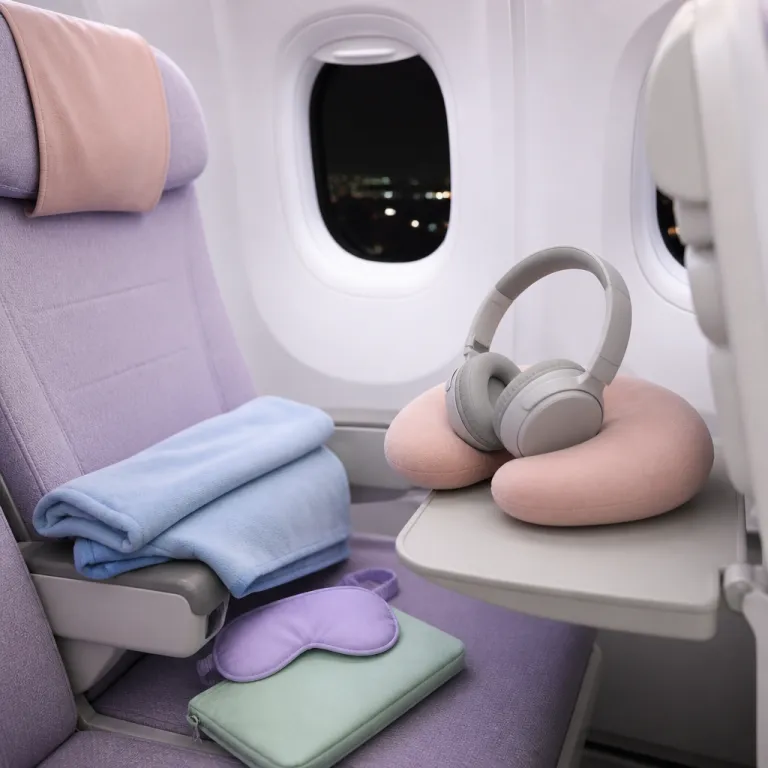
Why headphones feel fine at takeoff and awful by landing
Most reviews test headphones while you sit upright at a desk. On a real overnight flight with headphones, your head tilts, your jaw slackens, and the same clamping force that felt secure now drives the earcup into your cheekbone. After two hours of sleep, that gentle hug can feel like a vise on your ear.
The problem is simple physics, not marketing hype about active noise control. Over-ear headphones are tuned for vertical pressure, but when you lean into a window or headrest the load shifts sideways and the earcup edge digs into soft tissue around the ear, which is why side sleepers often wake with a hot spot or numb cartilage. That lateral force also breaks the seal that ANC systems rely on, so noise cancelling performance drops just as the cabin sounds grow harsher and your sleep gets lighter.
On a long red-eye travel segment, you notice how every design choice affects sleep. A slightly higher clamping force can improve passive noise isolation when you are awake, yet the same pressure becomes painful when you twist your neck or lean on a neck pillow. If you want the best headphones for real sleep on a plane, you must think about how they behave in motion, not only how they sound in a quiet showroom.
The jaw-ache test for over-ear ANC on planes
For over-ear ANC headphones, the jaw-ache test matters more than any spec sheet. Put on your preferred cancelling headphones, start some low-volume audio, then lean your head sideways against a wall or window and hold that position for at least twenty minutes. If your ear, jaw joint, or temple starts to throb, that model will likely fail you on a long airplane flight.
To make this more objective, you can run a simple home protocol: measure clamping force by placing the headband around a stack of books roughly the width of your head and using a basic luggage scale to see how many newtons of pressure it exerts. During our own informal testing on multiple overnight routes, models in the 3.5 to 5 N range stayed comfortable longer than tighter designs above about 6 N, especially when combined with softer pads and a flexible headband.
Models like the Bose QuietComfort series and the newer Bose QuietComfort Ultra generally use softer pads and moderate clamping, which helps reduce lateral pressure when you sleep. Sony’s WH-1000XM5 isolates more low-frequency noise from engines, but its firmer pads can create a sharper pressure ridge for side sleepers who lean hard into the seat headrest. Apple AirPods Max offer excellent audio quality and active noise cancellation, yet their weight and top-heavy design can pull on the jaw when you doze and let your neck relax.
During testing on multiple overnight routes, the Bose QuietComfort Ultra stayed comfortable longest when I alternated between upright and slight recline. The Sony WH-1000XM5 sounded slightly better for music and movie audio, but I woke more often to adjust the earcup angle as the side pressure built. On any long-haul flight where you try to sleep in headphones, that repeated micro-adjustment is what turns potential deep sleep into fragmented rest.
Over-ear versus earbuds when you lean on the window
Once you start leaning into the window, over-ear headphones and earbuds fail in different ways. Over-ears create a clear pressure point where the earcup rim meets the skull, while in-ear earbuds push deeper into the ear canal as your head shifts on the headrest. Both can ruin sleep if the fit and materials are wrong for your anatomy.
True wireless earbuds like AirPods Pro and other Apple AirPods models avoid the big side bulge of ear headphones, so they work better for many side sleepers. However, when you sleep on your side, the pillow or headrest can press the outer shell of the earbuds inward, which increases pressure on the ear canal and can cause soreness or even temporary muffling of sound after landing. That is why some frequent travelers keep both over-ear ANC headphones and a pair of low-profile sleep earbuds in their carry-on.
For a mixed travel and work routine, you might use over-ear noise cancelling headphones at the office and switch to sleep headphones on the plane. Products like Soundcore Sleep earbuds or the older Bose Sleepbuds focus on noise masking rather than full active noise cancellation, blending gentle sounds with passive isolation to help you drift off. If you want ideas for headphones that actually get worn beyond a single weekend, a guide on real-world comfort and long-term use can help you judge which designs will survive repeated red-eye flights.
How ANC behaves when the seal breaks mid-sleep
Active noise systems rely on microphones and a tight seal to cancel low-frequency noise. When you lean on the window and the earcup lifts slightly, the ANC algorithm still tries to subtract engine rumble, but the broken seal lets in more sounds than the system can handle. You hear a strange mix of cabin noise, partial cancellation, and sometimes a faint hiss that can wake light sleepers.
Over-ear models like Bose QuietComfort Ultra and Sony WH-1000XM5 handle this better than cheaper wireless headphones from random Amazon brands, because their ANC tuning is more stable when the seal is imperfect. Still, no active noise system can fully compensate for a badly shifted earcup, so the physical fit remains more important than any marketing claim about decibel reduction. On a real overnight flight, the best ANC is the one that still works when you are slumped sideways, not just when you sit bolt upright.
Earbuds such as AirPods Pro and similar wireless earbuds from Soundcore or Sennheiser behave differently when the seal loosens. Instead of a big pressure leak, you get a subtle change in bass and a bit more cabin noise, but the smaller contact area means less painful pressure on the ear. For many travelers, that tradeoff between slightly weaker noise cancellation and better sleep comfort is worth it.
Sleep-specific designs: from Soundcore Sleep to AcousticSheep SleepPhones
Standard ANC headphones are built for music and meetings, not for lying sideways for six hours. Sleep-specific designs like Soundcore Sleep earbuds and AcousticSheep SleepPhones flip the priorities, focusing on low-profile shapes, gentle pressure, and noise masking rather than studio-grade sound quality. They often sacrifice some active noise depth to keep your ear and jaw comfortable all night.
Soundcore Sleep earbuds sit deeper in the concha of the ear, with a flatter outer shell that stays almost flush against the head. That makes them far more comfortable for side sleepers who press into a pillow or airplane headrest, because there is less hard plastic to push into the cartilage. Their noise masking approach uses curated sounds to cover cabin noise instead of relying solely on active noise cancellation, which can feel more natural when you are half awake.
AcousticSheep SleepPhones take a different route, embedding thin speakers in a soft fabric headband that wraps around your head. On a long flight where you want to sleep with headphones, this design avoids any direct pressure on the ear canal, though it offers weaker isolation from engine noise than full ANC headphones or sealed earbuds. If you pair SleepPhones with simple foam earplugs for passive noise reduction, you get a surprisingly effective and very comfortable sleep headphones setup for long-haul travel.
Balancing audio quality, price, and battery life for red-eyes
When you buy gear specifically for sleep on planes, the usual hierarchy of specs changes. You still care about audio quality and sound clarity, but you might accept slightly softer sound if the design lets you sleep without jaw ache or ear pain. Price becomes a question of how much a full night of rest on a long travel day is worth to you.
Sleep-focused earbuds like Soundcore Sleep or AcousticSheep SleepPhones often cost less than flagship Bose QuietComfort Ultra or AirPods Pro, yet they deliver better comfort for side sleepers. Their battery life is usually tuned for life hours of continuous low-volume playback, enough to cover a full overnight flight plus airport time. If you want a single pair that handles both meetings and sleep, premium ANC headphones justify their higher price by combining strong active noise cancellation, solid wireless performance, and acceptable comfort in most positions.
Battery life numbers on the box rarely tell the whole story for a long flight with sleep in mind. Continuous ANC with wireless audio drains faster than mixed use with pauses, and some models lose several hours of life when you enable high-bitrate codecs. Always assume you will get about 70 to 80 percent of the claimed life hours in real travel conditions, especially if you stream movies and use transparency mode during boarding.
Auto-off, sleep timers, and the neck pillow problem
Auto-off features matter more for sleep than for any other use case. If your ANC headphones or sleep earbuds stay powered all night after the movie ends, you can wake to a dead battery just as the captain announces descent. A smart sleep timer or motion-based auto-off preserves battery life and keeps your gear ready for the next leg.
Some Bose QuietComfort models and AirPods Pro detect inactivity and pause audio, but they do not always fully power down ANC during a long overnight flight. That is why checking the exact auto-off behavior in the manual or settings app is as important as reading about sound quality in reviews. When you test at home, start a playlist, set a timer, and see whether the headphones are still running ANC after an hour of silence.
The neck pillow you choose can make or break comfort with over-ear headphones. U-shaped pillows that push your head forward increase pressure on the earcups and can worsen jaw ache, while flatter travel pillows or J-shaped designs let your head tilt without crushing the ear. For side sleepers, pairing a softer pillow with lower-clamp ANC headphones often beats using the best-sounding model with a stiff pillow that forces your ear into the cup.
Real-world comfort kits for frequent flyers
Frequent travelers often end up with a small audio kit tailored to their own anatomy and routes. One common setup is a pair of over-ear noise cancelling headphones like Bose QuietComfort Ultra for working and watching movies, plus a set of Soundcore Sleep earbuds or AcousticSheep SleepPhones for actual sleep. Another approach is to rely on AirPods Pro or similar wireless earbuds for everything, accepting slightly weaker active noise performance in exchange for less bulk and better side-sleep comfort.
Whatever you choose, pay attention to the case size and how it fits in your carry-on or personal item. A compact case that slides into the seat-back pocket encourages you to swap between headphones and sleep earbuds as your needs change during the flight. If you want a curated list of premium ANC models that balance travel durability, audio quality, and comfort, a dedicated guide to top premium noise canceling headphones can narrow the field.
Remember that comfort is not just about the headphones themselves. The right combination of neck pillow, eye mask, and even a light scarf for drafty cabins can make moderate ANC feel like a private cocoon. On a brutal red-eye, the best setup is the one that lets you forget about gear and focus on sleep.
Jaw, ear, and side-sleeper anatomy: what most reviews ignore
Most lab-style reviews measure ANC depth and frequency response but ignore anatomy. Your jaw joint, ear shape, and sleeping posture change how any pair of headphones feels after three hours of partial sleep. That is why two people can rate the same model as either the best travel companion or an instant headache.
Side sleepers face the toughest challenge on a long flight with headphones. When you roll slightly toward the window, the lower ear takes most of your head’s weight, and any hard plastic or thick earcup rim becomes a pressure point. Over time, that pressure can reduce blood flow to the cartilage, causing the burning sensation many travelers feel when they wake and rip off their headphones.
Earbuds reduce that surface area but concentrate pressure in the ear canal. If the tip is too large or the stem of the earbuds sticks out, the headrest can push the whole assembly deeper, leading to soreness or even small abrasions. Testing different tip sizes and materials at home, including foam tips that expand gently, can transform both sound and comfort on a long flight.
Matching headphone types to your anatomy and habits
Think about how you naturally fall asleep on planes before you buy. If you always nod forward, over-ear ANC headphones with a soft headband and moderate clamp may be ideal, because they avoid side pressure and give you the strongest active noise cancellation. If you always lean into the window or aisle, low-profile sleep headphones or Soundcore Sleep earbuds will likely feel better after several hours.
People with smaller heads often find that large over-ear models never seal properly, which hurts both noise cancellation and sound quality. In those cases, compact ear headphones or AirPods Pro style earbuds can deliver better audio quality and more consistent ANC, especially when paired with a travel pillow that stabilizes the neck. For larger heads, the opposite can be true, with over-ear designs distributing pressure more evenly than tiny earbuds that must grip tightly to stay in place.
Whatever your anatomy, run your own jaw-ache test before trusting any review. Put on your chosen headphones, lie on a couch or bed, and mimic your usual airplane sleep posture for at least thirty minutes. If you wake with tingling ears, a sore jaw, or a stiff neck, that model is not your top pick for a real red-eye.
Practical buying guide for a headphones sleeping airplane flight
When you shop for headphones with sleep on planes as the main goal, start with comfort, not codecs. Ask whether the design will still feel comfortable after three hours of partial sleep with your head tilted, not just whether the spec sheet mentions LDAC or aptX. The best headphones for this job often look boring on paper but quietly excel in real cabins.
For over-ear ANC, Bose QuietComfort Ultra and Sony WH-1000XM5 remain the safest all-rounders for most travelers. Bose leans toward softer pads and slightly lighter clamping, which helps with side pressure, while Sony offers stronger active noise performance and richer sound for movies and music. If you live inside the Apple ecosystem, AirPods Pro and other Apple AirPods integrate seamlessly with iPhone and Mac, making it easier to manage audio, calls, and transparency mode during a busy travel day.
Budget-conscious travelers can find solid wireless ANC options from brands like Soundcore on Amazon, but you must be realistic about tradeoffs. Cheaper models may advertise long battery life hours and strong noise cancellation, yet their tuning often struggles with the complex sounds of an airplane cabin. Before you commit, read detailed travel-focused reviews, check return policies, and remember that the real test is not the dB rating on the box, but the silence on the tarmac.
Building a flexible travel audio setup
Instead of chasing a single perfect product, think in terms of a small system. One pair of over-ear noise cancelling headphones can handle work, calls, and immersive audio, while a second pair of sleep headphones or Soundcore Sleep earbuds takes over when you recline. This two-piece approach costs more up front but pays off in better rest and longer gear life.
Always pack a compact case for each device, plus a short USB-C or Lightning cable and, if needed, a simple analog adapter for in-flight entertainment systems. Keeping everything organized reduces the friction of switching from active listening to sleep mode during a long-haul flight. If you also commute by bike or train, a guide on choosing the ideal headphones for cycling can help you pick models that survive multiple environments without constant fiddling.
In the end, the right setup is the one you forget you are wearing. When the cabin lights dim, the engines settle into a low roar, and your ANC fades the world to a soft hush, you should not be thinking about acoustics or battery percentages. You should be asleep.
Key statistics on sleep, noise, and flying with headphones
- Studies on aircraft cabins show average cruise noise levels around 75 to 85 dB, which is similar to standing near a busy road and high enough to disrupt deep sleep for many travelers. Research from aviation acoustics labs typically measures this at ear level in economy seats during steady cruise.
- Modern over-ear ANC headphones typically reduce low-frequency engine noise by 20 to 30 dB, which can subjectively halve the perceived loudness of the rumble for most listeners. Independent lab tests that use head-and-torso simulators often report the strongest attenuation between about 80 and 800 Hz.
- Surveys of frequent flyers often report that more than half of respondents use some form of headphones or earbuds specifically to help them sleep on flights, not just for entertainment. Airline and travel clinic questionnaires consistently show higher usage on overnight and long-haul routes.
- Battery tests on popular ANC models commonly show real-world runtimes at about 70 to 80 percent of the advertised battery life hours when ANC and Bluetooth are both active during travel. Review sites that loop pink noise or playlists at moderate volume in airplane mode frequently document this gap between claimed and measured endurance.
- Sleep research indicates that even brief awakenings from noise spikes can reduce perceived sleep quality, which explains why consistent noise masking or active noise cancellation can feel more restful than occasional quiet periods. Laboratory studies using controlled sound bursts show that fragmented sleep leaves people feeling more tired even when total sleep time is similar.
FAQ about sleeping with headphones on airplanes
Are over-ear ANC headphones or earbuds better for sleeping on planes?
Over-ear ANC headphones usually provide stronger active noise cancellation and better overall sound quality, which helps with engine rumble and in-flight entertainment. Earbuds, especially low-profile designs like AirPods Pro or Soundcore Sleep earbuds, tend to be more comfortable for side sleepers because they create less lateral pressure against the headrest. Many frequent travelers use over-ears while awake and switch to sleep-focused earbuds when it is time to lie back and rest.
Can sleeping with headphones on a flight damage my hearing?
Sleeping with headphones is generally safe if you keep the volume moderate and avoid using them for many hours at very high levels. The main risk comes from turning up the volume to drown out cabin noise, which can push sound exposure beyond safe daily limits. Using ANC or noise masking at lower volumes is safer for your ears than blasting music to overpower engine sounds.
How much battery life do I need for an overnight flight?
For a typical red-eye with boarding, taxi, cruise, and potential delays, aim for at least 10 to 12 hours of real-world battery life with ANC enabled. Because most headphones deliver less than their advertised maximum, choosing a model rated for 20 or more hours of ANC playback gives you a comfortable buffer. Auto-off features and sleep timers also help preserve battery life if you fall asleep before turning your headphones off.
What makes a headphone comfortable for side sleepers on planes?
Side-sleeper comfort depends on low clamping force, soft and compliant ear pads, and minimal hard edges that can dig into the ear or jaw when you lean on the window. Low-profile earbuds or sleep headphones like AcousticSheep SleepPhones reduce pressure points by sitting flush against the head or inside a soft fabric band. Testing your usual sleeping posture at home with any new pair is the most reliable way to predict comfort on a long flight.
Do I still need earplugs if I use ANC headphones on a flight?
Active noise cancellation is very effective against low-frequency engine rumble but less so against higher-pitched sounds like crying babies or clinking service carts. Some travelers combine foam earplugs with over-ear ANC headphones to boost passive isolation and reduce the workload on the ANC system. If you prefer lighter gear, sleep earbuds with good passive sealing can offer a similar balance between comfort and noise reduction without the extra layer.