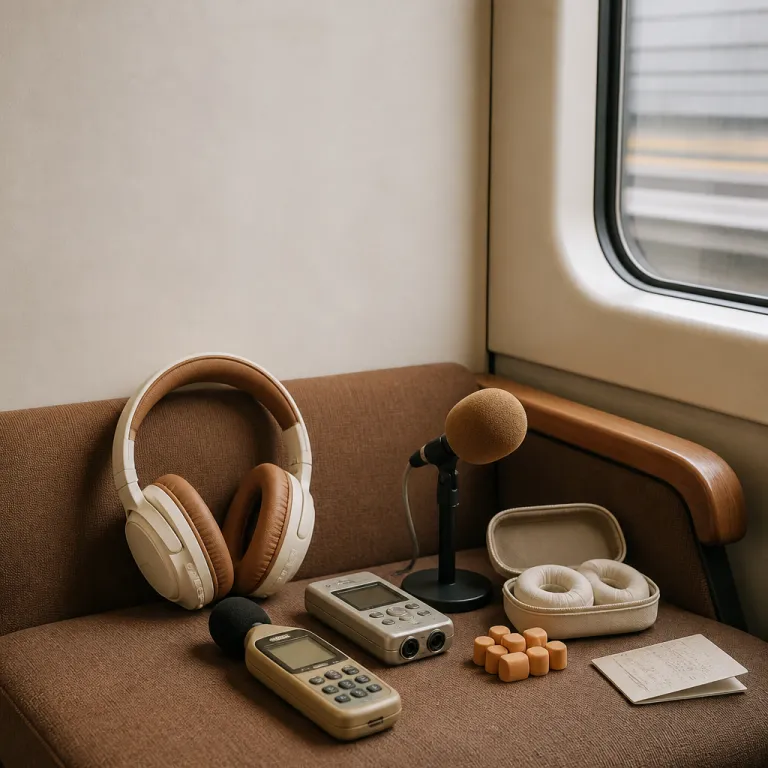
Why noise cancelling headphones commute train scenarios are uniquely demanding
On a packed carriage, noise cancelling headphones used on a daily rail commute face a tougher test than in any quiet lab. The rail rumble under your feet sits below 200 Hz, while crowd chatter, squealing brakes and shrill door chimes spray energy across the mid and high audio bands that active systems struggle to tame. When you add station announcements, your own ear noise from movement and the clatter of bags, you quickly see why no single pair of headphones can erase everything at once.
Most modern headphones with active noise cancelling, often shortened to ANC, use tiny microphones near the ear cups to sample external noise and then generate an opposite sound wave. This active noise process works brilliantly on steady low frequency noise, so the deep bass thud of the train and the engine drone almost vanish, but the same circuitry reacts too slowly to sudden screeches or a nearby laugh. That is why even the top wireless models with strong noise reduction still let through some sharp consonants, keyboard clicks and the higher harmonics of voices during a commute.
For a daily commuter, the goal is not total silence but a controlled sound floor that lets you play music or podcasts at safe levels without cranking the volume. Good over ear headphones combine passive isolation from well sealed ear cups with active noise reduction, so the form factor and design matter as much as the chipset. When you choose ANC headphones for regular train travel, you are really choosing which parts of the spectrum to prioritise, how much comfort you want under a hat, and how many hours of battery life you need between charges.
How ANC actually works on trains: strengths, blind spots and adaptive tricks
On a suburban line rolling at moderate speed, active noise systems shine because the low frequency rail rumble is predictable and easy to cancel. Hybrid ANC, which combines microphones outside the ear cups with sensors inside the ear, can reduce that rumble by 20 to 30 decibels in controlled tests using head and torso simulators, so the perceived sound level drops dramatically even before you play any audio. Once you start to play music with a bit of deep bass, the remaining low level vibrations are masked and the carriage suddenly feels calmer.
The blind spot appears when the train brakes hard, doors slam or a nearby passenger shouts, because those sounds spike between roughly 800 Hz and 4 kHz where active noise algorithms are less effective. Even the best noise cancelling headphones for commuting by rail, including flagships like Bose QuietComfort Ultra or Sony WH 1000XM5, cannot fully erase that mid band chaos in independent measurements from reviewers such as RTINGS and SoundGuys, so you still hear some edge on voices and screeches. That is why transparency mode is so important on modern wireless headphones, since it lets you deliberately let in useful sounds like announcements rather than fighting a losing battle against every transient.
Adaptive ANC tries to close this gap by changing its strength and frequency focus in real time based on microphones, motion sensors and sometimes GPS. On a train, that can help when you move from a quiet tunnel to a noisy above ground section, but it can also create pumping effects where the sound floor rises and falls in a distracting way over time. Before you buy, look for reviews that test adaptive active noise on real trains, not just in offices, and pay attention to whether the system keeps the audio stable while you walk, sit and stand in crowded carriages.
For readers who want to dive deeper into how hybrid active noise cancelling behaves in motion, a detailed test of hybrid active noise cancelling Bluetooth headphones with long play time and deep bass is available under this hybrid ANC Bluetooth headphones review, which reports both lab and field data. That kind of lab plus real world testing usually combines controlled pink noise in a test chamber with measurements on actual commuter lines, showing how battery performance, Bluetooth stability and ear cup seal interact with the raw noise cancellation numbers. It also highlights how different designs handle ear noise from jaw movement, glasses and hats during long commutes.
Model by model: Bose, Sony, Apple and Sennheiser on real train commutes
When you narrow the field to noise cancelling headphones optimised for train commuting, a few models consistently rise to the top. Bose QuietComfort and the newer Bose QuietComfort Ultra remain reference points for low frequency active noise, so the floor rumble and HVAC drone on intercity trains almost vanish, but their tuning is relaxed and some listeners find the sound a little soft on detail. Sony WH 1000XM5 and Sennheiser Momentum 4 Wireless push a bit more energy into the treble, which helps speech clarity in podcasts, though they let slightly more mid band noise through than the Bose in many tests.
Apple AirPods Pro, especially the latest generation of AirPods Pro 2, are the in ear headphones that punch far above their size on trains, thanks to strong active noise and excellent transparency mode for announcements. Their form factor suits commuters who want something pocketable and light, but the smaller ear tips mean passive isolation depends heavily on getting the right fit in each ear. Over ear headphones with larger ear cups, like the Bose QuietComfort Ultra or Sennheiser Momentum 4, spread pressure more evenly and often give better comfort over several hours, especially if you wear glasses or a beanie.
Price and battery life also separate these options for a daily commuter who spends hours on rails every week. Over ear wireless headphones in this class typically offer 20 to 30 hours of play time with ANC active, while in ear models like AirPods Pro sit closer to 5 to 6 hours per charge with extra hour battery reserves in the case. If you care about long term value and avoiding e waste, it is worth reading analyses of the three year headphone problem, such as this piece on why ANC headphones become e waste so quickly, because sealed batteries and fragile headbands can turn an expensive pair into landfill before the audio tech is truly outdated.
Comfort, fit and form factor: what matters when you stand for an hour
On a rush hour train, comfort is not a luxury, it is survival, because even the best noise cancelling headphones for a commute by train are useless if you keep adjusting them every few minutes. Over ear headphones with plush ear cups distribute clamping force around the skull, which helps when you lean against a window or get jostled in a crowd. In ear headphones rely on a tight seal in the ear canal, so any ear noise from chewing, talking or jaw movement becomes more noticeable over time.
Form factor also affects how well active noise systems perform, since a good physical seal reduces the workload on the ANC circuitry and improves overall sound quality. Closed back over ear designs with deep pads usually give the strongest passive isolation, so the active noise only has to cancel the remaining low frequency rumble, while open or shallow designs leak more and let in extra mid band chatter. If you wear glasses, look for ear cups with softer foam that can deform around the arms, because a hard ridge can break the seal and reduce both bass response and noise cancellation.
Weight and headband design become critical when you stand for 60 to 90 minutes each way, especially under a winter hat or hood. Lighter wireless headphones with well padded bands reduce hot spots on the crown, but extremely light models sometimes feel less stable when the train lurches, so there is a trade off between stability and comfort. Before buying, try to keep a pair on for at least half an hour in a store, move your jaw, tilt your head and simulate real commute movements, because that is when pressure points, ear fatigue and subtle design flaws reveal themselves.
Battery life, connectivity and smart features that actually help commuters
For a commuter, battery life is not a marketing bullet, it is the difference between a peaceful ride and a day ruined by raw carriage noise. Over ear wireless headphones aimed at travellers now routinely claim 30 or more hours of play time with ANC on, but real world results on trains with Bluetooth multipoint and spatial audio features active often land closer to the mid twenties. In ear models with smaller cells may only give 5 or 6 hours per charge, so you need to think in terms of total hours per week, not just a single trip.
Fast charging matters more than headline capacity when your headphones die halfway through a long day, because a 10 minute top up that gives 3 to 4 hours of listening can rescue the evening commute. Bluetooth stability is equally important in crowded stations where dozens of phones, laptops and wireless earbuds compete for spectrum, so look for models with modern Bluetooth versions and solid antenna design rather than chasing obscure codecs. Features like auto pause when you remove an ear cup, reliable wear detection in each ear and easy switching between phone and laptop save time and reduce friction in daily use.
Smart features can either help or hinder on trains, depending on how they are tuned. Adaptive ANC that changes strength based on your movement can be useful when you leave the train and walk through a busy concourse, but some systems overreact and create audible pumping in the background sound. Transparency mode that automatically activates when you start a call or when the headphones detect a station announcement can be genuinely helpful, especially as broadcast audio technologies such as Auracast begin to appear in public spaces, a trend explored in depth in this article on why broadcast audio can matter more than another decibel of ANC.
How to tune your sound and music for a calmer rush hour ride
Even with strong active noise, what you choose to play through your headphones can make or break a commute. Bass rich tracks with controlled deep bass help mask the residual low frequency rumble that ANC does not fully cancel, while mid forward podcasts can cut through the remaining chatter without needing unsafe volume levels. If you listen to very quiet acoustic music, you will notice more of the carriage noise floor, so pairing that content with the most aggressive noise cancelling headphones for a commute by train makes sense.
Most modern wireless headphones and in ear models come with companion apps that let you tweak EQ, ANC strength and sometimes spatial audio modes. On trains, a mild bass boost and a slight dip in the harsh upper mids often yield a more relaxed sound, especially when combined with a stable active noise profile rather than constantly shifting adaptive modes. Spatial audio can be fun for movies, but on a commute it sometimes spreads sound in a way that makes external noise more noticeable, so many commuters prefer a conventional stereo presentation for predictable isolation.
Volume discipline is crucial because the temptation to overpower noise by sheer loudness is strong when the carriage gets rowdy. A good rule is to set a comfortable level in a quiet room, then rely on ANC and smart tuning rather than cranking the dial on the train, which protects your hearing and reduces long term ear fatigue. Remember that the real mark of a well designed pair is not the dB rating on the box, but the silence on the tarmac.
Buying guide: matching noise cancelling headphones to your specific train commute
Choosing noise cancelling headphones for a commute by train starts with mapping your actual route and habits, not chasing generic top ten lists. If you ride older, rattlier lines with intense low frequency rumble, prioritise models with class leading active noise in the sub 500 Hz band, such as Bose QuietComfort Ultra or Sony WH 1000XM5, even if the price is higher. For newer, smoother trains where crowd chatter dominates, a snug fit, strong passive isolation and clear midrange tuning may matter more than raw ANC depth.
Think about how many hours you spend in transit each week and match that to realistic battery life, including time for calls and video on your phone or laptop. Over ear wireless headphones with 20 to 30 hours of rated play time will comfortably cover a full work week of commuting plus some office use, while in ear options like AirPods Pro rely on the case to stretch total hours across several days. If you often forget to charge devices, fast charge capability and clear battery indicators in the app or on the ear cups become non negotiable features.
Finally, consider the full ownership experience rather than just the launch price and a promise of free shipping from a retailer. Check whether the manufacturer offers battery or pad replacements, how robust the headband hinges feel and whether the Bluetooth and ANC firmware receive updates over time. For a daily commuter, the best cancelling headphones are the ones that still feel comfortable, connect quickly and block the right kind of noise after hundreds of rush hour rides, not just on the first unboxing day.
Key figures on train noise and ANC performance
- Typical interior noise levels on commuter trains range from about 70 to 80 dB A weighted during cruising, rising to 85 dB or more during braking or in older carriages, according to measurements from several European rail operators and academic transport noise studies that use calibrated sound level meters at seated ear height.
- Modern over ear ANC headphones can reduce steady low frequency noise by roughly 20 to 30 dB in the sub 500 Hz band, based on independent lab tests from organisations such as RTINGS and SoundGuys that use head and torso simulators in controlled chambers.
- In the speech critical 1 to 4 kHz range, most consumer ANC systems only achieve around 5 to 10 dB of reduction, so voices and announcements remain partially audible, which is why transparency mode and good passive isolation are still essential for commuters.
- Longitudinal surveys of urban commuters in large cities have found that regular exposure to average noise levels above 80 dB for more than 2 hours per day is associated with increased risk of hearing fatigue and long term threshold shifts, underscoring the value of effective ANC and sensible volume limits.
- Battery life claims for wireless ANC headphones are often 10 to 20 percent higher than real world results, with independent testers typically measuring 22 to 26 hours of continuous playback on models advertised at 30 hours when ANC and Bluetooth are both active.
FAQ: noise cancelling headphones on trains
Are over ear or in ear headphones better for train commutes ?
Over ear headphones usually provide stronger passive isolation and more comfortable ear cups for long rides, which helps ANC work more effectively against low frequency rumble. In ear models like AirPods Pro can match or beat some over ear designs on pure active noise, but their performance depends heavily on tip fit and they may amplify ear noise from jaw movement. For most commuters who ride more than an hour per day, a well fitting over ear pair strikes the best balance between comfort, stability and noise reduction.
Can ANC block train announcements and create safety issues ?
Strong ANC can reduce the level of announcements, especially the low frequency components, but it rarely removes them completely because speech energy sits in a band where active systems are less effective. Using transparency mode when approaching your stop or keeping volume at moderate levels ensures you still hear critical information. Many modern headphones also offer configurable transparency presets so you can quickly switch between isolation and awareness on platforms and in stations.
How much battery life do I really need for commuting ?
For a typical commuter who spends 1 to 2 hours per day on trains, a pair rated for at least 20 hours of ANC playback will comfortably cover a full work week without charging. If you also use the same headphones for office work, calls and evening listening, aiming for 30 hours of claimed battery life or reliable fast charging is safer. In ear models with shorter single charge endurance can still work well if their cases provide multiple recharges and you build a habit of topping them up during the day.
Does higher ANC strength always mean better comfort on trains ?
Very aggressive ANC can create a slight pressure sensation in some ears, especially in sealed over ear designs, which some people find fatiguing over long rides. A more moderate but stable noise reduction profile, combined with good passive isolation and a comfortable fit, often feels better over time than the absolute strongest setting. The best approach is to test different ANC levels on an actual train if possible and choose the one that lowers noise enough without causing discomfort or dizziness.
Is it worth paying extra for spatial audio and advanced codecs for commuting ?
Spatial audio and high resolution codecs like LDAC can improve immersion and detail in ideal conditions, but on a noisy train their benefits are often masked by the environment. For commuting, reliable Bluetooth connectivity, strong ANC, comfort and battery life usually matter more than marginal codec gains. If you already own a compatible phone and listen to high quality files, the extra features can be a nice bonus, but they should not be the primary reason to choose one pair over another for daily train use.