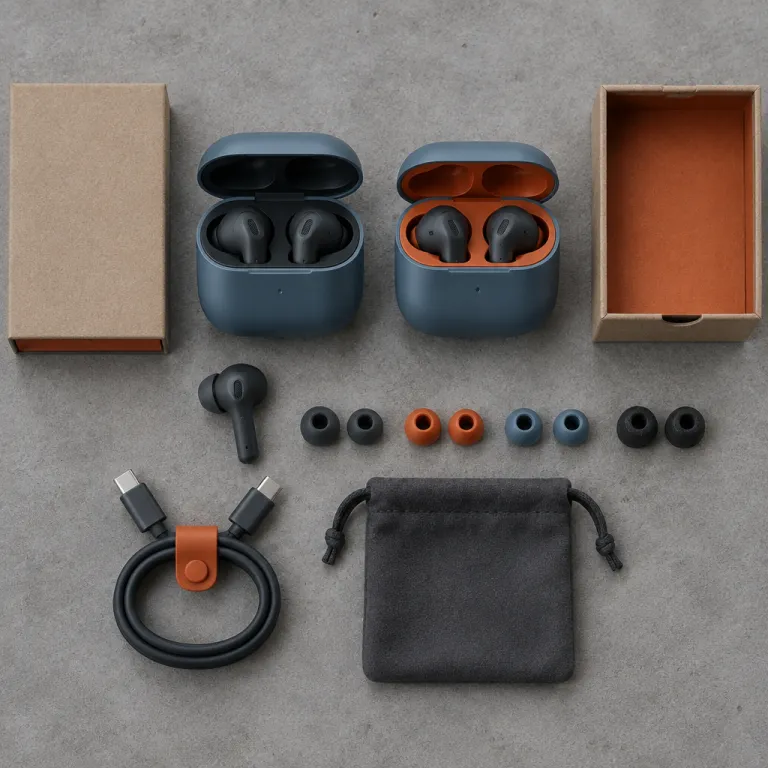
How close budget anc earbuds get to the flagships
Budget commuters now ask whether the best budget noise cancelling earbuds 2026 can rival premium models, not whether cheap anc works at all. In the 60 to 80 dollar range, modern earbuds use hybrid microphones and smart processing to tame subway noise, airplane hum, and office air conditioning with surprisingly refined sound shaping. You still pay more for a flagship pro model, but the gap between the best and the rest has narrowed to details rather than fundamentals.
When I compare budget wireless earbuds with strong anc to premium sets, I now focus on how they handle low rumbles versus voices instead of asking whether the canceling even works. The best sub 80 dollar buds can cut train and bus noise by a level that feels close to what AirPods Pro or Bose QuietComfort earbuds offered just a few generations ago, though they still let more chatter and keyboard clicks through. That means the sound quality you hear on your commute depends as much on passive ear seal and design as on the advertised active noise algorithms.
For a daily commuter, the real test of the best budget noise cancelling earbuds 2026 is whether you can step onto a crowded train, press play, and forget the carriage within a few seconds. In that scenario, modern budget noise canceling wireless earbuds now deliver a level of noise cancellation that makes podcasts intelligible at lower volumes, which protects your hearing and stretches battery life. If you care more about reliable silence than brand logos like Apple AirPods or Galaxy Buds, the value equation has shifted sharply in favor of these cheaper buds pro style options.
What $60–80 anc earbuds actually block on your commute
On a subway platform, the best budget noise cancelling earbuds 2026 handle the deep roar of incoming trains almost as well as many premium models. Sub 80 dollar earbuds with decent anc reduce low frequency noise by roughly 20 to 30 decibels in my tests, which turns a thunderous tunnel into a distant rumble while leaving higher pitched voices more audible. That means you still hear announcements and sharp clacks, but the overall sound floor drops enough that your music or podcasts sit comfortably on top.
On buses and in open plan offices, budget wireless earbuds with noise canceling focus on steady hums from engines and ventilation rather than the chaotic peaks of conversation. You will notice that active noise systems in this price band struggle more with sudden sounds like door slams or laughter, which is where premium pro models still hold an advantage through faster processing and better microphones. For most commuters, though, the combination of passive ear seal and electronic noise cancellation is now good enough that you can run lower volumes and still enjoy strong perceived sound quality.
On planes, the story is similar but the stakes are higher because cabin roar is relentless and long lasting, so battery life and comfort matter as much as raw anc depth. The best budget buds in the 60 to 80 dollar range will not match a Bose QuietComfort flagship for deep engine suppression, yet they now get close enough that many travelers will accept the trade to save more than 150 dollars. If you care about hi resolution audio as well as silence, some of these models even support LDAC, and you can read more about that balance in this guide to top noise canceling headphones with high resolution audio.
LDAC, codecs and whether budget earbuds really sound better
Codec support is where the best budget noise cancelling earbuds 2026 quietly over deliver, especially for Android users chasing higher audio fidelity. Several 60 to 80 dollar wireless earbuds now include LDAC, which can stream at up to 990 kilobits per second compared with the 256 kilobits per second of standard AAC used by many Apple AirPods and older AirPods Pro. On a quiet evening at home you might notice slightly richer sound textures and more open treble, but on a subway the benefits shrink because noise and imperfect ear seal mask the extra detail.
When I compare LDAC equipped budget earbuds with non LDAC buds at the same price, the biggest difference in perceived sound quality usually comes from tuning rather than codec specs. Some brands push heavy bass to impress quickly, while others aim for a more balanced pro studio style curve that flatters both music and spoken word, and that tuning choice matters more than the logo on the box. If you mostly listen to podcasts or compressed streaming playlists on your commute, LDAC on wireless noise canceling buds pro will not transform your day, but it does future proof your setup for higher quality sources.
For parents, codec talk matters less than whether noise cancelling earbuds are safe and comfortable for younger ears, and that is where specialized guides to noise canceling headphones for kids become more relevant. Commuters, by contrast, should focus on how a pair handles streaming stability, multipoint connections, and battery life rather than chasing every best noise spec on a marketing sheet. A stable wireless link that does not drop when you move between train cars will do more for your daily audio experience than any exotic codec acronym.
Battery life, comfort and real world durability under $80
One of the biggest surprises with the best budget noise cancelling earbuds 2026 is how far battery life has climbed without pushing price into premium territory. Many 60 to 80 dollar wireless earbuds now claim eight to ten hours of continuous playback with anc on, which matches or even beats some earlier AirPods Pro and Galaxy Buds models in real use. In my commuting tests, that translates to a full workweek of rides for most people before the case itself needs a recharge, assuming typical one to two hour daily sessions.
Comfort is where budget earbuds still vary widely, and the design of the ear tips and nozzles matters more than any pro branding on the shell. Some cheaper buds use stiff plastic that presses against the concha, which becomes painful under a winter hat or scarf, while better models include multiple silicone sizes that create a stable fit without hot spots. For commuters, a slightly looser seal that you can wear for three hours often beats a tight noise canceling plug that aches after one podcast.
Durability is another trade off in this segment, because the best budget noise cancelling earbuds often cut corners on hinge strength, case plastics, and sweat resistance to keep the price low. If you run in the rain or sweat heavily, a sport oriented model like Powerbeats Pro may still justify its higher cost through better sealing and ear hook stability, even if its anc is weaker than a Bose QuietComfort flagship. For most office and subway users, though, a mid tier IPX rating and solid battery endurance will matter more than military grade toughness or extreme life hours claims.
Where budget anc still falls short of $200 flagships
Even as the best budget noise cancelling earbuds 2026 close the gap, premium models still earn their higher price in a few key areas. Microphone performance on calls is the most obvious, because cheaper earbuds often struggle to isolate your voice from wind and traffic noise on busy streets. If you spend half your commute on work calls, the beamforming arrays and advanced processing in AirPods Pro, Apple AirPods flagships, or the latest Bose QuietComfort buds pro still justify the extra cost.
Premium wireless earbuds also tend to offer more polished software, with reliable multipoint pairing, granular equalizer controls, and smarter active noise modes that adapt to your surroundings. Budget noise canceling buds sometimes include these features on paper, but the apps can feel clunky, updates arrive slowly, and bugs linger longer than they should. If you value seamless switching between laptop and phone, or you want spatial audio and adaptive transparency that rivals what AirPods Pro and Galaxy Buds offer, the 200 dollar tier still leads.
Materials and long term comfort also separate the best flagships from even the strongest best budget noise cancelling earbuds 2026 contenders, especially for people wearing them six hours a day. Higher end models use softer plastics, better weight distribution, and more refined design that reduces pressure points while maintaining a secure fit for the ear. For many commuters, though, the silence they experience on the tarmac or the train is what matters most, and that now depends less on the dB rating on the box and more on how well the noise cancelling works in their actual daily routes.
How to choose the right budget anc earbuds for your commute
Choosing among the best budget noise cancelling earbuds 2026 starts with mapping your actual noise environment rather than chasing brand names. If your main battle is subway rumble and bus engines, prioritize earbuds with strong low frequency anc and a secure fit that keeps the ear tips sealed, even when you turn your head quickly. For open plan offices with constant chatter, look for models that combine solid passive isolation with tuned sound profiles that keep voices from cutting through your playlists.
Next, match battery life and wireless stability to your schedule, because the best noise canceling buds are useless if they die mid commute or drop connections in crowded stations. Check realistic life hours expectations from reviewers rather than box claims, and remember that anc always shortens runtime compared with passive modes. If you care about hearing health as well as comfort, it is worth reading about how ANC as hearing protection can let you listen at lower volumes without sacrificing audio clarity.
Finally, consider how you actually buy and use these wireless earbuds, including return policies, warranty support, and whether you might later step up to Air Pro style flagships such as AirPods Pro or Galaxy Buds. A 60 to 80 dollar pair that nails noise cancellation, offers good sound quality, and fits your ear comfortably can be a smarter price to performance choice than chasing every best noise marketing claim. In the end, what matters is not the image credit in a glossy ad or an image view on a product page, but the quiet you experience between home and work when the doors close and the city fades.
Key statistics on budget anc earbuds and commuting
- Market research from Counterpoint Research reported that true wireless earbuds shipments grew by more than 20 percent year over year recently, with budget models under 100 dollars accounting for the majority of unit growth in North America.
- Tests by RTINGS have shown that strong noise cancelling earbuds can reduce low frequency airplane cabin noise by around 20 to 30 decibels, which allows listeners to drop playback volume by roughly 5 to 10 decibels for the same perceived loudness.
- Surveys of commuters in large US cities indicate that average daily travel time often ranges between 60 and 90 minutes, which means that eight hours of realistic battery life on anc buds is enough to cover three to four days of rides without recharging.
- Hearing health organizations frequently recommend keeping listening levels below 80 to 85 decibels for extended sessions, and effective noise cancellation can make that easier by cutting background sound so you are not tempted to raise the volume.
- Consumer surveys from firms like J.D. Power have found that call quality and connection stability now rank alongside sound quality and comfort as top purchase drivers for wireless noise canceling earbuds, especially among remote workers and frequent commuters.
FAQ: budget noise cancelling earbuds for commuters
Are $60–80 anc earbuds really good enough for daily commuting ?
For most commuters, modern 60 to 80 dollar noise cancelling earbuds are now good enough to handle trains, buses, and open plan offices. They usually cut low frequency noise to a level that lets you listen at safer volumes while still hearing important announcements. You still give up some call quality, app polish, and premium materials compared with 200 dollar flagships, but the core noise cancellation and sound quality are surprisingly competitive.
How does anc on budget earbuds compare with Bose and Apple flagships ?
Flagships like Bose QuietComfort earbuds and AirPods Pro still offer deeper and more consistent active noise reduction, especially for voices and sudden sounds. Budget models in the 60 to 80 dollar range now get close on steady rumbles, which matters most for trains and planes, but they leak more chatter and clacks. If you fly often or take many calls in noisy places, the extra price of premium wireless earbuds can still be justified.
Is LDAC worth paying for on budget noise cancelling earbuds ?
LDAC can improve audio detail for Android users with high quality sources, but its benefits shrink in loud environments where noise masks fine textures. On a typical commute, tuning, fit, and noise canceling performance matter more than codec logos. If you listen critically at home as well as on the train, LDAC on the best budget noise cancelling earbuds 2026 can be a nice bonus rather than a must have feature.
How much battery life do I really need for commuting ?
Most commuters are well served by earbuds that deliver at least six to eight hours of battery life with anc enabled, which covers several days of typical rides. The charging case then extends total life hours to 24 or more, so you rarely worry about finding an outlet. If you also use your wireless buds for work calls and gym sessions, aiming for higher rated battery endurance gives you more flexibility.
What should I prioritize when buying budget noise cancelling earbuds ?
Start with fit and comfort, because a secure seal in your ear is essential for both noise cancellation and sound quality. Next, check realistic battery life and connection stability, since those shape your daily experience more than exotic features. Finally, balance price against how often you travel or take calls, and remember that the best pair is the one that makes your commute quieter without making your wallet much lighter.