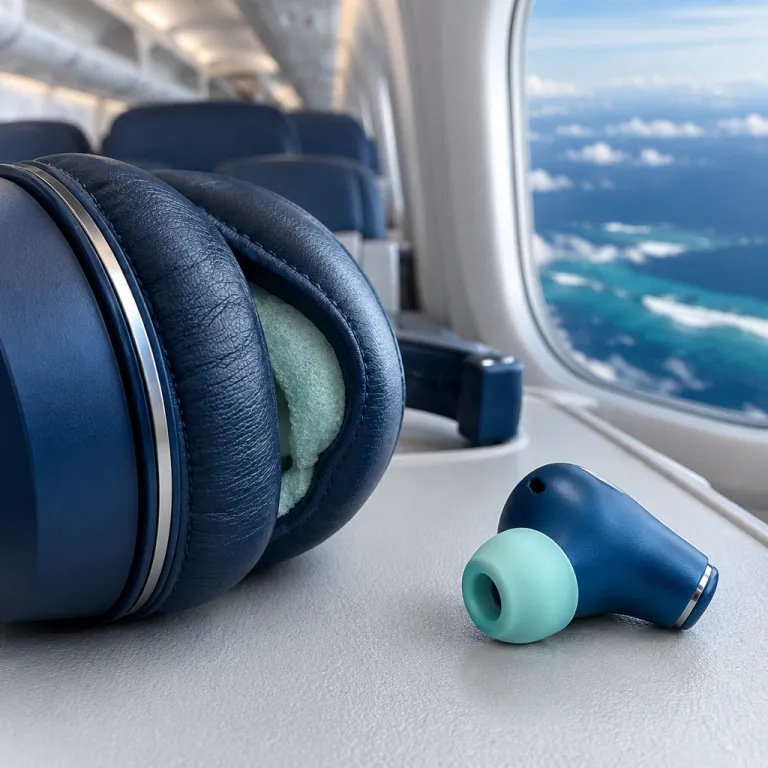
Headphones vs earbuds for flying: what really matters at 35 000 feet
On a plane, the debate about headphones vs earbuds for flying is not abstract at all. The cabin is filled with low frequency engine noise, bursts of galley clatter and chatty voices that punish both sound quality and your patience during any long flight. When you compare over ear headphones and compact earbuds in this environment, you quickly see that the best choice depends on how you travel, how you sleep and how much carry on space you can spare.
Over ear headphones wrap around the ear and combine passive noise isolation from thick pads with active noise cancellation that uses microphones to cancel low rumble. In contrast, in ear earbuds rely on a tight ear tip seal for passive noise blocking, then layer active noise cancelling on top to tame the engine drone during hours of flying. That is why many frequent flyers treat this as a serious guide decision rather than a casual tech purchase, especially when they spend long periods in economy instead of business class.
Think of the cabin as a test bench where every weakness is exposed and every marketing claim about noise cancellation or premium sound quality is challenged. The constant noise forces cancelling headphones to work harder, which drains battery life faster and reveals which models handle active noise gracefully without pressure on the ear. In this context, headphones travel performance is not about glossy ads but about whether your bose headphones or your AirPods Pro earbuds still feel good and sound good when the seat belt sign has been on for three straight hours.
ANC depth at altitude: how over-ear and earbuds handle engine noise
At cruising altitude, the noise profile is dominated by a steady low frequency roar from the engines and airflow around the fuselage. Over ear headphones like the Bose QuietComfort Ultra and Sony WH 1000XM5 combine strong passive noise isolation with powerful active noise cancellation, so they cut that low rumble more deeply than most earbuds during a typical flight. Earbuds such as AirPods Pro or Bose QuietComfort Earbuds lean heavily on their in ear seal, which can be excellent, but they usually let a little more low end noise through while still handling mid range chatter well.
When you compare headphones vs earbuds for flying in terms of pure noise cancelling depth, premium over ear headphones still hold the edge for the worst engine drone. Their larger drivers and ear cups give the ANC algorithms more room to work, and the passive noise barrier from thick pads means less active noise energy is needed to reach a good result. That said, the best earbuds now get close enough that many travelers accept a small compromise in cancellation for the freedom of a tiny case and lighter carry on weight.
Cabin pressure changes add another twist, because they can slightly flex over ear pads and break the seal just as easily as they can push earbuds deeper into the ear canal. A broken seal reduces both passive noise isolation and active noise cancellation, so even the best headphones or best earbuds will sound worse until you reseat them carefully around the ear. If you want a deeper technical comparison of over ear versus in ear isolation in shared spaces, a focused analysis such as the one on over ear vs in ear for isolation can help you translate office lessons to the cabin.
Sleep comfort and fatigue: jaw pressure vs ear canal soreness
Trying to sleep with over ear headphones on a plane exposes a specific comfort problem that spec sheets rarely mention. When you lean against the window or a firm headrest, the side pressure from the earphones headphones can push the cups into your jaw and glasses arms, which leads to a dull ache after a few hours of flying. Some travelers in business class can recline enough to avoid this, but in economy the clamp force of cancelling headphones becomes a real factor in whether you wake up rested or irritated.
Earbuds change the equation by removing that side pressure entirely, which is why many people prefer them for sleep even when they accept slightly less noise cancellation. A well fitting pair of AirPods Pro or similar premium earbuds can sit almost flush with the ear, so you can rest your head on a travel pillow without the hard contact that over ear headphones create. The trade off is that the ear canal itself can become sore after long periods, especially if the silicone tips are too large or if cabin pressure shifts push them deeper during the flight.
From a sound quality perspective, both formats can deliver great audio for flight entertainment, but comfort often decides which one you actually keep on for six or eight hours. Over ear headphones usually offer a wider soundstage and more natural bass, while in ear earbuds provide a more intimate presentation that can feel intense in a quiet cabin. For travelers who want a structured way to weigh these comfort and sound trade offs, a detailed comparison such as the one on choosing between in ear monitors and headphones can serve as a practical guide beyond marketing claims.
Carry-on economics: space, cases and the hybrid strategy
Carry on space is a hard limit, not a theory, especially when you travel with only one cabin bag. Over ear headphones in a hard case can easily occupy the volume of a small packing cube, while a set of earbuds in their charging case disappears into a jacket pocket without affecting your packing strategy at all. That difference becomes critical when you juggle laptop, toiletries, spare clothes and maybe a camera, because every cubic centimeter counts before the gate agent checks bag size.
Foldable designs such as the latest Sony XM series narrow the gap slightly by letting the ear headphones collapse into a more compact footprint, but they still cannot match the tiny profile of earbuds. For many frequent flyers, the smartest answer to the headphones vs earbuds for flying question is a hybrid approach that uses headphones earbuds together rather than forcing a single winner. They keep premium over ear cancelling headphones for the longest legs and overnight segments, then rely on small earbuds for airport walking, boarding, short hops and quick listening during layovers.
Battery life also plays into this carry on calculus, because you may not want to carry multiple chargers or cables for long periods of travel. Over ear models like Bose QuietComfort Ultra or Sennheiser Momentum 4 often deliver 20 to 30 hours of playback with active noise cancellation on, which easily covers a long haul flight plus airport time. Earbuds usually offer 5 to 8 hours per charge with ANC, but the case adds several full recharges, so the combined battery life can still outlast a multi segment itinerary without hunting for power points near your seat.
Battery life, cabin pressure and real-world ANC performance
Battery life numbers on the box rarely match what you see in a noisy cabin with active noise running at full strength. Over ear headphones tend to handle this better because their larger batteries mean that even with aggressive noise canceling, you still get enough hours to cover a long flight without anxiety. Earbuds can drain faster when you push volume to overcome engine noise, so you may find yourself rationing ANC or dipping into the charging case during a movie marathon.
Cabin pressure shifts during ascent and descent can subtly change how both headphones and earbuds fit, which affects both passive noise isolation and active noise performance. Over ear pads may briefly lose their seal around the ear as the foam compresses, while in ear tips can feel like they are being pushed inward, which some people interpret as a don like pressure on the eardrum. The best headphones and best earbuds manage this with pressure relief vents and smart ANC tuning, but sensitive listeners should still expect a short adjustment period at the start of each flight.
For travelers who care as much about sound quality as about silence, premium models from Bose, Sony and Sennheiser remain the safest bets. Bose QuietComfort and the newer QuietComfort Ultra prioritize stable active noise over flashy codecs, while Sony’s WH 1000XM line and Sennheiser Momentum 4 chase higher resolution sound without sacrificing cancellation depth. If you want a curated overview of models that balance hi res audio with strong noise cancellation for serious travel, a resource such as the top noise canceling headphones with high resolution audio guide can help you shortlist options before you start hunting for deals or loyalty points redemptions.
Choosing for your seat: economy rows, business class pods and flight entertainment
Your seat and cabin class change the answer to the headphones vs earbuds for flying question more than most spec sheets admit. In a tight economy row, over ear headphones can feel bulky when you twist to reach the aisle, yet their superior noise cancellation makes crying babies and clinking cutlery fade into the background. Earbuds feel almost invisible and make it easier to lean or share armrests, but they may let more low frequency noise through, which forces you to raise volume and risks ear fatigue.
Business class travelers often have more space and softer surfaces, which makes over ear headphones easier to live with for long periods of flying and sleeping. The combination of a lie flat seat, a soft pillow and premium cancelling headphones like Bose QuietComfort Ultra or Sony WH 1000XM5 can turn a noisy cabin into a private cocoon with excellent sound quality for flight entertainment. In this context, the slightly larger case in your carry on feels like a good trade when you step off the plane less tired and less overwhelmed by cabin noise.
Payment methods and loyalty programs rarely decide audio comfort, but they do influence when people upgrade from basic earphones headphones to serious travel gear. Many frequent flyers wait for seasonal deals, use credit card points or airline miles to offset the cost of premium bose headphones or AirPods Pro, then keep that one pair as their dedicated headphones travel companion for years. The real metric that matters is not the marketing dB rating on the box, but the silence on the tarmac when the engines spool up and your world stays calm.
Key figures about in-flight noise and headphone performance
- Typical cabin noise levels on commercial jets range from 75 to 85 dB A near the ear, which is roughly as loud as heavy city traffic according to measurements published by aviation health researchers.
- Modern over ear active noise cancelling headphones can reduce low frequency engine noise by 20 to 30 dB in the 50 to 1 000 Hz range, based on independent lab tests from audio measurement labs that compare multiple premium models.
- In ear earbuds with strong passive noise isolation and ANC usually achieve around 15 to 25 dB reduction in the same low frequency band, which is slightly less than over ear models but still enough to make speech and announcements more intelligible.
- Many premium over ear headphones now advertise 20 to 30 hours of battery life with ANC enabled, while most true wireless earbuds offer 5 to 8 hours per charge plus 20 to 30 additional hours from the case, according to manufacturer specifications and third party battery drain tests.
- Studies on passenger comfort suggest that reducing continuous cabin noise by even 5 to 10 dB can significantly lower reported fatigue and improve perceived sleep quality on long haul flights, especially for travelers seated near the wings.
FAQ: headphones vs earbuds for flying
Are over-ear headphones or earbuds better for blocking airplane noise ?
Over ear headphones generally block more low frequency engine noise because they combine strong passive isolation from ear pads with powerful active noise cancellation. Earbuds can get close, especially models with deep in ear seals, but they usually let a little more low end rumble through while still handling mid range chatter well. For the quietest experience in a noisy cabin, premium over ear cancelling headphones still have a small but clear edge.
Which is more comfortable for long flights: over-ear headphones or earbuds ?
Comfort depends on how you sit and sleep during the flight. Over ear headphones avoid ear canal soreness but can create jaw pressure when you lean against a window or headrest, while earbuds remove side pressure yet may cause fatigue inside the ear after many hours. Many frequent flyers use a hybrid approach, wearing earbuds for boarding and short segments, then switching to over ear headphones for sleep and long haul legs.
Do I need noise cancelling, or are passive headphones enough on a plane ?
Passive isolation from closed back headphones or well sealing earbuds helps, but it rarely cuts enough low frequency engine noise to make long flights comfortable. Active noise cancelling adds targeted reduction of that constant rumble, which lowers listening volume and reduces fatigue over time. If you fly several times per year, especially on long routes, investing in good ANC usually pays off in both comfort and perceived sound quality.
How much battery life do I really need for a long-haul flight ?
For a single long haul segment plus airport time, aim for at least 15 to 20 hours of battery life with ANC on for over ear headphones, or 6 to 8 hours per charge for earbuds plus a case that can fully recharge them at least twice. This ensures you can handle delays, connections and in seat entertainment without hunting for power outlets. Travelers who regularly take ultra long routes may prefer over ear models rated for 25 hours or more to avoid mid flight charging.
Are premium models like Bose QuietComfort Ultra or AirPods Pro worth it just for flying ?
Premium models from brands such as Bose and Apple cost more, but they usually deliver more consistent ANC, better comfort and more reliable Bluetooth behavior in crowded airports. If you fly often, the improvement in noise reduction, sound quality and overall fatigue can justify the higher price over several years of use. Occasional flyers on shorter routes may be satisfied with mid range options, but frequent travelers tend to notice the difference on their tenth flight with the same pair.