
Summary
Editor's rating
Value: strong features, but you really pay the Apple tax
Design: looks high-end, feels a bit heavy
Battery life: solid, but the case situation is still weird
Comfort: fine for a while, then you start feeling the weight
Build quality and durability: premium feel, but baby them a bit
Sound, ANC and smart features: strong, especially with Apple gear
What you actually get and who it’s really for
Pros
- Strong sound quality with deep, controlled bass and clear mids/highs
- Top-tier noise cancellation and natural-sounding transparency mode
- Seamless integration and quick switching across Apple devices with Spatial Audio and smart features
Cons
- Heavy and can become uncomfortable during long listening sessions, especially with glasses
- Most smart features are locked to Apple ecosystem; basic experience on Windows/Android
- High price for what you get, plus a weak protective case for something this expensive

Specifications
View full product page →| Brand | Apple |
Premium price, real-world use
I’ve been using the AirPods Max 2 in Starlight as my main headphones for a couple of weeks, swapping between work calls, commuting, and watching movies at night. I’m already deep in the Apple ecosystem (iPhone, MacBook, iPad, Apple TV), so I was curious if these would actually be worth the money compared to the usual Sony/Bose stuff I’ve used before. Short answer: they do a lot of things really well, but you need to know what you’re paying for.
In daily use, the first thing that stands out is how well they plug into the Apple world. The automatic switching between iPhone, Mac and iPad is genuinely practical. I’d be watching something on my iPad, get a call on my iPhone, and the audio would jump over without me digging in Bluetooth menus. That part just works, and once you get used to it, going back to regular Bluetooth pairing feels annoying.
On the other hand, you feel the limitations the second you try using them outside Apple gear. Paired to a Windows laptop or an Android phone, they basically turn into expensive, nice-sounding Bluetooth headphones without most of the smart tricks. No easy switching, no spatial audio magic, and some controls feel a bit wasted. If you’re not mainly on Apple devices, a big chunk of the value disappears in practice.
Overall, my first impression is: sound quality and noise cancelling are genuinely strong, the smart features are handy, but the comfort and weight are not perfect, and the price is high enough that every flaw is a bit annoying. They’re good, but they’re not some miracle product. Whether they make sense really depends on how “Apple-only” your setup is and how sensitive you are to heavy headphones on your head for long sessions.
Value: strong features, but you really pay the Apple tax
On the money side, this is where opinions will vary a lot. The AirPods Max 2 are clearly expensive, and you feel that from the moment you hit the checkout. For that price, you’re competing with top-tier Bose, Sony, and even some audiophile brands. Purely from a sound and ANC perspective, the gap between these and a good Sony/Bose model is not night and day. They sound better and more controlled to my ears, but we’re not talking about double the performance for double the price.
Where Apple is basically charging you extra is for the ecosystem integration and the feature set: seamless switching between Apple devices, Spatial Audio that works tightly with Apple TV and iPhone, live translation, and the overall “it just works together” feel. If you’re fully on Apple, those things genuinely make daily use smoother. I switched between Mac, iPhone and iPad without touching Bluetooth menus, and that alone is something you start to miss when you go back to other brands.
If you’re not heavily into Apple gear, the value drops fast. On Windows or Android, they turn into very good but over-priced Bluetooth headphones without most of the smart features. At that point, something like a Sony WH-1000XM series or Bose QC Ultra will give you similar sound and ANC, better comfort, more flexibility with codecs, and usually at a lower price. So it really depends where you sit: Apple user who wants the smoothest integration, or mixed-platform user who just wants good headphones.
Personally, I’d rate the value as: decent if you’re all-in on Apple and you really care about both sound and the ecosystem, but not great if you’re counting every pound or euro. There’s definitely better value on the market, but if you want that specific Apple experience plus strong ANC and sound, you accept the Apple tax and move on. Just don’t expect these to magically justify their price if you’re mostly using them like any other Bluetooth headset.
Design: looks high-end, feels a bit heavy
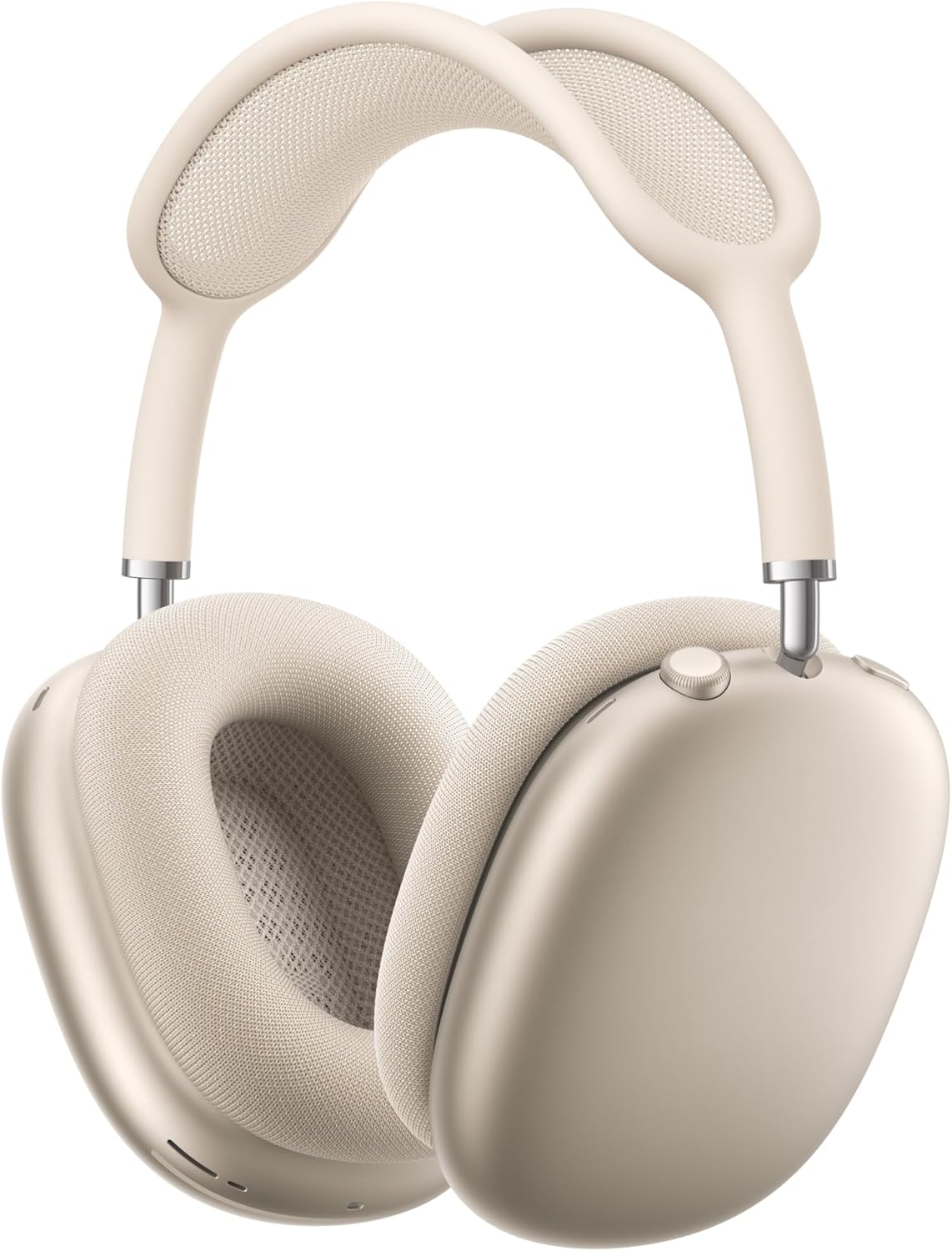
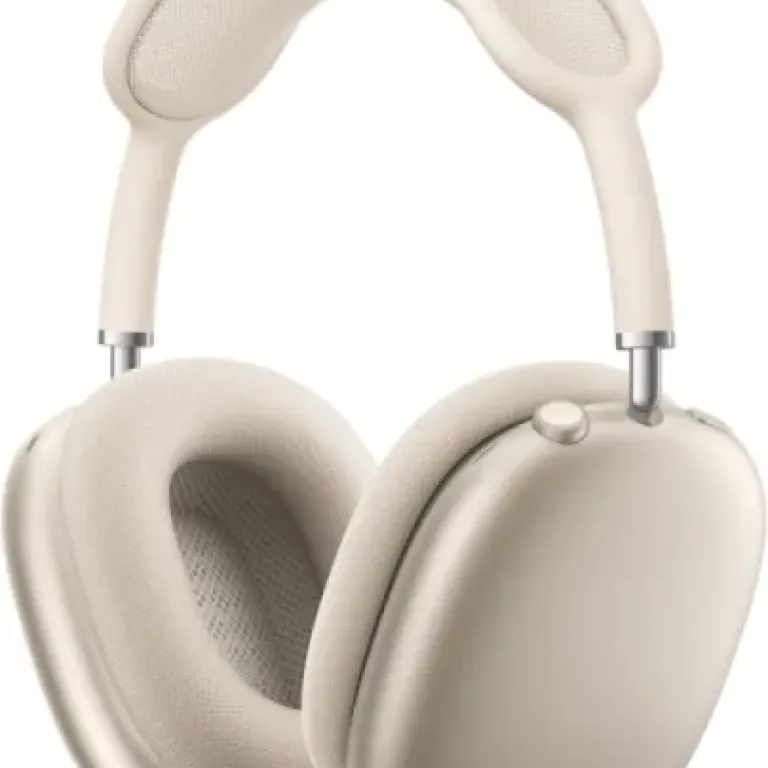
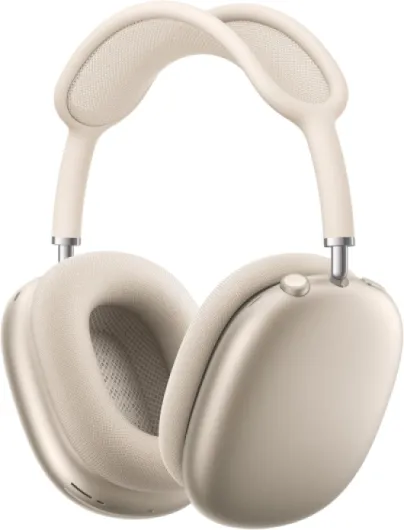
Design-wise, the AirPods Max 2 look and feel like a premium Apple product. The Starlight colour is a kind of soft champagne / off-gold that doesn’t scream for attention but still looks more interesting than plain silver. The ear cups are aluminium, which gives them a solid, cold-to-the-touch feel when you first pick them up. The headband uses this mesh canopy, which is supposed to spread weight better across the top of your head. Visually, they look clean and minimal, no flashy logos, just that typical Apple “we know you know” style.
The controls are simple: there’s a big Digital Crown wheel on the right ear cup for volume, play/pause, skipping tracks and answering calls, and a single button to switch between ANC/Transparency/Adaptive modes. I actually like this approach a lot more than swipe gestures on the ear cups like some brands do. The crown has a nice click and it’s easy to adjust volume precisely without looking. After a day, it felt natural and I stopped thinking about it.
The downside of this design is the weight. They’re heavy compared to Bose or Sony over-ears I’ve used. You notice it as soon as you pick them up, and after a couple of hours on your head, you feel it even more. The aluminium looks and feels premium, but you pay for it in grams. Also, the ear cups don’t fold inwards like most travel headphones, they just rotate flat, so they take up more space in a bag.
One thing that still annoys me is the Smart Case. It barely covers the headphones and leaves the headband exposed. It looks more like a weird purse than a proper case. It does trigger the low-power mode when you put the headphones in, but for transport protection, it’s honestly pretty average for something this expensive. Overall, design is clean and high-end, but not very practical, especially if you travel a lot or want something compact and light in a backpack.
Battery life: solid, but the case situation is still weird
Battery life on the AirPods Max 2 is pretty solid. In my use – a mix of music at work, calls, and some Netflix at night – I was getting roughly 2 full days before needing a charge, similar to what one of the Amazon reviews mentioned. That’s with ANC on pretty much all the time. If you only use them a couple of hours a day, you can easily stretch them over most of the week without thinking about it.
Charging is via USB‑C now, which is a relief. I could use the same cable as my MacBook or iPad, so I didn’t have to carry something special. A quick top-up of around 10–15 minutes gave me enough juice for several hours, so even if you forget to charge them overnight, you can plug them in while you shower and get through the day without stress. There’s no wireless charging, but honestly, on over-ear headphones that’s not something I personally miss.
The annoying bit is still the whole power management and Smart Case story. There’s no proper on/off button. They go into low-power mode when you leave them alone for a while, and into an even deeper low-power mode when you put them in the case. It works most of the time, but it’s not very transparent. You kind of have to trust that they’re not slowly draining in your bag. I never had a full surprise dead battery, but I’d prefer a simple physical on/off switch, especially at this price.
Overall, I’d rate the battery as: good enough that you don’t really worry about it day to day, but the whole case-as-a-power-switch idea still feels a bit gimmicky and not super clear. If you’re used to Sony or Bose where you just hold a button to turn them off, Apple’s approach feels like extra mental overhead for no real gain, apart from looking “cleaner” on the outside.
Comfort: fine for a while, then you start feeling the weight
On the comfort side, I’d call the AirPods Max 2 “good but not great”, especially for long sessions. The ear pads are soft and use a mesh fabric that doesn’t get as sweaty as some fake leather pads I’ve had on other headphones. The clamping force (how tight they squeeze your head) is firm but not painful at first. For short use – 30 to 60 minutes – they sit nicely, and the mesh headband spreads the pressure decently across the top of your head.
Where it starts to fall apart a bit is after 2–3 hours. That’s when I feel two things: the weight on the top of my head, and some pressure around my jawline and behind my ears. I wear glasses, and like the Amazon reviewer mentioned, the combination of glasses + firm clamp + heavy aluminium isn’t perfect. After a full movie, I often end up taking them off for a few minutes just to give my head and ears a break. They’re not torture, but they’re definitely not the kind of headphones you forget you’re wearing.
Compared to a Bose QuietComfort or Sony WH-1000XM series, the difference is clear: the Bose/Sony feel lighter and more “cloud-like”, even if they don’t feel as premium in the hand. If you mainly use headphones for long-haul flights, long office days, or gaming marathons, this is something to think about. The AirPods Max 2 are fine for a couple of hours, but they’re not the comfiest option on the market for all-day wear.
The positive side is that the ear cups are roomy enough for my ears, and the fabric pads are easy to replace if they wear out. They also don’t get crazy hot, which I appreciate in summer. But overall, comfort is the main weak point for me: it’s acceptable, but the combination of weight and clamp means they’re not the headphones I instinctively grab if I know I’ll be wearing them for half a day straight.
Build quality and durability: premium feel, but baby them a bit
In terms of build, the AirPods Max 2 feel very solid in the hand. The aluminium ear cups don’t creak, the telescoping arms slide smoothly, and nothing rattles. They definitely feel more robust than a lot of plastic headphones. The mesh headband hasn’t sagged or deformed in my time with them, and the ear cushions snap on and off with magnets, which makes them easy to replace if they get worn or dirty. Overall, they give the impression of a product that will last, as long as you don’t abuse them.
That said, the premium materials come with a few trade-offs. The aluminium cups pick up small scratches and marks if you’re not careful, especially if you toss them in a bag with keys or other hard objects. The mesh headband, while comfortable, feels like something that could potentially tear if it gets caught on something sharp. I haven’t had any damage myself, but I wouldn’t just throw these around like a cheap pair of beaters. They’re more in the “treat with care” category.
The included Smart Case doesn’t help much on the protection front. It covers the ear cups but leaves the headband exposed, and the whole thing feels more like a dust cover than a real protective case. For something this expensive, I’d expect a sturdier case that can actually handle travel, backpacks, and being shoved under an airplane seat. If you move around a lot, I’d honestly budget for a third-party hard case to feel safe.
From a reliability standpoint, connection stability has been good. No random dropouts, no weird bugs when switching between my iPhone and Mac, and the buttons and Digital Crown still feel tight and responsive after repeated use. So durability is decent, but you can tell they’re designed more for desk and couch life than rough daily abuse. If you’re careful with your tech, they should hold up fine. If you’re rough on your gear, you might want something lighter and less fragile-feeling.
Sound, ANC and smart features: strong, especially with Apple gear
Let’s talk about how they actually perform. In terms of sound quality, the AirPods Max 2 are genuinely solid. The bass is deep and controlled, not boomy or muddy. Mids are clear, so vocals and dialogue stand out nicely, and the highs are crisp without getting harsh. I noticed small details in some tracks (little background instruments, room reverb, etc.) that I didn’t pick up as clearly on cheaper headphones. It’s a clean, fairly neutral sound with a bit of extra low end, which works well for most genres: pop, rock, electronic, even podcasts.
The Active Noise Cancellation is one of the highlights. In a noisy train, it cuts out a big chunk of the low rumble and background chatter. It’s not total silence, but it gets very close to what I’ve had with top-end Bose and Sony, and in some situations it feels even better. The Adaptive Audio mode is also handy: it adjusts how much noise it blocks depending on your environment, so you don’t have to keep switching modes manually all the time.
Transparency mode is also really good. It sounds natural, not like a cheap microphone feeding sound into your ears. I could have a conversation at my desk without taking the headphones off, and Conversation Awareness that automatically lowers the volume when you start talking is actually useful. It’s not perfect – sometimes it triggers when you cough or mumble – but in general it saves you from jabbing at buttons in the middle of a chat.
Where the AirPods Max 2 really stand out versus normal headphones is Spatial Audio with head tracking and live translation when paired with a recent iPhone. Watching a movie on Apple TV with spatial audio feels more like sitting in front of a surround system than just wearing headphones. The sound stays locked to the screen when you move your head, which is surprisingly immersive. Live translation is more of a niche thing, but for travel or bilingual meetings, it’s a neat extra. All of this, though, is heavily tied to Apple devices. On Windows or Android, you basically just get the good sound and ANC, and most of the smart stuff disappears.
What you actually get and who it’s really for
Out of the box, you get the AirPods Max 2, the usual thin Smart Case, a USB‑C charging cable and a bit of paperwork. No audio cable, no charger brick, nothing fancy. For the price, it feels a bit barebones, but that’s Apple being Apple. Setup is classic Apple style: open them near your iPhone, a popup appears, tap connect, done. In under a minute, they were also available on my MacBook and iPad through the same iCloud account.
The key features you actually notice in real life are: Active Noise Cancellation (with Adaptive Audio), Transparency mode, Personalised Spatial Audio, and some new smart bits like Conversation Awareness and live translation when paired with a recent iPhone. The H2 chip also brings better audio processing and more stable connection. On paper it sounds like a laundry list of buzzwords, but day to day, a few things really stand out: the ANC, the seamless switching, and the spatial audio with Apple TV or iPhone movies.
Where it gets more nuanced is the target user. If you’re mostly on Apple: iPhone + Mac + maybe Apple TV, these make sense as a high-end, everyday pair of headphones. They’re good for commuting, office work, calls, and watching stuff at home. If you’re bouncing between Apple and non-Apple devices, or you’re mostly on Windows/Android, they start to feel like overkill because so many of the clever features either vanish or become basic.
So in practice, I’d describe them like this: premium over-ear headphones that are clearly built first for iPhone users, with strong noise cancelling and a clean, controlled sound. They’re not the most flexible or the lightest, and they’re definitely not the best value on the market, but if you want something that plugs neatly into your Apple life and you’re okay paying the Apple tax, they fit that role pretty well.
Pros
- Strong sound quality with deep, controlled bass and clear mids/highs
- Top-tier noise cancellation and natural-sounding transparency mode
- Seamless integration and quick switching across Apple devices with Spatial Audio and smart features
Cons
- Heavy and can become uncomfortable during long listening sessions, especially with glasses
- Most smart features are locked to Apple ecosystem; basic experience on Windows/Android
- High price for what you get, plus a weak protective case for something this expensive
Conclusion
Editor's rating
After living with the AirPods Max 2 for a while, my honest take is this: they’re very good headphones with a clear target user, not a universal no-brainer. The sound is clean, punchy and detailed, the noise cancelling is up there with the best, and the integration with iPhone, Mac, iPad and Apple TV is genuinely practical. Spatial Audio and Conversation Awareness aren’t just gimmicks; they do bring small quality-of-life improvements if you actually use them day to day.
On the flip side, they’re heavy, the comfort is only okay for long sessions, and the Smart Case is more cosmetic than protective. The price is high enough that these flaws stand out. And if you’re not mainly using Apple devices, a lot of what makes them special simply isn’t available, which kills a big chunk of their value. In that situation, you’re better off with Sony or Bose and you’ll save money.
I’d say: they’re for Apple users who want premium-feeling over-ears, care about strong ANC and smooth device switching, and don’t mind paying extra for that integration. They’re not ideal for people who wear headphones 8+ hours a day, glasses wearers who are very sensitive to clamp and weight, or anyone who frequently uses Windows or Android. If you fit the first group and can live with the weight, you’ll probably be pretty happy with them. If not, you can get something lighter and more flexible for less money elsewhere.