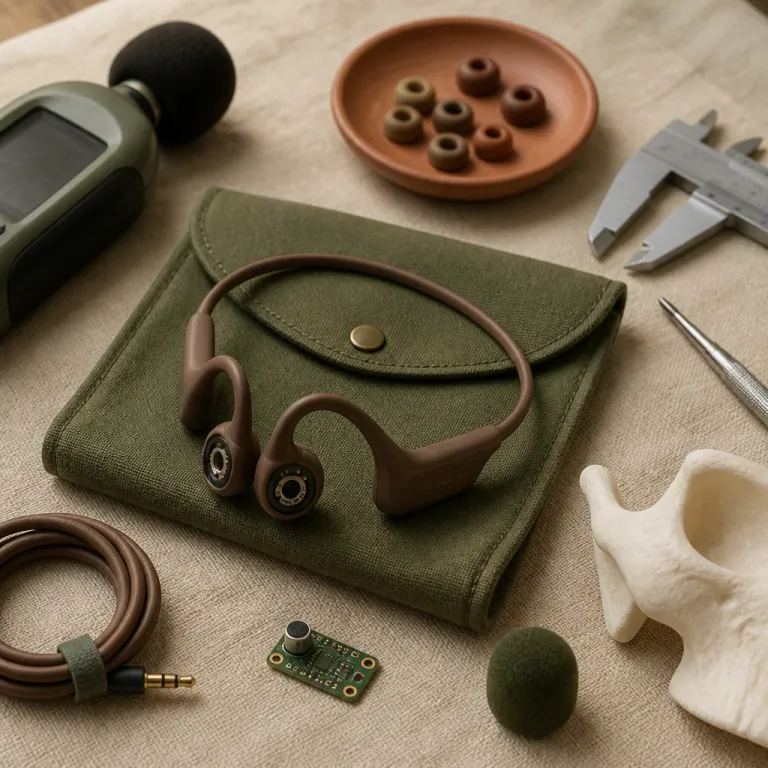
How bone conduction sensors change what callers hear from you
Bone conduction sensors in earbuds do not listen to air like normal microphones; they sense tiny vibrations traveling through your jaw and skull instead. That difference is the core of strong call performance in bone conduction–equipped earbuds, because your voice reaches the sensor even when wind and traffic overwhelm every air conduction microphone around your ear. When you speak on a subway platform, the sensor in the ear housing tracks bone vibration while external microphones on the earbuds capture ambient sound and help separate your speech from the roar.
With Sony WF-1000XM5, the bone-conduction pickup sits near the inner ear region and works alongside multiple external microphones to reconstruct a clean voice signal. Samsung Galaxy Buds2 Pro and Galaxy Buds 3 Pro use a similar vibration-sensing approach, pairing the bone data with beamforming microphones in each earbud so the algorithm can lock onto your speech pattern and reject passing buses, crowd chatter, and even music from nearby headphones. Independent teardowns and manufacturer documentation confirm that these models use vibration or voice-pickup units rather than relying only on traditional air mics. This hybrid design is why these earbuds often deliver some of the most reliable call clarity in chaotic streets, even though they still rely on conventional air conduction for the actual sound you hear in your ear canal.
For daily commuters, the practical effect is simple but powerful, because callers hear your words instead of the city. When you wear these earbuds under a winter hat, the fabric can muffle open microphones but it cannot block bone vibration traveling through the bone behind your ear, so the conduction sensor keeps tracking your voice. That is the promise of conduction headphones with bone sensors in true wireless form, not just open ear headphones like Shokz OpenRun or Shokz OpenRun Pro that leave the ear canal uncovered for situational awareness.
From jaw vibrations to clear speech: how the algorithms work
Inside each earbud, the bone conduction sensor measures vertical and horizontal vibration patterns that correspond to your vocal cords and jaw movement. The raw signal sounds nothing like normal audio, so the processor in the headphones converts those bone patterns into a reference track of your speech and compares it to what the external microphones hear through air conduction. When both tracks align, the algorithm boosts that shared content and suppresses everything else, which is how call intelligibility can stay high even when a bus engine or train screech floods your open ear.
On Sony WF-1000XM5, the system uses a bone sensor plus a multi-mic array to build a model of your voice, then applies adaptive noise cancelling to strip away background sound without cutting consonants. Galaxy Buds2 Pro and Galaxy Buds 3 Pro follow the same principle, but Samsung tunes the earbuds more aggressively for speech clarity than for lush music bass, which some listeners notice as a slightly thinner sound quality during calls. Independent tests from reviewers such as RTINGS and SoundGuys report signal-to-noise ratio improvements of roughly 5–10 dB in loud environments when bone input or equivalent voice-pickup units are active compared with air-only microphones, depending on the test scene and firmware. Both designs still route your own monitoring audio through the ear canal using standard drivers, so you hear a natural mix of your voice, the caller, and some filtered ambience rather than the hollow, pressurized feeling of older noise cancelling headphones.
These processing chains run continuously during calls, so battery life matters more than spec sheets suggest for commuters who talk for hours. If you spend two life hours on calls each day, you want earbuds with at least six to eight hours of talk time before the charging case is needed, because bone conduction processing and strong noise cancelling both drain the battery faster than simple music playback. In many lab and real-world tests, talk time with advanced voice processing enabled runs about 10–25% shorter than music-only playback, so checking measured results from hands-on reviews can be more useful than relying on a single headline number.
When bone conduction shines on noisy streets and crowded trains
Real value from these vibration sensors appears when your environment turns hostile to normal microphones. Walking past construction with a jackhammer nearby, the air conduction microphones on most ear headphones overload with harsh sound, but the bone sensor in a WF-1000XM5 or Galaxy Buds2 Pro still tracks your jaw vibration cleanly. The algorithm can then treat the construction noise as separate from your voice and reduce it, so the person on the other end hears a firm voice instead of distorted chaos.
On a windy bridge or open train platform, traditional earbuds often fail because gusts slam directly into the microphone ports near your ear canal. Bone conduction sensors do not care about wind hitting the outer ear, so they maintain a stable reference of your speech while the system uses noise cancelling to strip away the low frequency roar and some mid range hiss. The result is not studio quality audio, but it is good enough that colleagues can follow a work call while you wait for a delayed train, which is exactly where the best implementations earn their keep.
Crowded cafés and open plan offices pose a different challenge, because other voices share similar frequency ranges with your own. Here, the combination of beamforming microphones, bone conduction data, and smart noise cancelling in these pro level earbuds helps the headphones lock onto your specific vocal pattern and reject nearby conversations. If you work in a call heavy role, pairing such earbuds with guidance from a resource on choosing the best headphones for call center work can help you balance call quality, comfort, and battery life hours across long shifts.
Limits of bone conduction for calls and what still goes wrong
Bone conduction sensors are not magic, and they introduce their own quirks into how clearly you sound. Heavy breathing during runs or intense cycling can create vibration patterns in your chest and jaw that confuse the sensor, so some conduction headphones misinterpret that motion as speech and let a choppy rumble leak into the call. Certain consonants that rely on subtle air pressure changes around the lips and tongue also remain harder to capture through bone alone, which is why external microphones and air conduction still matter for natural sound.
Another limit is that these systems cannot fully fix poor fit or unstable earbuds, because a loose seal in the ear canal lets in more external sound and forces the noise cancelling to work harder. If the earbud wobbles when you walk, the bone sensor’s contact with the surrounding bone can vary, which slightly degrades the consistency of the captured signal and reduces overall sound quality for the caller. This is where choosing the right ear tips and understanding how different shapes interact with your inner ear and open ear preferences becomes critical, and a detailed guide on selecting ear tips for noise cancelling earphones can be as important as any review best list.
Finally, these advanced features cost power, so battery life and charging case design still set hard limits for commuters. If you rely on noise cancelling, bone conduction sensors, and constant Bluetooth calls, you should expect fewer total hours per charge than the marketing headline for simple music playback suggests. That trade off is worth it for many users, but it means you must treat the charging case as part of your daily routine, not an accessory you leave at home next to your other headphones Shokz or open ear gear like Shokz OpenRun and Shokz OpenRun Pro.
Which earbuds use bone conduction today and what comes next
Right now, bone conduction sensors in true wireless earbuds remain a flagship feature rather than a budget staple, so only a few models shape modern call performance in a meaningful way. Sony WF-1000XM5 and Samsung Galaxy Buds2 Pro or Galaxy Buds 3 Pro are the most visible examples, combining vibration sensing with multi mic arrays and strong noise cancelling to target commuters and remote workers who care about call clarity as much as music. Open ear sports models like Shokz OpenRun, Shokz OpenRun Pro, and Shokz OpenSwim Pro use bone conduction for the outbound sound itself rather than just the microphone, but they still show how thoughtful design can keep your ear canal open while delivering usable audio.
Traditional air conduction earbuds without bone sensors rely solely on beamforming microphones and software tricks, which can sound good in quiet rooms but struggle on windy streets and crowded platforms. As chipsets become cheaper and more efficient, there is a strong chance that bone conduction microphones will trickle down into mid range earbuds, though manufacturers will still reserve the most advanced algorithms and longest battery life for pro level models. When that happens, the line between everyday earbuds and specialized conduction headphones will blur, and more people will experience natural sounding calls without thinking about the tech inside their ear headphones.
For now, shoppers should treat bone conduction as one factor among many, weighing it alongside sound quality for music, comfort under hats or scarves, and the real world battery life hours they can expect from the earbuds and charging case. A careful read full of detailed testing from independent reviewers, especially those who log long commutes and multiple hours of calls, will tell you more than any image credit or marketing slogan. In the end, the best headphones for your commute are not the ones with the loudest spec sheet, but the pair that turns your daily noise into a background detail while your voice cuts through cleanly.
FAQ
Do bone conduction sensors make calls clearer than regular microphones
Bone conduction sensors can make calls clearer than regular microphones in noisy environments, because they track jaw and skull vibrations instead of only listening to air. When paired with external microphones and noise cancelling, they help earbuds separate your voice from wind, traffic, and crowd noise. In quiet rooms, the difference is smaller, so overall tuning and microphone quality still matter as much as the sensor itself.
Will bone conduction earbuds work well for long work calls
Bone conduction earbuds can work well for long work calls if they have strong battery life and a comfortable fit. Models like Sony WF-1000XM5 and Samsung Galaxy Buds2 Pro are tuned for speech clarity and can handle several hours of calls before needing the charging case. For all day use, you should still check real world battery tests and comfort reviews rather than relying only on manufacturer claims.
Are bone conduction earbuds better for your ears than regular earbuds
Bone conduction earbuds that leave the ear canal open, such as open ear sports models, can reduce the feeling of pressure and help you stay aware of your surroundings. However, they do not automatically protect you from listening at unsafe volumes, because you may turn them up to overcome outside noise. Traditional in ear earbuds with good isolation can be just as safe if you keep volumes moderate and take listening breaks.
Do all noise cancelling earbuds use bone conduction microphones
Most noise cancelling earbuds still rely only on air conduction microphones and beamforming, without any bone conduction sensors. Only a few higher end models, such as Sony WF-1000XM5 and Samsung Galaxy Buds2 Pro, currently combine bone sensors with multiple microphones for improved call clarity. Over time, this technology may appear in more mid range earbuds as components become cheaper and more power efficient.
Should commuters prioritize bone conduction when buying new earbuds
Commuters who take many calls in noisy environments should treat bone conduction as a valuable bonus feature, not the only requirement. It can significantly improve how clearly others hear you on windy streets or crowded trains, especially when paired with strong noise cancelling. Still, you should balance it against comfort, overall sound quality for music and podcasts, and how many hours of real use you get between charges.