
Summary
Editor's rating
Value: who should actually spend this much
Design: looks and ergonomics in real life
Battery life and charging: boring in a good way
Comfort: good for many, tricky for some heads and glasses
Materials: where the money actually goes
Durability: solid build, but not built for abuse
Performance: sound and ANC in real-world use
What you actually get and how they fit into daily use
Pros
- Sound quality clearly ahead of most mainstream ANC headphones, with tight bass and detailed mids
- Premium materials and build (metal and leather) that feel more solid than typical plastic competitors
- Comfortable for 1–2 hour sessions with good weight distribution, plus reliable auto-pause and simple physical controls
Cons
- ANC is decent but not on the same level as Sony/Bose and has some noticeable blind spots
- High price, especially at full retail, with a fairly basic app and limited extra features
- Fit and sound balance can shift slightly depending on head shape and glasses, which may annoy some users

Specifications
View full product page →| Brand | Bowers & Wilkins |
High-end cans that actually sound like high-end cans
I’ve been using the Bowers & Wilkins Px8 as my main headphones for a few weeks now, swapping between them and a pair of Sony WH-1000XM4 and Bose QC45 that I already owned. I didn’t get them for free; I bought them on discount because I was curious if the price was just branding or if there was a real step up in sound. Short version: the sound is clearly a step up, but the rest of the package isn’t perfect.
In day-to-day use, I’ve taken them on trains, used them at the office, and worn them at home plugged into my laptop over USB-C. I’ve used them for music (mostly rock, metal, electronic, and some jazz), plus a bunch of YouTube and a few calls. So this isn’t a lab review; it’s just what they’re like to live with when you’re not being gentle and you actually commute and move around with them.
The main thing I noticed during the first hour is that these are tuned for people who care more about sound quality than features. The app is basic, the ANC is decent but not class-leading, and there’s no fancy gimmicks. But when you hit play, you can hear where the money went: the drivers and the general tuning. If you’re coming from mid-range ANC headphones, you’ll probably notice the difference right away, especially with busy tracks.
That said, there are trade-offs. The price is high, the ANC has some odd blind spots, and comfort will depend a lot on your head shape and whether you wear glasses. I’ll go through all that in more detail, but if you just want a quick take: they sound great, feel high-end, but they’re not the best all-rounder for everyone.
Value: who should actually spend this much
Value is where things get tricky. At full retail price, the Px8 sit firmly in the luxury segment. You can get Sony or Bose flagships for noticeably less, and they’ll give you stronger ANC and more features. So if your main goal is blocking out noise on planes or in open offices, and you’re not super picky about sound quality, those cheaper options make more sense. The Px8 only start to feel like a decent deal if you catch them on sale and you actually care about audio quality and build.
Where they do make sense is for people who already tried the usual suspects and found the sound a bit bland. If you want something that sounds clearly better than mainstream ANC headphones and also feels more premium in the hand, the Px8 deliver that. You’re paying for nicer materials, better tuning, and a more hi-fi leaning sound. In that context, the price is high but not insane, especially if you compare them to even more expensive boutique brands that don’t actually sound much better.
On the downside, you’re sacrificing some things for that. The ANC is good but not class-leading, the app is basic, and there’s no water resistance. You’re not getting a feature-packed product; you’re getting a focused one. If you’re the type who likes lots of customization, multiple EQ presets, or advanced smart features, you’ll probably feel like you’re paying top dollar and not getting enough toys in return.
So in terms of value, I’d put it like this: at full price, they’re for people who really prioritise sound and build and know what they’re getting into. On discount, they become a more reasonable buy for anyone who wants a step up from Sony/Bose in sound and can live with slightly weaker ANC. If you just want the “best all-rounder for travel and office” and don’t obsess over audio details, there are more sensible options for less money.
Design: looks and ergonomics in real life
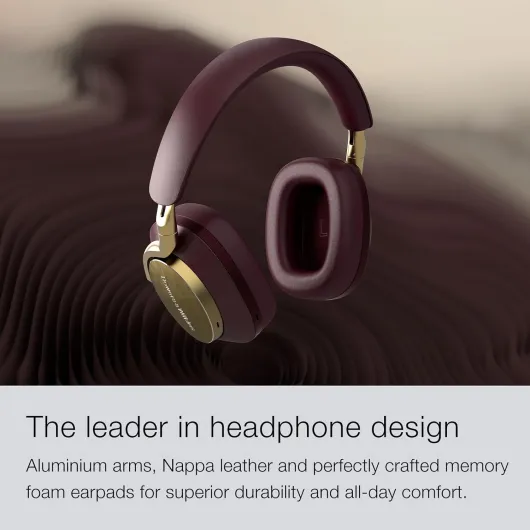
Design-wise, these look and feel like a grown-up product. No glossy plastic, no gamer RGB, just a fairly understated over-ear with metal arms and leather everywhere. I used the black version, which is a bit more low-key than the gold/burgundy one you see in some marketing shots. In person, they still look pricey. The only thing that slightly ruins the stealth look is the big silver “Bowers & Wilkins” logo on each ear cup. It’s not subtle, and if you prefer low branding, you’ll notice it every time you look in a mirror.
The headband has a solid metal core and feels sturdy when you extend it. The cups slide out with a smooth, firm motion and don’t feel wobbly. Compared to my Sony XM4, the Px8 feel more rigid and less plasticky. The trade-off is that they don’t fold completely in on themselves. The cups swivel flat, but the whole thing still takes up more space in a bag than something like the Bose QC45, which fully folds. If you travel a lot and pack light, this is something to consider.
On the head, the design is more about a clean profile than max portability. The arms are thin but solid, and the hinge design doesn’t creak. After a few weeks, I don’t have any weird noises or loose parts. I’ve thrown them into a backpack inside the case and once or twice without the case, and so far nothing has chipped or scratched. The matte finish on the cups seems fairly resistant to fingerprints, which is nice if you hate constantly wiping smudges.
From a usability angle, the layout of the buttons is decent. Right side has most of the controls, left side has a single button for ANC/pass-through modes. After a few days, I could adjust ANC or skip tracks without thinking about it. No weird touch gestures to remember, just button presses. In short: the design leans more towards solid and mature than flashy. If you like that “nice hi-fi gear” vibe rather than something that screams consumer gadget, you’ll probably like how these look and feel in hand.
Battery life and charging: boring in a good way
The Px8 are rated for around 30 hours of battery life, and in real use I’m getting pretty close to that with ANC on most of the time and volume around 50–60%. Over a typical week, using them 3–4 hours a day for work and commuting, I’m charging them about once. They don’t drain noticeably in standby either, which is nice. Some older ANC headphones I’ve had would quietly die in the case; these don’t seem to have that problem so far.
Fast charging works as advertised. A quick 15-minute charge gives you a good chunk of listening time (B&W claims up to 7 hours; I didn’t time it exactly, but it’s enough to get you through a long commute or a work session). They charge via USB-C, and you can also listen while charging, which I tested on my laptop. That’s handy if you’re low on battery and sitting at a desk. The headphones don’t get hot while charging, just slightly warm at most.
The battery level reporting is fairly accurate. The app shows a percentage, and the voice prompts give you rough updates, but I mostly relied on the app. I didn’t notice any weird jumps from, say, 40% to 10% out of nowhere. It drains in a pretty linear way. The one thing missing is a super detailed power management screen like some brands have, but honestly, I didn’t really miss it. You charge them, they last a long time, end of story.
For travel, 30 hours is enough for long flights plus airport time, as long as you remember to charge them the night before. If you’re the type who constantly forgets, the fast charge helps a lot. Overall, battery life is one of those areas where they just quietly get the job done without drama. Not a headline feature, but also not something you’ll complain about unless you’re expecting 50+ hours like some non-ANC models.
Comfort: good for many, tricky for some heads and glasses
Comfort is where things get a bit mixed. On my head (average size, I do wear glasses), they’re generally comfortable for 1–2 hour sessions. The clamp force is moderate: stronger than Bose QC45, weaker than some older on-ears. The pads are soft and the leather feels nice against the skin, so there’s no scratchy feeling. After about two hours, I start to notice some pressure on the top of my head from the band, but it’s not unbearable. A quick adjustment or a short break usually fixes it.
With glasses, the seal is decent but not perfect. I get a mostly good seal around the ears, but depending on the angle of the glasses arms, I sometimes feel a small gap and a slight leak of external noise. It’s not as forgiving as Bose, which are super soft and just mold around glasses more easily. One thing I noticed is that if the cups shift slightly, the soundstage can feel like it moves a bit to one side, especially in the mids. Tightening the headband and pressing the cups in fixes it, but it’s one of those little annoyances you don’t get with all headphones.
Weight-wise, 320 grams is on the heavier side compared to the usual 250–270g ANC crowd. The good news is that B&W did a decent job distributing that weight. The band has enough padding, and the clamping force helps keep them stable without feeling like a vice. I walked around, used them on trains, and did some light chores with them on, and they didn’t feel like they were sliding off or bouncing around. If you shake your head hard, they move a bit, but nothing crazy.
Overall, I’d call comfort “pretty solid but not universally great.” If you have a narrow or smaller head, or you wear thicker glasses, you might run into more fit issues, especially with the sound shifting slightly when the seal changes. For my fairly average head, I can use them for long work sessions with just the occasional break. They’re not as instantly forgettable on the head as Bose, but they’re miles better than the old B&W PX, which were basically torture devices for some people.
Materials: where the money actually goes
The materials are one of the main reasons to pick the Px8 over cheaper options. You get cast aluminium arms, proper metal joints, and Nappa leather on the headband and ear pads. Compared to the plasticky feel of most mainstream ANC headphones, these clearly sit in a different category. When you pick them up, they feel dense and solid without feeling like a brick. At around 320 grams, they’re not super light, but the weight matches the build quality. It’s the kind of weight where your brain goes, “okay, this isn’t cheap stuff.”
The ear pads are memory foam with soft leather on top. They feel nice to the touch and don’t have that fake plastic leather texture that starts peeling after a year on many cheaper models. Obviously I can’t comment on multi-year durability yet, but based on how they feel, I’d be surprised if they started flaking as fast as some Bose and Sony pads do. The stitching and seams are neat, with no loose threads or glue blobs. It’s the sort of finish you’d expect at this price, and here they actually deliver.
The carry case is also covered in Nappa-style material, which looks good but makes me slightly nervous about throwing it onto rough surfaces. It’s not a rugged case; it’s more of a "keep it pretty" kind of case. Inside, there’s a small pocket for the cables, and everything fits snugly. The zips feel fine and don’t snag, but again, this is more about looking high-end than surviving a year of being crushed in a work bag with tools and chargers.
From a materials perspective, I don’t feel short-changed. You’re paying for metal, leather, and decent finishing instead of shiny plastic and chrome paint. If you’ve had cheaper headphones literally crack at the hinges or have the pads disintegrate, the Px8 feel like a step up. The only real concern I have is that leather always needs a bit of care. If you sweat a lot or use them in very hot conditions, you’ll want to occasionally wipe them down and maybe treat the leather at some point, otherwise you’re just asking for long-term wear issues.
Durability: solid build, but not built for abuse
In terms of durability, the Px8 feel more robust than the average plastic ANC headphone. The metal arms and hinges don’t flex or creak when you adjust them, and after a few weeks of daily use there are no rattles or worrying noises. I’ve extended and collapsed the headband hundreds of times by now, and it still feels as tight and smooth as day one. Compared to my older Sony pair, which started creaking after a year, the Px8 give more confidence.
The leather parts are the main thing you’ll want to be careful with. The headband and pads are covered in Nappa leather, which feels nice but doesn’t love being soaked in sweat or stuffed into a bag with sharp objects. I’ve been reasonably careful: I always put them in the case when I’m throwing them into a backpack, and I wipe them down occasionally with a soft cloth. So far, no cracks, no peeling, and no visible wear, but we’re talking weeks, not years. Long-term, leather always shows use, so if you want them to stay pretty, you’ll need to treat them better than a cheap plastic pair.
The case offers decent protection against bumps and mild drops, but it’s not a hard shell like some Pelican-style cases. If you sit on it or crush it under heavy luggage, I wouldn’t be shocked if the headphones took a hit. For normal commuting and office life, it’s enough. I’ve tossed the case into crowded bags with laptops, chargers, and books, and the headphones came out fine, no dents or scuffs.
One thing to note: they’re not water-resistant at all. No IP rating. I wouldn’t wear them in the rain or during workouts. A light drizzle probably won’t kill them instantly, but it’s not a risk I’d take with something this expensive. So overall durability verdict: the structural build feels strong, the materials are quality, but you still need to treat them as a premium item, not a beater you throw around or sweat all over.
Performance: sound and ANC in real-world use
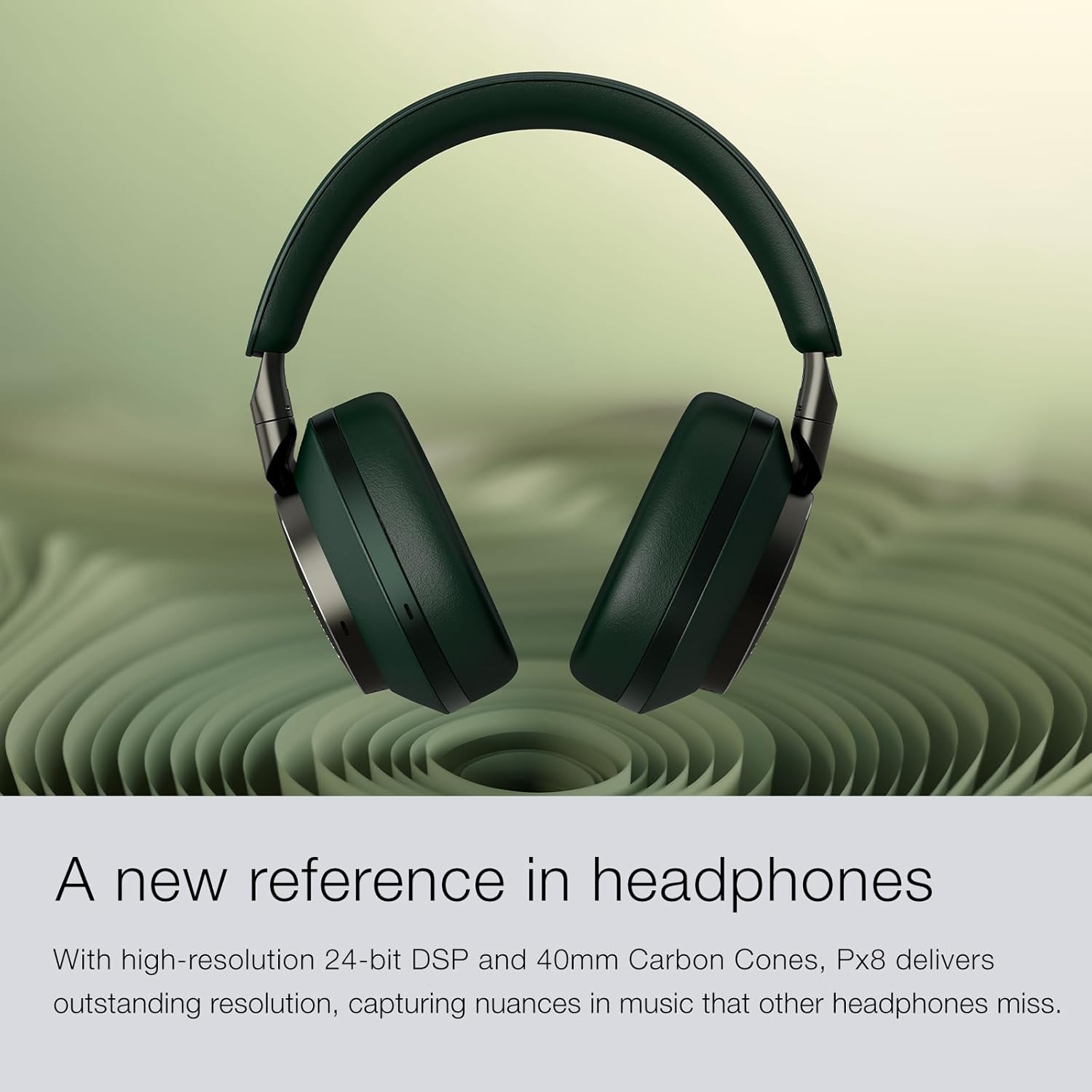
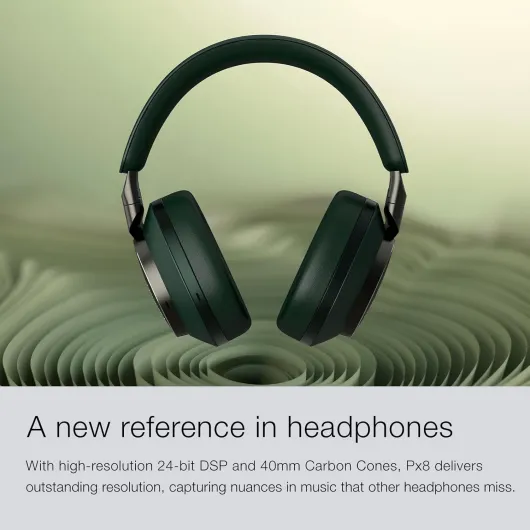
Sound is where the Px8 actually justify a good chunk of their price. They use 40mm carbon drivers and 24-bit DSP, and you can tell they’re tuned with detail in mind. Compared to my Sony XM4 and Bose QC45, the Px8 give a clearer, more controlled sound. Bass goes deep but stays tight; it doesn’t drown everything else unless the track itself is a bass-heavy mess. Mids are clear, so vocals and guitars stand out nicely, and the treble has enough bite to keep things lively without getting harsh at normal volumes. If you listen to rock, metal, or complex electronic stuff, they handle busy tracks better than the usual consumer ANC headphones.
Soundstage is fairly wide for a closed-back Bluetooth headphone. You don’t get that cramped “everything in your skull” feeling. You can pick out instruments and positions fairly easily, and there’s a decent sense of depth. It’s not open-back level, obviously, but for travel headphones, it’s pretty good. One annoyance, like I mentioned earlier, is that if the seal around the ear isn’t consistent, the balance can shift a bit to one side. So if they sit slightly off, the whole band can feel like it’s a bit left or right. Once you get the fit dialed in, it’s fine, but it’s something to be aware of.
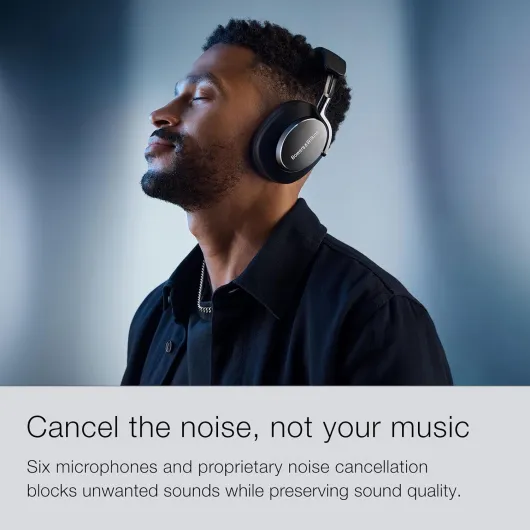
ANC is where they lag behind the top dogs. It’s not bad, just not best-in-class. Constant low noise like engine hum or air-con gets reduced well enough, but not as much as Sony or Bose. The weird thing is the "blind spots" some people mention: certain angles behind you or off to the side seem to leak more sound. I noticed this in a supermarket and on a busy street: sounds directly behind me or at specific angles were more present than I’d expect. It’s not a deal-breaker if you mainly want to take the edge off noise, but if your main focus is the strongest ANC possible, there are better choices.
Call quality is fine but not mind-blowing. The six-mic system does a decent job cutting out background hum, and people on the other end didn’t complain, but it’s not on the same level as some dedicated call-focused headsets. For casual calls and meetings, it works. For loud environments, your voice is still understandable, but you’re not magically isolated from the world. Overall performance summary: sound quality is the clear highlight, ANC is “good enough” but not top tier, and calls are serviceable.
What you actually get and how they fit into daily use
Out of the box, the Px8 give off a clear “premium toy” vibe. You get the headphones, a hard-ish carry case covered in Nappa-style material, a USB-C to USB-C cable, and a USB-C to 3.5mm cable. No pile of random adapters, no clutter. It’s a pretty lean package, which is fine, but at this price I kind of expected at least a simple airline adapter or something. The case itself is fairly compact for over-ears and fits easily in a backpack, but it’s not tiny. If you’re used to super-foldable Sony/Bose cases, this one is a bit more chunky.
Setting them up is straightforward. Hold the power button, they pop up on your phone or laptop, and you’re paired in seconds. I used them on Android, Windows, and an iPad. Multipoint isn’t as smooth as Sony’s implementation, but once I’d paired with phone and laptop, switching usually worked without having to dive into Bluetooth settings every single time. The Bowers & Wilkins Music app is simple: you get ANC/Pass-through controls, a basic EQ (bass/treble sliders), and some device settings. No crazy sound modes or tricks; it’s very bare-bones.
In daily use, they do the basics well. They auto-pause when you take them off and resume when you put them back on, which actually works reliably, unlike some headphones where it’s hit or miss. The on-cup buttons are physical, not touch surfaces, which I personally prefer. There’s a combined power/pairing slider, volume up/down, and a multi-function button that handles play/pause, track skip, and calls. It’s easy enough to learn by feel after a day or two. I never found myself accidentally triggering things while adjusting the fit, which happens to me all the time on touch-based cups.
Where they clearly aim is the “I care about sound and build more than features” crowd. If you want crazy configurable ANC modes, tons of DSP presets, or advanced spatial audio stuff, this isn’t that product. But if you mostly want rock-solid Bluetooth, a clean app with just the essentials, and a headphone that behaves predictably, the Px8 fit that profile pretty well. It’s a fairly focused product rather than a Swiss Army knife.
Pros
- Sound quality clearly ahead of most mainstream ANC headphones, with tight bass and detailed mids
- Premium materials and build (metal and leather) that feel more solid than typical plastic competitors
- Comfortable for 1–2 hour sessions with good weight distribution, plus reliable auto-pause and simple physical controls
Cons
- ANC is decent but not on the same level as Sony/Bose and has some noticeable blind spots
- High price, especially at full retail, with a fairly basic app and limited extra features
- Fit and sound balance can shift slightly depending on head shape and glasses, which may annoy some users
Conclusion
Editor's rating
After living with the Bowers & Wilkins Px8 for a while, my take is pretty simple: these are headphones for people who care more about sound and build quality than about ticking every feature box. The sound is genuinely a step up from the usual Sony/Bose options – tighter bass, clearer mids, and more detail across busy tracks. Build and materials also feel a notch higher, with real metal and leather instead of mostly plastic. If you’ve been chasing that “I actually hear more in my music” feeling from wireless ANC headphones, the Px8 get you closer than most mainstream choices.
But they’re not perfect. The ANC is fine but not class-leading and has some odd blind spots where certain directions leak more noise than others. Comfort is good for many people but not universally great, especially if you have a tricky head shape or wear glasses. The app is basic, and you don’t get flashy extras or water resistance. At full price, you really need to value the sound and the premium feel to justify the cost. On sale, they make more sense as a “treat yourself” upgrade for people who listen a lot and want something nicer than the usual plastic travel cans.
If you want the strongest ANC, loads of features, and the best bang for your buck, you’re better off with Sony or Bose. If you want a more high-end listening experience in a wireless, noise-cancelling package and you’re okay with some compromises on ANC and features, the Px8 are a solid choice. Just be honest with yourself about what you actually care about before dropping this kind of money.