
Summary
Editor's rating
Value for money: depends a lot on the price you pay
Design: clean look, but hinges are the weak confidence point
Battery life: the main strong point
Comfort: good for a couple hours, not my pick for all-day wear
Build & durability: feels okay in hand, but I don’t fully trust the hinges
Sound & ANC: punchy, fun tuning with solid noise cancelling
What you actually get and how they behave day to day
Pros
- Very strong battery life with useful fast charging
- Punchy, enjoyable sound and solid ANC for everyday use
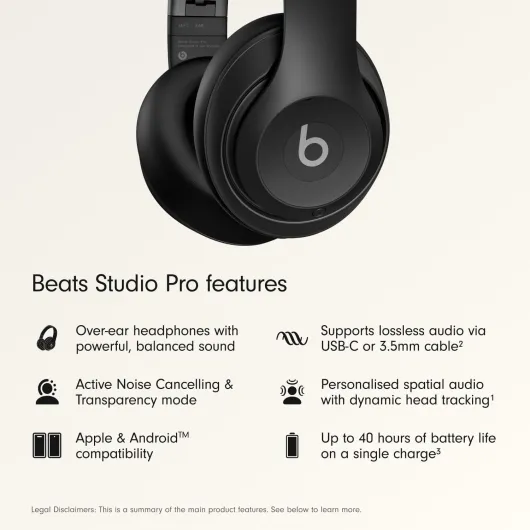
- Good Apple and Android compatibility with USB‑C and 3.5 mm options
Cons
- Comfort drops off after a few hours of continuous use
- Hinges and non-hard case don’t inspire full confidence for rough travel

Specifications
View full product page →| Brand | Beats |
Over-ears instead of AirPods: worth the switch?
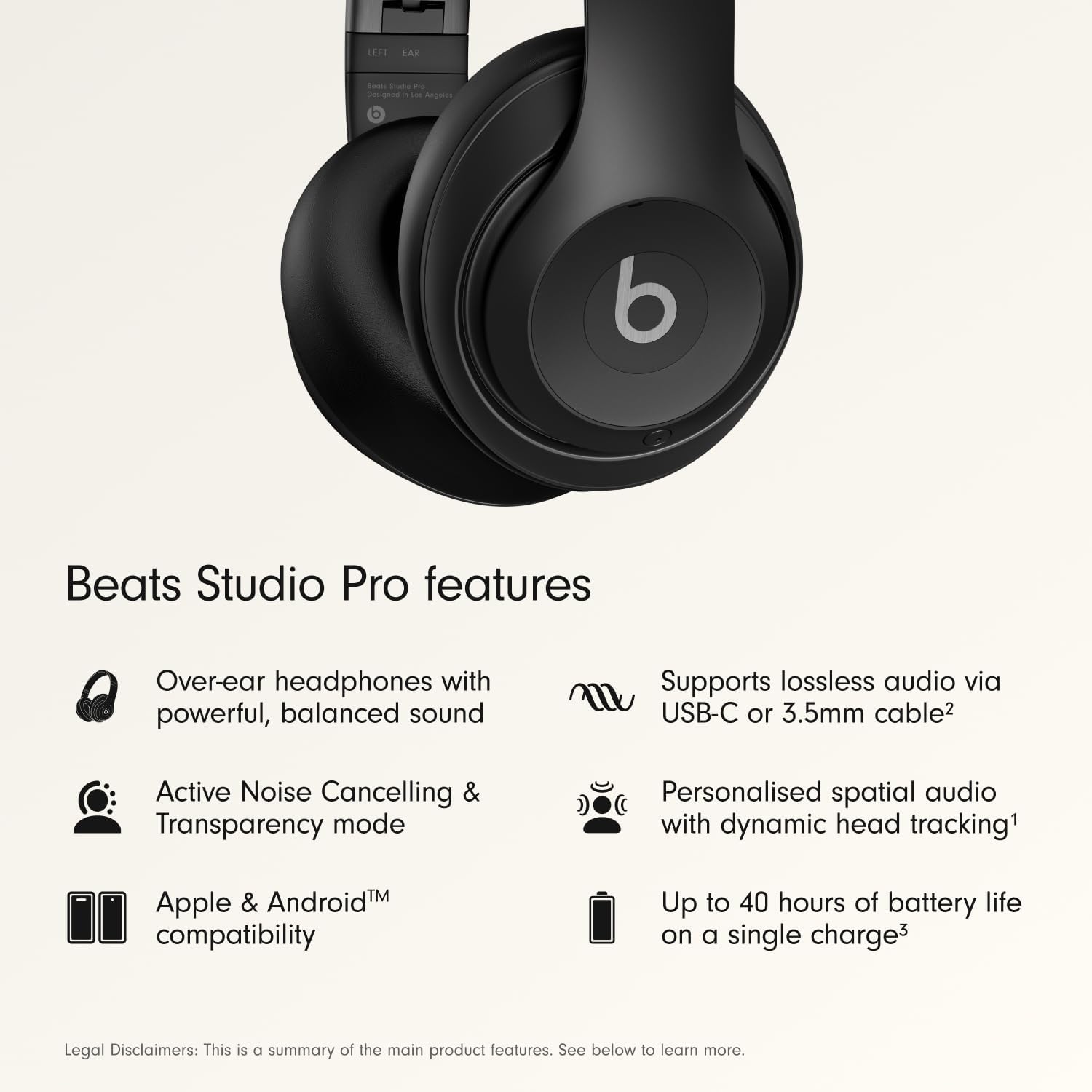
I’ve been using the Beats Studio Pro as my main headphones for a few weeks now, mostly for work, commuting, and some Netflix at night. I came from in-ears (AirPods style) and an older pair of Sony over-ears, so I wasn’t exactly new to this type of product. I wanted something that could do a bit of everything: music, calls, travel, and blocking out noise when I’m trying to focus. On paper, these looked pretty solid: up to 40 hours of battery, active noise cancelling, USB‑C audio, and they work with both Apple and Android without feeling hacked together.
In daily use, they feel like a very “consumer” pair of headphones in the good and bad sense. They’re easy to use, the Bluetooth pairing is painless, and the buttons are simple enough that you don’t need to read the manual. At the same time, if you’re expecting studio-level sound or the absolute best noise cancelling, that’s not what you’re getting here. They’re more for people who want something that sounds good, looks decent, and just works across their devices.
What stood out to me quickly was the battery life and the noise cancelling. I can go several days of mixed use without even thinking about charging them, and ANC is good enough that my keyboard and most office chatter basically vanish. The flip side is comfort and build confidence. The headband and ear pads are okay, but after 2–3 hours straight, I start feeling pressure on the top of my head and around my ears. And because they fold, I’m always a bit nervous about the hinges, especially after reading other people talk about breaks there.
So overall, they’re not perfect, but they get a lot of things right for everyday use. If you want something simple that you can throw on, block out a good chunk of noise, and not worry about charging all the time, they do the job. If you’re picky about long-session comfort or you really want the best ANC on the market, you might want to compare with Sony or Bose before pulling the trigger.
Value for money: depends a lot on the price you pay
Value is where things get a bit more nuanced. At full retail around $350, I personally think they’re on the expensive side for what they offer. For that kind of money, you’re in direct competition with Sony WH-1000XM series and Bose QuietComfort models, which usually have better ANC and often better all-day comfort. The Beats counter with strong Apple and Android integration, good battery, and a sound signature that many people enjoy, but it’s not a clear win at full price.
Where they start to make more sense is on sale, around $170–$200, which is where a lot of people seem to grab them (Black Friday, promos, etc.). At that price, they’re a pretty solid deal: you get long battery life, decent ANC, good call quality, and multi-platform support with USB‑C and 3.5 mm options. Compared to buying high-end earbuds at the same price, you’re trading compact size for better battery and stronger isolation.
If you’re deep in the Apple ecosystem, you’ll probably appreciate the smooth pairing and integration. But it’s worth noting that you don’t get some of the fancy Apple-only features you’d find on AirPods Max, and the multi-device switching isn’t as seamless. On Android, they’re also quite usable, and the native features there make them feel less like an afterthought than some Apple-focused products.
So, are they good value? My honest take: on discount, yes; at full price, I’d look around first. If you can catch them around the $200 mark or lower, they’re a good all-rounder for travel, studying, and everyday listening. If you’re about to pay close to list price, I’d compare them directly with Sony and Bose and decide if the Beats styling and ecosystem perks are really worth the extra cash for you.
Design: clean look, but hinges are the weak confidence point
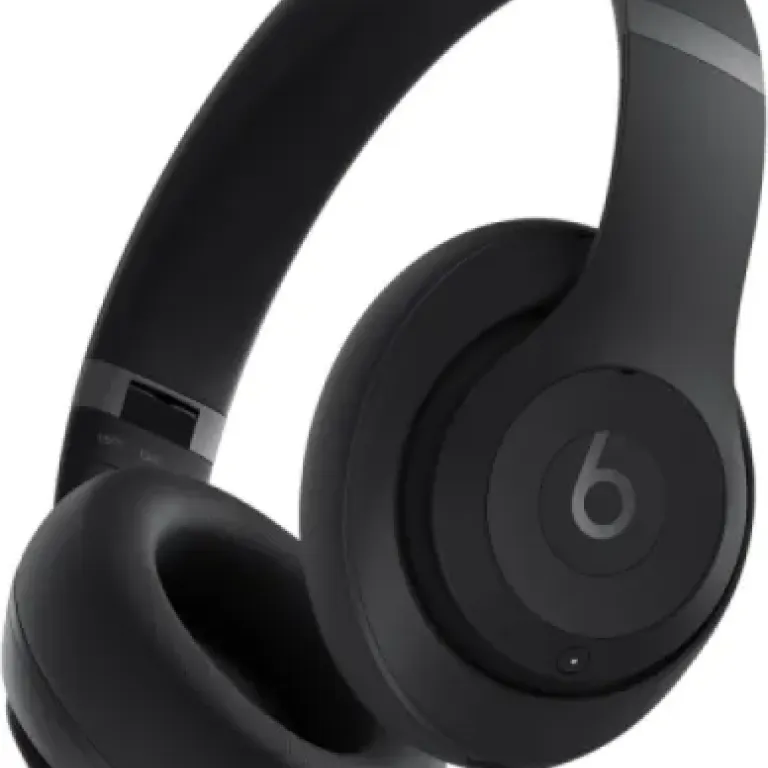
Visually, the Beats Studio Pro keep that typical Beats look: smooth surfaces, big "b" logos on the cups, and a fairly minimal, all-black finish in this version. If you’re into flashy designs, this color is pretty low-key; it blends in at the office or on a plane. Personally, I like that it doesn’t scream for attention. They fold inward, which makes them easier to toss into a bag or the included case. The folding mechanism is handy, but it’s also the part that makes me a bit nervous, especially after reading reviews mentioning broken hinges from drops or pressure in a bag.
In terms of size and weight, they’re around 260 g, which is in the same ballpark as other over-ears like Sony WH-1000XM series. On the head, they don’t feel heavy at first, and the clamp isn’t brutal, but you do feel that you’re wearing a proper headset, not a featherweight. The adjustment sliders are smooth enough and hold their position, so you don’t have to readjust every time you put them on. The cups rotate enough to sit flat on your ears, but not fully flat like some models that can lay on a desk.
The buttons are integrated into the design in a way that doesn’t look cheap. You’ve got tactile volume controls and a multi-function button on one side, plus the ANC/Transparency switch. I prefer this over touch panels that misfire every time you adjust the cups. The USB‑C port and 3.5 mm jack are on the bottom of the cups, which is pretty standard and easy to reach. The branding is there but not screaming; if you know Beats, you recognize it, but it’s not covered in shiny chrome or anything like that.
Overall, the design is clean and practical, but I wouldn’t call it bulletproof. If you baby your gear or keep it in a backpack sleeve, you’re probably fine. If you tend to throw your stuff around, sit on your bag, or drop headphones off the bed regularly, I’d seriously consider buying a proper hard case or looking at a more rugged design. The folding is convenient, but it’s also the weak point in my mind.
Battery life: the main strong point
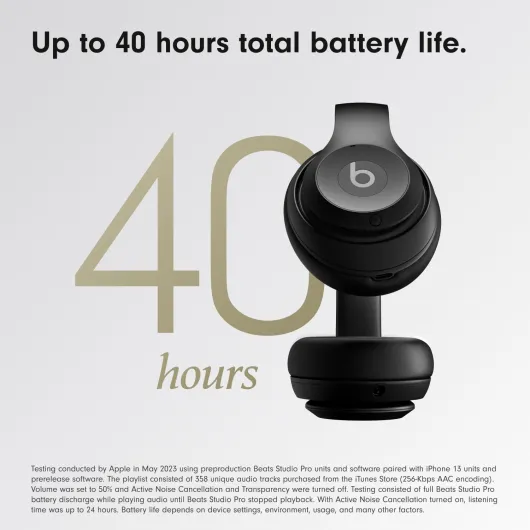
Battery is one of the biggest selling points here, and in practice it holds up well. They’re rated for up to 40 hours of listening, and with mixed use (some ANC on, some off, volume around 60–70%), I was easily going several days without charging. I never actually ran them down to 0% in a single stretch. For normal use—few hours of music per day, some calls, some videos—you’re realistically charging them maybe once a week, which is very convenient.
The Fast Fuel feature is also actually useful. They claim 10 minutes of charging gives you up to 4 hours of playback. I didn’t time it with a stopwatch, but plugging them in for a short 10–15 minute top-up before heading out did give me more than enough juice for an evening out or a long work session. Since it’s USB‑C, it’s easy to share a cable with your phone or laptop, as long as everything is relatively recent.
Charging time from low battery to full isn’t instant, but it’s not painful either. You’re looking at around 1.5–2 hours depending on your charger. There’s no wireless charging, but honestly, for over-ear headphones, I don’t really miss that. A simple USB‑C cable gets the job done, and the port feels solid enough that I’m not worried about it loosening anytime soon.
Overall, I’d say battery life is one of the clear strengths of the Beats Studio Pro. If you travel a lot, work in different locations, or just hate thinking about charging, these are very practical. Compared to true wireless earbuds that need a top-up every couple of days, having a pair of headphones that just keep going is pretty nice.
Comfort: good for a couple hours, not my pick for all-day wear
Comfort is where these are decent but not outstanding. The ear cups are over-ear, so they do cover the ears fully, which I prefer over on-ear models that crush the cartilage. The pads are made of faux leather with soft foam underneath. When you first put them on, they feel pretty nice and cushy, and the clamp force is moderate. For shorter sessions, like a commute or a movie, I had no issue. The problem shows up after 2–3 hours of continuous use: I start to feel pressure at the top of my head from the headband, and a bit of heat and soreness around the ears.
To be fair, I’m somewhat sensitive to headphone pressure, and almost every over-ear I’ve used has ended up causing some fatigue. But these are not in the “wear all day and forget them” category, at least not for me. After a long work session, I usually take a 10–15 minute break just to give my head and ears a rest. Compared to some Bose models I’ve tried, the Beats feel a bit firmer on the head. They stay in place well, which is nice if you move around, but the tradeoff is more pressure over time.
Breathability is also average. The pads do warm up your ears, especially in warmer rooms or if you’re using them while walking outside on a hot day. I wouldn’t use them for intense gym sessions; they can slip a bit with sweaty skin, and one user comment about them falling during deadlifts is pretty accurate. For light walking or sitting at a desk, they’re fine, but I wouldn’t call them ideal workout headphones.
If comfort is your top priority and you plan to wear headphones 6–8 hours straight every day, I’d say these are okay but not the best option. For mixed use—some travel, some studying, some gaming—they do the job. Just don’t expect to forget they’re on your head after a full day. I’d rate comfort as good enough, but not a strong selling point.
Build & durability: feels okay in hand, but I don’t fully trust the hinges
In terms of build, the Beats Studio Pro feel solid enough, but not indestructible. The plastic on the cups and headband doesn’t feel cheap, and there’s no weird creaking when you adjust them. The faux leather on the ear pads and headband looks and feels decent, but like most synthetic materials, I’d expect some wear and potential peeling after a couple of years if you use them heavily or sweat in them a lot. They are not water resistant, so I wouldn’t wear them in the rain or during very sweaty workouts.
The big question mark for me is the folding mechanism. The fact that several users mention hinge breaks after drops or pressure in bags lines up with how they feel in the hand: not flimsy, but not tank-like either. If you treat your electronics carefully, you’ll probably be okay. If you tend to toss your headphones into a backpack with books, laptops, and who knows what else, I’d be more cautious. The included woven case helps with scratches and light bumps, but it’s not a rigid hard case, so it won’t protect against someone sitting on your bag or luggage getting crushed.
On the positive side, I’ve accidentally bumped them off a desk once, and they survived without any visible damage or weird rattles. The adjustment sliders still move smoothly, and the ear cups haven’t loosened up in a bad way. The buttons also still click cleanly and haven’t gotten mushy. So short term, durability seems fine. The concern is more long-term, especially around the hinges and the ear pad material.
If you’re planning to keep these for several years, I’d strongly suggest:
- Use a hard case if you travel or throw them in bags often.
- Avoid using them as gym headphones where sweat and drops are more likely.
- Wipe the pads once in a while to slow down wear.
Sound & ANC: punchy, fun tuning with solid noise cancelling
Sound-wise, the Beats Studio Pro are clearly tuned for everyday listening, not for super neutral studio work. There’s noticeable bass, but it’s more controlled than older Beats models that were all about boom. For hip-hop, pop, and electronic music, they’re pretty fun to listen to: the low end has weight, vocals sit fairly clear in the mix, and the highs don’t stab your ears. If you’re into classical or very detailed acoustic tracks, you might find them a bit rounded and not the most precise, but for Spotify and YouTube, they’re more than fine.
The volume headroom is good. I rarely go above 70–80% volume, even in noisier environments. Compared to standard AirPods, they feel stronger and cleaner at higher volumes, and I don’t get that thin, harsh sound when I push them. The USB‑C lossless audio option is a nice bonus if you want to plug into a laptop or phone directly and skip Bluetooth compression. It’s not night-and-day for casual listening, but it’s handy for gaming or watching movies on a device that has USB‑C but no good Bluetooth support.
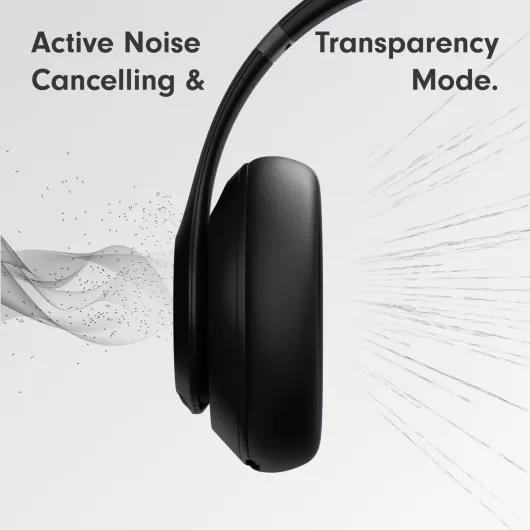
The Active Noise Cancelling (ANC) is solid. It’s not on the same level as top-tier Sony or Bose, but it kills a good chunk of low-frequency noise: air conditioning, bus engines, plane rumble, etc. Office chatter is reduced a lot, though not completely gone. For working in a café or on a train, I found it more than enough to get into my own bubble. One thing to note: one user mentioned a weird knocking sound in the left ear near a router when ANC is on. I didn’t hit that exact issue, but ANC systems can sometimes react weirdly to certain constant electronic noises. The good thing is you can always switch to Transparency mode or turn ANC off if something feels off.
Call quality is better than I expected. The voice-targeting mics do a decent job of focusing on your speech and cutting down background noise. People on the other end usually didn’t realize I was on headphones, which is better than my older AirPods that often picked up wind and traffic. Latency for video watching is acceptable; lipsync on Netflix and YouTube felt fine on both iPhone and laptop. For gaming, Bluetooth still has some delay, but if you’re picky about that, you can always use the 3.5 mm or USB‑C wired connection.
What you actually get and how they behave day to day
Out of the box, you get the headphones, a woven carrying case, a USB‑C to USB‑C cable, and a 3.5 mm audio cable. So you’re covered for Bluetooth, USB‑C audio, and old-school wired use. No USB‑C to USB‑A adapter, so if your charger is older you need your own brick or cable. The case is soft but structured; it’s better than a simple pouch, but it’s not a hard shell, so if you throw your bag around a lot you’re still relying on the hinges not getting crushed. Given how some users mention hinge issues, I’d personally prefer a hard case.
Setup is straightforward. On iPhone, it pops up with the usual Apple-style pairing card; on Android, it supports Google Fast Pair, so it’s also fairly quick. Once paired, the Bluetooth 5.3 connection is stable. I walked around my apartment and even into another room without dropouts. They advertise up to 100 meters of range; in real life, through walls, it’s obviously less, but I didn’t see anything weird like random disconnections. Switching between phone and laptop works, but it’s not magic. A couple of times I had to turn Bluetooth off on one device to force it to connect to the other, which matches what some buyers complain about.
The on-ear controls are physical buttons, not touch gestures, which I actually prefer. Volume up/down is clear, and the multi-function button handles play/pause, track skipping, and calls. There’s also a button for toggling between ANC and Transparency. It’s all pretty intuitive. The only thing that took a bit of getting used to was remembering which side had which button by feel, but after a few days, muscle memory kicks in. Voice assistant (Siri or Google Assistant) triggers fine from the button, and the mics are good enough that people usually don’t notice I’m on a headset.
In short, as a product, it’s very plug-and-play. No weird learning curve, no mandatory app to make them usable, and enough connection options to cover most situations. The downside is there’s nothing particularly special here either: it’s a solid, standard wireless ANC headphone experience with a little extra polish for Apple and Android users.
Pros
- Very strong battery life with useful fast charging
- Punchy, enjoyable sound and solid ANC for everyday use
- Good Apple and Android compatibility with USB‑C and 3.5 mm options
Cons
- Comfort drops off after a few hours of continuous use
- Hinges and non-hard case don’t inspire full confidence for rough travel
Conclusion
Editor's rating
The Beats Studio Pro are solid everyday wireless over-ear headphones with a few clear strengths: long battery life, simple controls, decent noise cancelling, and a sound profile that works well for modern music and streaming. They’re easy to use, play nicely with both Apple and Android, and the USB‑C plus 3.5 mm options give you flexibility if you want to go wired. For commuting, travel, studying in a noisy place, or just watching movies at home, they get the job done without much hassle.
On the downside, they’re not the most comfortable for very long sessions, and the folding hinges don’t inspire huge confidence if you’re rough with your gear. ANC is good but not class-leading, and at full retail price they sit in a tough spot against Sony and Bose. In my view, they make the most sense if you catch them on sale and you want something simple, with strong battery and a fun, punchy sound, rather than chasing audiophile-level detail.
Who are they for? People who want one pair of headphones that can handle travel, work, and casual listening, especially if you use both Apple and Android devices. Who should skip them? Anyone super sensitive to head pressure who wears headphones 8 hours a day, or someone who wants the absolute best ANC in the market. If you fall in the first group and you can grab them at a discount, they’re a good, practical choice. If not, it’s worth comparing carefully before paying full price.