
Summary
Editor's rating
Value: worth it if you care about sound more than features
Classic studio look with a few modern tweaks
Comfort: actually wearable for full workdays
Built mostly like a tool, not a fashion accessory
Durability and daily abuse
Sound: clear, detailed, a bit bright, with tight bass
What you actually get with the DT 770 Pro X
Pros
- Comfortable velour pads and reasonable clamp make it easy to wear for hours
- Clear, detailed sound with tight bass and fairly neutral tuning for studio work
- Detachable cable and replaceable parts improve long-term durability and practicality
Cons
- Treble can feel a bit harsh for some listeners, may benefit from EQ
- Stock cable is very long and awkward for typical desktop use
- No mic, no wireless, and no ANC, so limited if you want an all-in-one headset

Specifications
View full product page →| Brand | beyerdynamic |
Closed studio cans that don’t fry your ears (or your neck)
I’ve been using the beyerdynamic DT 770 Pro X for a few weeks now, mostly for home recording, some casual gaming, and late-night music listening. I already knew the older DT 770 and DT 880 from friends’ studios, so I had a rough idea of what to expect. This new Pro X version is supposed to keep the same general sound but be easier to drive and a bit more practical with the detachable cable.
In real life, my use is not super fancy: plugged into an audio interface when I record, sometimes into a USB DAC on my laptop, and quite often straight into my phone or Switch. No crazy audiophile chain, just normal gear most people might actually use. I mainly wanted something closed so I don’t bother people at home and so my click track doesn’t bleed into the mic when I’m recording vocals or guitar.
Overall, they feel like a very “workhorse” pair of headphones. Nothing flashy, no RGB, no ANC, no app. Just wired, closed, and meant to be worn for hours. Sometimes that’s exactly what you want. They’re not perfect, and there are a couple of annoying details, but they do their job well enough that I keep reaching for them instead of my other pairs.
If you’re wondering whether these are worth picking over the older DT 770 Pro or over typical gaming headsets, I’ll walk through how they behave in real use: sound, comfort, build, and whether the price makes sense. Short version: pretty solid if you actually care about sound and don’t need wireless or fancy features.
Value: worth it if you care about sound more than features
In terms of value for money, I think the DT 770 Pro X lands in a good spot. It’s not cheap, but it’s also not in the crazy audiophile price range. For what you pay, you get a headphone that can handle serious recording and mixing, but also works well for gaming and music if you like a cleaner sound. Compared to a lot of “gaming” headsets in the same price range, the sound quality is honestly on another level, especially in clarity and detail.
Where the value is a bit mixed is features. There’s no mic, no wireless, no ANC, no app, no EQ profiles built in. It’s just a wired headphone. If you need a mic, you have to buy one separately. If you want wireless convenience, this is not it. So if you compare it to something like a mid-range wireless ANC headphone, you might feel you’re getting less for the same money. But if your priority is sound and comfort, not features, then it suddenly looks like a better deal.
The detachable cable, repairable parts, and general build quality also add value in the long run. Instead of replacing the whole thing when the cable dies or the pads wear out, you just swap parts. That’s boring but important if you actually use your headphones every day. I do think they should have included a shorter second cable in the box, because the 3 m cable is overkill for most home setups. That would have made the package feel more complete.
So, are they the best value on earth? No. There are cheaper options that sound good enough, and there are open-back models in this price range with even better soundstage. But if you need closed-back, neutral-ish, comfortable headphones that can plug into anything and last, the price feels fair. You’re mostly paying for consistent sound, comfort, and build, not for bells and whistles.
Classic studio look with a few modern tweaks
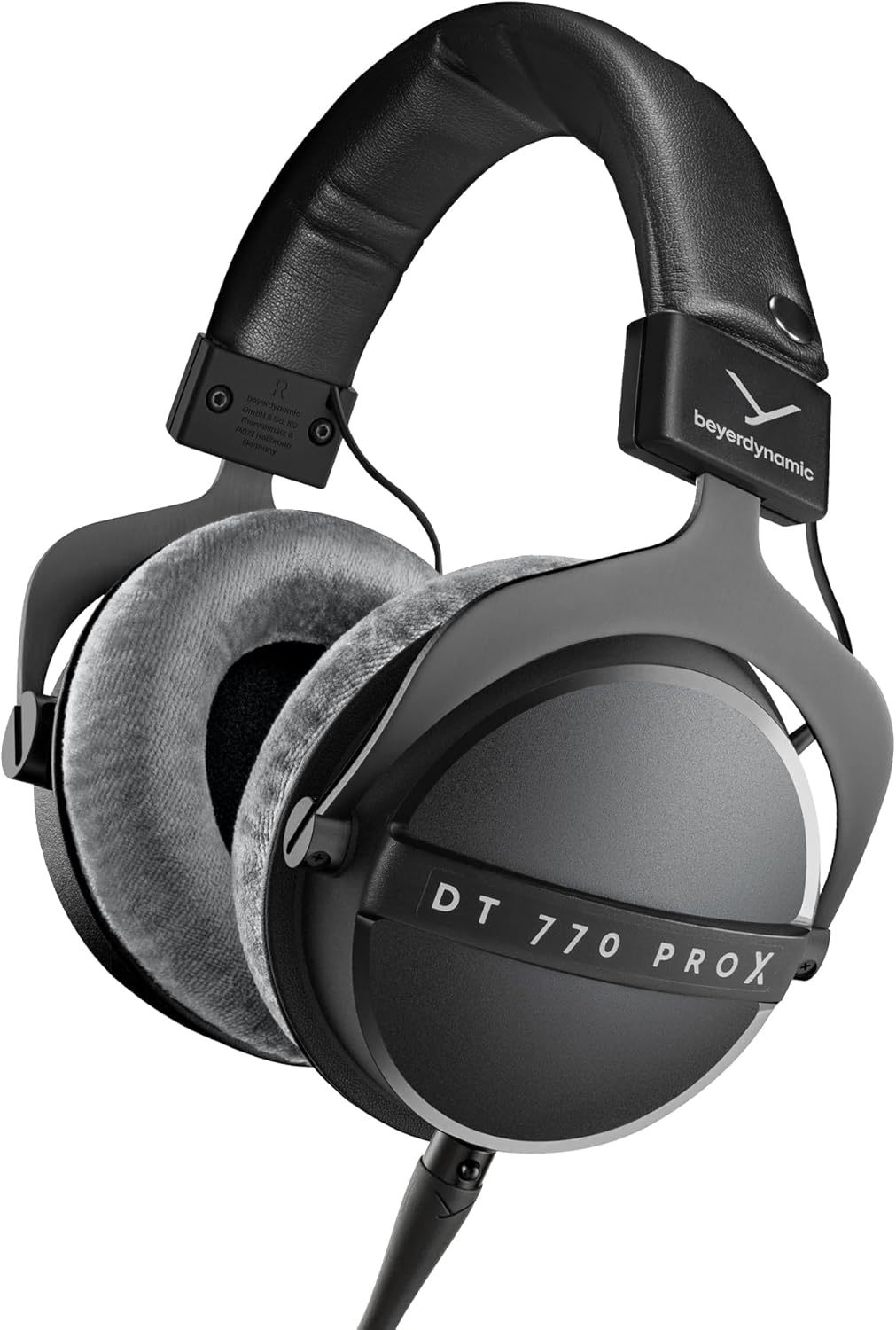
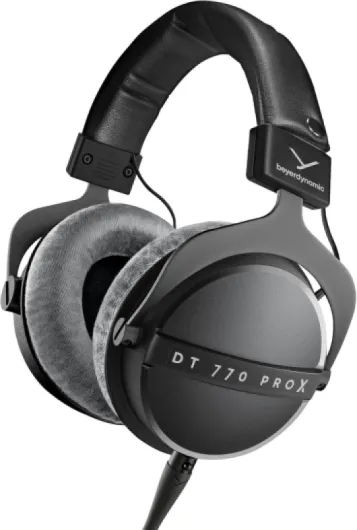
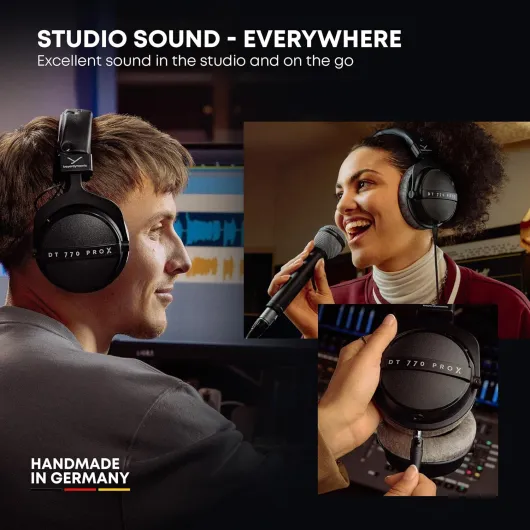
Design-wise, the DT 770 Pro X looks very much like a beyerdynamic: round cups, visible yokes, and a pretty industrial vibe. Everything is matte black, so it doesn’t scream for attention on camera or in an office. If you’ve seen the older DT 770 Pro, this looks like its slightly more modern cousin, but still very much in the same family. No weird shapes, no glossy accents, no chrome that will scratch in two weeks.
The earcups are oval-ish but basically round on the outside, and they sit fully over my ears. The headband is padded with a stitched cover, and there’s a small recess in the middle so it doesn’t press on the very top of your skull. That sounds minor, but after a few hours, you really notice that it spreads the pressure better. The branding is pretty minimal: a small beyerdynamic logo and the model name, nothing too loud.
One big change versus older models is the detachable cable on the left cup. The connector is recessed and locks with a small twist, so it’s not going to fall out if you stand up or move around. This is a huge plus if you’ve ever killed a pair of wired headphones because of a cable snag. It also makes it easier to swap to a shorter cable for portable use. Out of the box, though, the cable is long and a bit annoying if your setup is tight and your interface is right next to you.
On my head, they don’t look ridiculous. They’re not super slim, but they’re not those giant open-back UFOs either. For streamers or people on Zoom calls, they look like normal studio cans, not like a toy gaming headset. If you care about aesthetics, I’d call it simple and practical. If you like flashy stuff, you’ll find them a bit boring, but at least they don’t make you look like a sci-fi character.
Comfort: actually wearable for full workdays
Comfort is probably the main reason I stuck with these instead of going back to my other pairs. The clamping force out of the box is snug but not painful. After a couple of days, it loosened up just enough that I could wear them for hours without getting that “head in a vise” feeling. They still grip enough that they don’t slide off if I lean forward to grab something or move around while playing guitar.
The velour pads make a big difference. They don’t trap as much heat as leatherette pads, so my ears don’t end up sweaty after a long music or gaming session. I’ve done 3–4 hour stretches with these on while mixing and only needed a short break because of general listening fatigue, not because my head hurt. The pads are deep enough that my ears don’t hit the driver covers, which is something that annoys me on a lot of cheaper headsets.
Weight-wise, at around 298 grams, they’re light enough that you don’t feel like you’re wearing a helmet. The headband padding is decent, and that little cut-out at the top really helps. On some headphones, I get a hot spot on the crown of my head after an hour; with these, that took much longer to show up, and even then it was mild. For glasses wearers: I wear fairly thin frames, and the clamp didn’t crush them into my skull. If you have very thick frames, you might feel some pressure, but that’s true with most over-ears.
If I nitpick, the only comfort downside for me is the long cable tugging slightly when I’m at my desk. Since it’s heavy and long, if it falls off the table, you feel a gentle pull. That’s more of a cable issue than a comfort issue, but it does affect how carefree it feels to wear. Still, as far as over-ear closed headphones go, these are one of the easier pairs to keep on all day, especially compared to sweaty leather gaming headsets or super clampy studio models.
Built mostly like a tool, not a fashion accessory
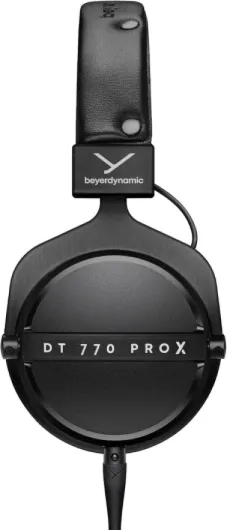
Materials are a mix of plastic and metal, which is pretty standard for this type of headphone. The cups themselves are plastic, but they don’t feel hollow or cheap. The yokes that hold the cups are metal, and they give the impression that they can handle being bent and adjusted daily without snapping. The headband has a metal core under the padding, so overall the frame feels solid in the hands.
The ear pads are velour, which is one of the main reasons I like beyerdynamic stuff. No sweaty faux leather that peels after a year. The velour here is soft and doesn’t stick to your skin, even after a long session. It does attract a bit of dust and hair, but that’s the trade-off for comfort. The padding inside the cups feels medium-firm: not super plush like some hi-fi models, but not thin either. It gives you a decent seal without crushing your head.
The cable is rubbery, fairly thick, and feels ready to survive being rolled up and unrolled a lot. It’s not microphonic in a crazy way, but you will hear a little rustling if it rubs against the desk or your shirt. The connector at the headphone side is metal and clicks into place with a reassuring little twist. On one of the Amazon reviews, someone mentioned a small metal-on-metal click when putting them on; I also noticed a tiny noise from the yokes when adjusting, but nothing major. Just don’t expect silent luxury hinges like on super expensive hi-fi models.
Overall, the materials feel practical and repairable. Pads can be swapped, the cable can be replaced, and the construction looks like it can handle daily studio use. It’s not boutique-level fancy, but it feels like something made to work for years, not a disposable gadget. For the price, I think the balance between plastic and metal is fair, even if some people might wish for a bit more metal on the cups themselves.
Durability and daily abuse
I haven’t had these for years, obviously, but based on a few weeks of daily use and knowing older beyerdynamic models, they feel built for long-term abuse. The headband adjustment is firm and doesn’t slide out of place, and the metal yokes don’t flex in a scary way when you put them on. I’ve tossed them on the desk, hung them on a hook, and thrown them in a backpack a couple of times; no rattles, no loose parts so far.
The detachable cable is a big plus for durability. On fixed-cable headphones, the cable is usually what dies first. Here, if the plug or the wire goes bad, you just replace the cable. The locking mechanism feels sturdy enough that it won’t suddenly disconnect if you roll over the cable with your chair. I did notice, like one Amazon reviewer, a tiny metal click when putting them on sometimes, probably from the yokes shifting. It doesn’t feel like something is breaking, just a bit of mechanical noise.
The velour pads will probably compress over time, like all pads, but they’re replaceable. beyerdynamic usually sells spare parts for years, which is one of the reasons people stick with the brand. The plastic on the cups doesn’t show scratches easily and doesn’t feel brittle. I’m not babying them, and they still look basically new. They’re not water-resistant at all, so don’t take them out in the rain or sweat on them at the gym; they’re clearly meant for indoor use.
If you want something to throw in a backpack every day without a case, I’d still consider a simple pouch just to protect the pads. But overall, for a sub-$200 wired studio headphone, durability seems pretty solid. There are tougher, more rugged models out there, but they’re usually less comfortable or more expensive. This hits a decent middle ground between comfort and feeling like it will last.
Sound: clear, detailed, a bit bright, with tight bass
On the sound side, the DT 770 Pro X leans clearly towards studio use. The bass is present and tight, but not booming. If you’re used to bass-heavy consumer or gaming headsets, the first impression might be that these are lighter on bass. After a couple of days, I realized the low-end is actually there, just more controlled and not bloated. Kick drums and bass guitars are easy to separate, and electronic tracks have enough punch without turning into a rumble.
The mids are fairly neutral to my ears. Vocals sit clearly in the mix, guitars and pianos sound natural, and dialogue in movies and games is easy to understand. Where these stand out is detail in the highs. Cymbals, hi-hats, reverb tails, background sounds in games – you hear a lot. For mixing, that’s great, because you can catch sibilance, harshness, and little noises. For casual listening, this can feel a bit sharp with certain tracks, especially if the recording is already bright or compressed. I did find them a bit harsh at first on some rock and metal albums.
For gaming, positional audio is decent for a closed-back. The soundstage is not huge like an open headphone, but it’s not cramped either. You get a clear sense of left-right and some front-back, enough for shooters and immersive single-player games. Compared to typical gaming headsets I’ve used (HyperX, Razer), the detail and separation are just on another level, but without all the fake surround processing. Footsteps and distant sounds are easier to pick out, even if the stage isn’t massive.
They’re also easy to drive. My audio interface barely needs the knob above halfway. My phone and tablet can push them to more than enough volume. They scale a bit with a better DAC/amp (you get slightly tighter bass and a bit more control), but you don’t need fancy gear to enjoy them. Overall, the performance is very good for the price if you want clarity and detail over huge bass. If you’re sensitive to treble, you might want to EQ them a bit, but once dialed in, they handle music, gaming, and monitoring without much complaint.
What you actually get with the DT 770 Pro X
The DT 770 Pro X is a closed-back, over-ear wired headphone with a 48-ohm impedance. In plain terms, it’s meant for studio work like monitoring and recording, but the 48 ohms means you can plug it into pretty much anything: phone, laptop, controller, audio interface, DAC, whatever. You don’t need a huge headphone amp to get decent volume, which is a big difference compared to some older 250-ohm studio models.
In the box, you basically get the headphones, a long detachable cable (around 3 meters), a 3.5 mm jack with a screw-on 6.35 mm adapter, and that’s about it. No fancy case in my unit, no extra pads, no second shorter cable. So don’t expect a big accessory bundle. The detachable cable uses a mini locking connector on the cup, which feels secure. The upside is if the cable dies, you replace the cable, not the whole headphone. The downside is the stock cable is way too long for desktop use unless your PC or interface is far away.
On paper, they cover up to 40 kHz in frequency response, but honestly, what matters more is that they aim for a fairly neutral, studio-style tuning. That means not super boosted bass like many consumer or gaming headsets, and not a big V-shape. In practice, I’d call them slightly bright with good, tight bass rather than huge bass. For recording and mixing, this makes sense; for bass-heads, maybe less so.
The target use is pretty clear: people who record, mix, or just want a reliable closed headphone with a flat-ish sound. They’re not trying to be travel headphones (no ANC, not foldable), and not trying to be lifestyle fashion gear. If you want wireless, a mic, or noise cancelling, this is the wrong product. If you want something you can trust for monitoring and also game/listen with, it fits better.
Pros
- Comfortable velour pads and reasonable clamp make it easy to wear for hours
- Clear, detailed sound with tight bass and fairly neutral tuning for studio work
- Detachable cable and replaceable parts improve long-term durability and practicality
Cons
- Treble can feel a bit harsh for some listeners, may benefit from EQ
- Stock cable is very long and awkward for typical desktop use
- No mic, no wireless, and no ANC, so limited if you want an all-in-one headset
Conclusion
Editor's rating
The beyerdynamic DT 770 Pro X is a solid choice if you want a closed-back wired headphone that you can actually wear for long sessions without your head or ears complaining. The sound leans towards studio use: clear, detailed, slightly bright, with tight but not overblown bass. For recording, mixing, and critical listening, that works very well. For gaming and casual music, it still does a good job, especially if you don’t mind tweaking the EQ a bit if the treble feels too sharp on some tracks.
The build is sturdy, the detachable cable is a big plus, and the velour pads make a clear difference in comfort compared to typical leatherette headsets. It’s not packed with features: no mic, no wireless, no ANC. If you’re after a do-it-all travel and office headset with noise cancelling and Bluetooth, this is the wrong product. But if you mainly sit at a desk, work on audio, or just want reliable sound quality from something that feels like a tool rather than a toy, it’s a good fit.
I’d recommend it to home studio users, beginner producers, streamers who already use a separate mic, and anyone stepping up from basic gaming headsets and wanting cleaner, more honest sound. People who love heavy bass, want wide open soundstage, or need wireless convenience should probably look elsewhere or at least plan to pair these with EQ. Overall, it’s a pretty solid wired studio headphone that does its job without drama.