
Summary
Editor's rating
Is the AV157 worth the money?
Compact, discreet, and a bit old-school in a good way
Day-to-day use: less fiddling, less fatigue, fewer arguments over volume
Build quality and long-term use
Dialogue clarity: strong, bass and immersion: just okay
What the ZVOX AV157 actually is (and isn’t)
Does it actually help people with hearing issues?
Pros
- Dialogue is much clearer than with typical TV speakers or basic soundbars
- Multiple AccuVoice/SuperVoice levels let you fine-tune speech clarity and background noise
- Simple setup, compact size, and easy-to-read remote suitable for older users
Cons
- Limited bass and overall cinematic impact compared to bars with a subwoofer
- No HDMI ARC; some newer TVs require an extra HDMI audio extractor
- At high voice-boost levels, audio can sound a bit thin or processed

Specifications
View full product page →| Brand | ZVOX |
If you’re tired of riding the volume button, this is for you
I’ve been using the ZVOX AccuVoice AV157 for a while now, and I’ll be blunt: this thing is not about cinematic bass or shaking the room. It’s about finally understanding what people are saying on TV without cranking the volume to ridiculous levels. If your main problem is mumbling dialogue buried under music and explosions, this product directly targets that issue and mostly nails it.
Before this, I was using a basic TV soundbar that sounded “bigger” but didn’t really fix the problem: quiet voices, loud effects, and constant volume changes. I was always grabbing the remote during action scenes or ads. With the AV157, the first thing I noticed is that voices come forward in the mix. You lose some low-end punch, but you gain actual clarity. For watching series, news, and talk shows, that trade-off makes sense.
It’s also clearly designed with older ears and people with hearing issues in mind. The whole AccuVoice and SuperVoice thing is basically a fancy way of saying it boosts speech frequencies and tones down background noise. It doesn’t magically fix badly mixed shows, but for most content, I understood more on the first try and rewound a lot less. That’s really the point here.
So if you’re expecting an all-in-one home theater beast, you’ll probably be underwhelmed. But if you just want the TV to stop mumbling and don’t want to mess with a big surround system, this soundbar is a pretty solid, practical solution. Not perfect, not cheap, but it does the main job it claims to do.
Is the AV157 worth the money?
Value is where opinions are going to split a bit. This soundbar usually sits in a mid-range price bracket—more expensive than basic soundbars from big brands, cheaper than full systems with subwoofers and HDMI features. If you judge it purely on sound “wow factor,” it might feel a bit pricey, because it doesn’t deliver huge bass or cinematic surround. But that’s not what you’re paying for. You’re paying for speech clarity tech that actually does something noticeable.
Compared to something like a Bose Solo 5 or generic bars in the same range, the AV157 clearly does a better job with voices. Several people who switched from Bose to this said the same: Bose sounds fuller, but ZVOX is clearer. So if your priority is understanding dialogue, you’re getting real added value here. If your priority is big, rich movie sound, you’d probably be happier spending the same money on a bar with a subwoofer and accepting that dialogue will still be hit or miss.
Where it stings a bit is the lack of HDMI ARC and modern extras. At this price, some people will expect HDMI, Bluetooth streaming, maybe even an app. Here you get none of that. If your TV only has HDMI ARC/eARC and no optical/analog, you’ll need to buy an HDMI audio extractor, which adds cost and complexity. That does drag the value down if you’re on a newer TV setup.
So, bottom line: if you or someone in your house struggles to hear dialogue and you’re tired of relying on subtitles, the AV157 is good value for money because it directly addresses that problem. If you hear fine and want a more cinematic, feature-rich bar for the same budget, there are better options. It really comes down to whether “clear speech” is your main buying reason. If it is, the price makes sense. If not, it’s overkill for what you get.
Compact, discreet, and a bit old-school in a good way
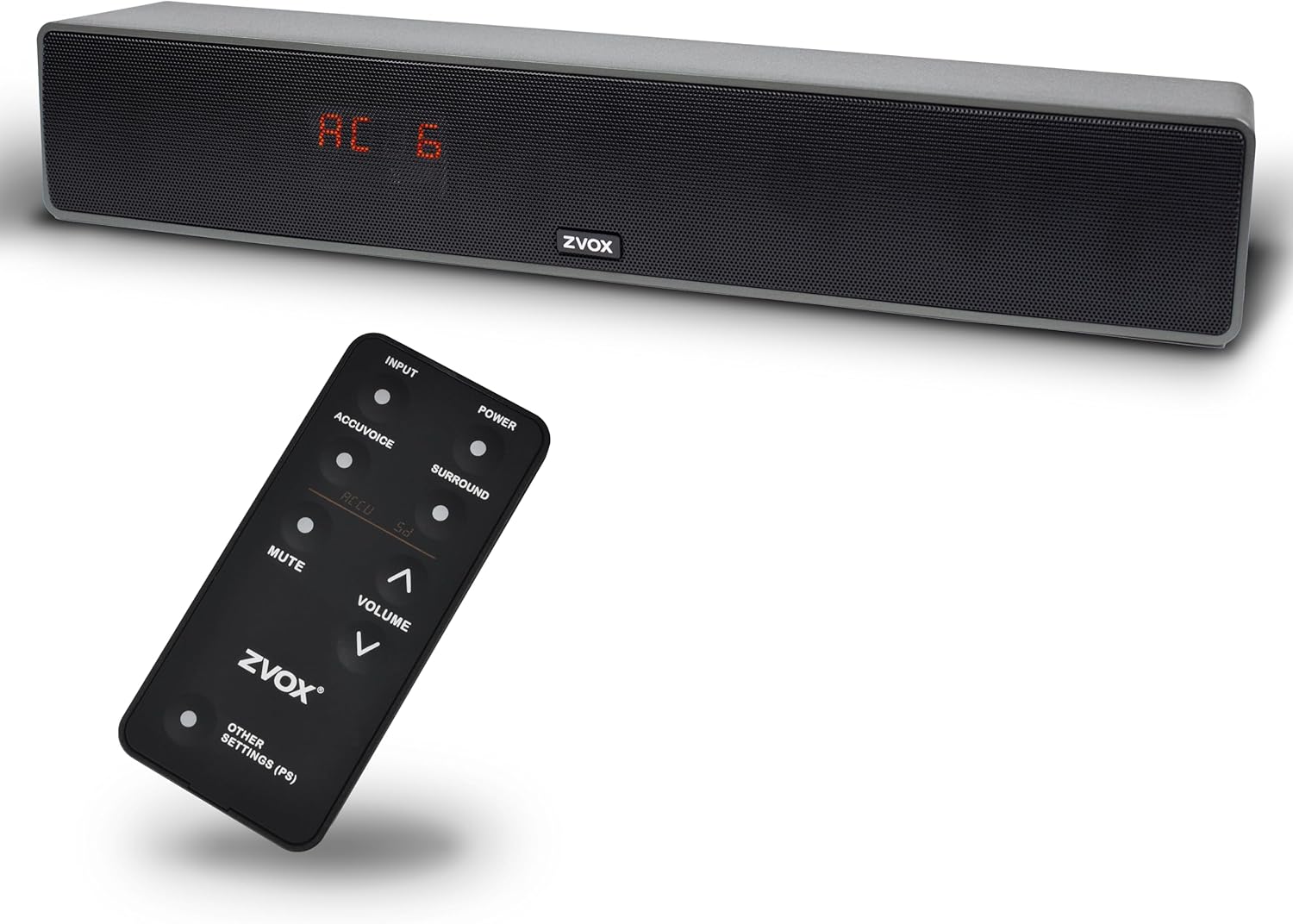
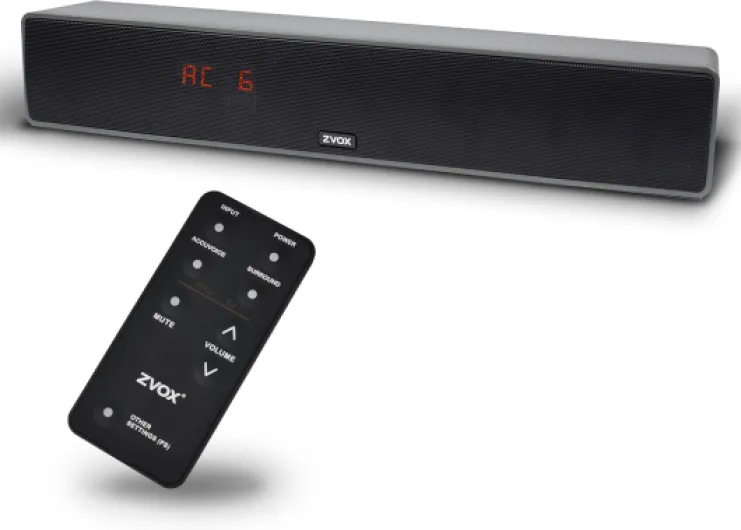
Design-wise, the AV157 is pretty low-key, which I like. The titanium color is basically a grey that blends in with most setups. It doesn’t scream “look at me, I’m a speaker,” which is nice if you don’t want your living room to look like a mini cinema. The footprint is small: 17" wide and under 3" high, so it sits easily in front of most 40–55" TVs without blocking the IR sensor or the screen. If your TV stand is tight, this size is actually a big plus compared to bulkier bars.
The front is just a simple grille with a small display behind it that shows volume and mode. The display is bright enough to see from a sofa but not so bright that it lights up the whole room. The one slightly annoying thing: there’s no simple always-on power indicator light. Sometimes you’re not 100% sure if it’s on or off until you hit volume and see the display. It’s not a deal-breaker, but it’s the kind of small usability detail you notice after a few days.
The remote is basic, and that’s a compliment. Big buttons, clear labels, nothing overloaded. You get volume, mute, AccuVoice, SuperVoice, surround modes, and tone controls. Compared to some giant remotes that try to control your fridge and microwave, this one is refreshingly simple. You can also teach your TV remote to handle basic volume and power, which is nice if you hate juggling multiple remotes. That part does take a couple of minutes, but once done, you mostly forget the ZVOX remote except when you change modes.
Build quality feels decent for the price range. It’s mostly plastic, but nothing feels flimsy or rattly. It’s not a heavy, premium metal bar, but it doesn’t feel like a toy either. If you’re expecting “luxury” materials, this isn’t that. It’s more: functional, compact, looks fine under a TV, and doesn’t attract dust and fingerprints like crazy. For a living room or bedroom TV, the design is practical and stays out of the way, which fits the purpose of this kind of product.
Day-to-day use: less fiddling, less fatigue, fewer arguments over volume
In daily use, the biggest benefit I noticed is simply less remote juggling and less listening fatigue. Before this, watching a movie meant constant volume changes: up to hear people talk, down when something loud happened, then up again when the music kicked in. With the AV157, dialogue is boosted enough that I could set the volume once and mostly leave it there. That sounds minor, but over a couple of evenings it makes TV watching a lot less annoying.
For households where one person hears fine and the other struggles, this kind of product is actually pretty handy. Instead of one person blasting the TV while the other complains it’s too loud, you can keep the volume reasonable and let the processing do the work. I tried it with someone who normally insists on subtitles, and they used subtitles less often. Not never, but less. That alone makes it more comfortable for everyone in the room.
Another point is ear fatigue. With standard speakers, when you crank the volume just to catch dialogue, all the high-pitched effects and music get tiring fast. Here, since the voices are clear at lower overall volume, the sound is easier to live with for a few hours. Yes, the sound is a bit more “flat” and less exciting, but for long Netflix sessions, I actually prefer that. It feels more like listening to a clear radio broadcast than a messy, boomy mix.
In terms of usability comfort, the big-button remote and the on-unit display are both friendly for older users or anyone who doesn’t want to mess with tiny icons. There’s a small learning curve with all the voice levels and surround modes, but after an evening of testing you basically find your two or three favorite settings and stick to them. It’s not perfect, but in everyday life, it does make TV watching more relaxed and less of a constant adjustment game.
Build quality and long-term use
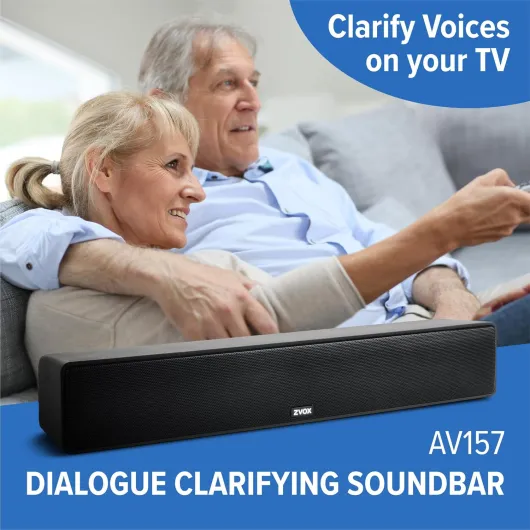
In terms of durability, this isn’t a tank, but it feels solid enough for everyday home use. The casing is plastic, but the grille is sturdy, and there are no loose parts or creaks when you move it around. At a bit under 5 pounds, it has enough weight that it doesn’t slide around easily when you press buttons on the remote or bump the TV stand. I wouldn’t drop it on the floor on purpose, but it doesn’t feel like it would fall apart from normal handling.
The electronics side seems stable too. There’s no built-in battery, so no worries there. It’s just a standard plug-in device with a Class D amplifier rated at 24 watts. I didn’t run into overheating issues, even after several hours of continuous use. The sound stayed consistent, no weird crackles or dropouts. Some users did mention a defective unit out of the box, but ZVOX support apparently handled exchanges quickly. That’s not ideal, obviously, but at least the support seems responsive when something goes wrong.
The lack of moving parts like a separate subwoofer or swiveling drivers actually helps in terms of longevity—less stuff to break. The remote is light but not flimsy, and the buttons feel like they’ll survive a lot of presses. The only thing I’d be a bit careful with is the included optical cable: it’s thicker and better than cheap ones, but optical connectors in general don’t like being yanked or bent sharply. Once you plug it in and set the bar in place, just leave it alone and you should be fine.
Realistically, this is the kind of device you set up once and then barely touch physically, so as long as it’s not in a kid’s play zone or under a window that leaks, it should last several years. It’s not “premium” in the sense of fancy materials, but for the price and the use case, the build feels appropriate and reliable enough.
Dialogue clarity: strong, bass and immersion: just okay
Let’s talk performance, because that’s the whole point of this soundbar. In normal TV watching—news, talk shows, sitcoms—the dialogue clarity is noticeably better than standard TV speakers and also better than generic soundbars that focus more on bass. Voices sit right in front of you, instead of sounding like they’re buried in the mix. For anyone who constantly rewinds to catch what someone said, that alone makes a big difference. You can keep the overall volume lower and still understand what’s going on.
The AccuVoice levels (1–6) start with a mild boost and go up to pretty aggressive voice emphasis. SuperVoice (another 6 levels) adds more background noise reduction. In practice, around level 3–5 is where I found the best balance. Go too high and voices start to sound a bit thin and harsh, especially in movies with already sharp soundtracks. But for tricky content—British dramas, mumbled dialogue, badly mixed streaming shows—those higher levels are useful, even if they’re not pretty. It’s more about “can I understand this?” than “does it sound rich?”
Now the trade-off: you do lose some bass and cinematic feel. Explosions, car chases, and big soundtracks don’t have the weight you’d get from a bar with a subwoofer. If you’re used to a bass-heavy system, this will feel a bit flat at first. After 10–15 minutes, I got used to it, and for regular TV I didn’t really miss it. For big blockbuster movies, though, it’s clearly not the same experience. You can bump the bass up in the settings, but there’s only so much three small full-range speakers can do.
The virtual surround (PhaseCue) is decent but not magical. It widens the soundstage a bit and makes things feel less like they’re coming from a single point, but don’t expect real surround effects behind you. Think of it more as “less narrow” than “cinema in a bar.” Volume-wise, the 24-watt amp is enough for a normal living room. It gets loud enough without obvious distortion, but this isn’t a party speaker. Overall: for its main job—making dialogue clear—it performs strongly. For full home theater immersion, it’s just okay.
What the ZVOX AV157 actually is (and isn’t)
The ZVOX AV157 is a compact soundbar built mainly for dialogue clarity, not for massive cinematic sound. It’s about 17 inches wide, just under 3 inches high and deep, and weighs a bit under 5 pounds. So it’s small enough to sit in front of most TVs without blocking the screen, or you can wall-mount it if you want things cleaner. There’s no separate subwoofer, no HDMI ARC, and no smart features. It’s very old-school in that sense: optical or analog in, sound out, that’s it.
Setup is straightforward: power cable plus either the included optical cable or the analog cable (3.5mm or RCA). I used the optical, which is what I’d recommend. One thing I noticed, and other buyers also mentioned, is that the quality of the optical cable matters. The thicker ZVOX cable did give me cleaner sound than the cheap one I had lying around. Once it’s plugged in, you basically set your TV audio output to external speakers, and it’s ready to go. No app, no Wi-Fi, no nonsense.
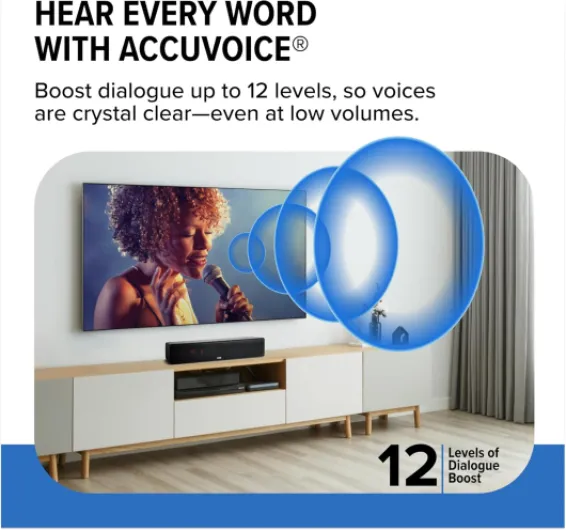
The main features are the AccuVoice and SuperVoice modes. You get 12 levels of voice boost (6 AccuVoice, 6 SuperVoice) plus different virtual surround settings (PhaseCue). In practice, that means you can tweak how much the voices are boosted and how much background noise is reduced. There’s also basic bass and treble adjustment, but this isn’t a fine-tuning audiophile product. It’s more like: “Do you want voices a bit clearer, or a lot clearer?” and you click until it feels right.
On the downside, it’s missing some modern stuff. No HDMI ARC/eARC means some newer TVs (especially some Samsung and glass-style models) will need an HDMI audio extractor, which is extra money and an extra box. Also, there’s no built-in Bluetooth streaming on this model, so it’s really focused on TV audio, not music. In short: it’s a simple, TV-first soundbar that trades fancy features for one main trick—clearer speech.
Does it actually help people with hearing issues?
Based on my use and what I’ve seen from others, I’d say yes, it genuinely helps if you struggle with dialogue, but with some limits. If your main problem is that modern TV mixes drown speech under background music, crowd noise, or effects, the AV157 tackles that head-on. The background is pulled back, consonants are sharpened, and voices are pushed forward. For a lot of people—especially older users or those with mild to moderate hearing loss—that’s enough to make TV watchable again without subtitles all the time.
The 12 levels of voice boost are not a gimmick. I tried them on different content: US series, British crime shows, noisy action films, and even news channels. On clean content like news, low to mid levels were more than enough and sounded fairly natural. On British stuff with heavy accents, or movies with sloppy sound mixing, the stronger levels helped catch words I would normally miss. It doesn’t magically fix everything, but I rewound less and turned on subtitles less often. That’s pretty much the measure of effectiveness here.
There are trade-offs, though. At high AccuVoice/SuperVoice levels, voices can sound a bit metallic or thin, and you definitely lose some atmosphere. If you’re an audio purist, you’ll hate it. But if your choice is between slightly “processed” voices you can understand versus “nice-sounding” audio you can’t follow, the decision is simple. Also, this is not a replacement for proper hearing aids if your hearing is seriously damaged. Think of it as a strong assist for TV, not a medical solution.
For people without hearing loss but who are just tired of bad mixes and loud ads (like me), it still has value. You can run it at lower levels so it doesn’t sound too processed, but you still get clearer speech and more stable volume. Overall, it does what it claims: makes dialogue easier to understand. It’s not magic, but it’s effective enough that going back to normal TV speakers feels pretty rough afterward.
Pros
- Dialogue is much clearer than with typical TV speakers or basic soundbars
- Multiple AccuVoice/SuperVoice levels let you fine-tune speech clarity and background noise
- Simple setup, compact size, and easy-to-read remote suitable for older users
Cons
- Limited bass and overall cinematic impact compared to bars with a subwoofer
- No HDMI ARC; some newer TVs require an extra HDMI audio extractor
- At high voice-boost levels, audio can sound a bit thin or processed
Conclusion
Editor's rating
The ZVOX AccuVoice AV157 is a focused product: it’s built to make TV dialogue clearer, and on that front it delivers. Voices are brought forward, background noise is pushed back, and you spend far less time riding the volume control. For older users, people with mild hearing issues, or anyone tired of mumbled shows and loud ads, it’s a genuinely useful upgrade over both TV speakers and many generic soundbars. It doesn’t fix bad mixes completely, but it reduces the frustration a lot.
On the flip side, this is not the best choice if you want big, cinematic sound with deep bass and modern features. There’s no HDMI ARC, no Bluetooth streaming on this model, and the overall sound profile is more about clarity than excitement. At higher voice-boost levels, audio can sound a bit thin, and the virtual surround is modest. So you’re paying specifically for speech enhancement, not an all-round home theater monster.
If your main complaint is “I can’t hear what they’re saying,” the AV157 is a pretty solid, practical buy and will likely get used every day. If you hear fine and mainly want movies to feel bigger and more immersive, you’re better off with a different soundbar at the same price point. It’s a niche product, but for the right person, it solves a real, everyday problem.